Convent Light Street in Penang.
THREE convent schools in Penang are in the news with talk that they may have to close down, supposedly because of dwindling enrolment.
Naturally, this has become unsettling because Penangites are very sentimental, even emotional, about these historic institutions.
I spent over a decade at St Xavier’s Institution, and I regard Convent Light Street as a sister school, as both schools sit side by side.
Many friendships were forged with CLS students, and those who qualified for Sixth Form studies, enrolled in SXI after completing their Form Five examinations.
CLS is also the oldest girls’ school in South-East Asia, standing proudly on its present site within the Unesco Heritage Zone since 1859.
The school was founded in 1852 by three French Catholic nuns from the Holy Infant Jesus Mission, who were part of a group of six who left France for Singapore in 1851 to set up a Catholic institution on the island.
According to an article by Louise Goss-Custard, the 30-year-old Mother Superior who led the group, died during the five-month journey, and the only remaining English-speaking sister decided to leave the order upon reaching Singapore.

“Another sister became seriously ill with ‘brain fever’ during the journey and remained ill for the rest of her life. Now too small a group to be effective in Singapore, the Sisters were sent to Penang, where the La Salle Brothers were already active and could support them until reinforcements arrived,” she wrote.
Penang founder Captain Francis Light had set up his administration where the CLS is now located, and for a while, Sir Stamford Raffles worked there before he moved on to Singapore.
Apparently, Raffles spent more time in Penang than in Singapore. He arrived in Penang – which was then known as the Prince of Wales island – in 1805 to work under Philip Dundas, the then-governor of Penang.
Fast-forward to today, the landowner – the Sisters of the Infant Jesus (a Catholic order) – has written to the Education Ministry asking for the return of the land where SK Convent Light Street, SMK Convent Light Street and SMK Convent Pulau Tikus are located.
Sister Celina Wong, the spokesperson, has assured that they have no intention of selling the land or buildings for redevelopment.
Beyond that, the sisters are not saying anything, though the reality remains that enrolment has dropped.
This is not the first time as the 124-year-old SK Pykett Methodist faced the same problem before. The school will be closed once its final term ends in 2019, and it won’t be around to show that there are now more teachers than students.
The Methodist Church in Malaysia revealed its education council had been in talks with the Education Ministry to phase out the school since 2010.
The authorities finally decided that SK Pykett Methodist Penang would be wound down gradually in five years (2015-2020).

Pykett Methodist School is a spin-off from the Methodist Boys School, which was formerly known as the Anglo-Chinese School, and was named after Methodist missionary G.F. Pykett, who was instrumental in the growth of education in Penang.
The school’s enrolment has been dwindling over the years, a scenario which the Methodist Church had described as “a phenomenon that seems to affect schools located within the city – not only in Penang but in other urban centres of the country too.”
The fate of the three Convent schools would probably be similar to that of Pykett. There is no question that the Sisters of the Infant Jesus have the best interest of the schools at heart and it must be tormenting them, having to deliberate the future of the schools and the challenges facing this institution.
They should seek the help of its illustrious alumnus, many of whom have strong business experience in the corporate sector, including in education.
The education field, like all sectors, is no different, and stakeholders obviously have to fine-tune their strategy to make new plans to continue with their mission.
It is good that Sister Wong has assured that the sisters have stood by their “objective of providing a wholesome education in our mission schools”.
The sisters may need to consider converting the schools into affordable private international institutions, since there is huge demand for quality education.
Chinese vernacular schools have gained traction, even among the non-Chinese, because they have earned a reputation for quality teaching, the reality being that Malaysians understand the economic value of Mandarin, with China now a superpower.
The mission schools set up in early Malaya, and later Malaysia, were popular, the importance of English and England’s economic position apparent to many. It is still the global lingua franca.
But there are reasons why well-intentioned Penangites are concerned over the fate of the three Convents.
Convent Seremban is an example. It was founded in 1904, but in 1994, the primary and secondary schools were demolished and relocated.
According to a news report, billboards were erected at the site for an underground car park and multi-storey shopping complex.
However, it has been more than 20 years since the school was demolished and nothing has substituted it. There is still a huge pond there, which has become an eyesore.
Meanwhile, the relocated Convent Seremban has been renamed SK Puteri and SMK Puteri, a legacy effectively wiped out.
But there are also instances where relocation was the best option. When the College General was moved by its owners, Penangites were outraged.
The 350-year-old College General, located on Gurney Drive then, was an institution to train Catholic priests and has since produced more than 1,000 men of cloth. Most of them returned to serve in their native countries in many parts of Asia.
Many products of the College General were Vietnamese who were later killed for their faith and eventually canonised and beatified by Rome.
The College General has a record of having two professors and five seminarians canonised, or declared saints, by the Vatican, and 50 others beatified, or declared by the Pope as one of the faithful who lived a holy life and/or died a martyr’s death.
But in the early 1980s, the La Salle Brothers vacated the Gurney Drive premises, with the site taken over by the International School of Penang (Uplands). Finally, in 2004, a property developer bought this piece of land for RM97.86mil from the La Salle Brothers to build a high-rise retail outlet and residential project.
Unfortunately, the site was too big, so, student enrolment shrunk, and today, the seminary is located at the nearby Mount Miriam.
The founders of these mission schools and institutions have played an integral role in our education system, producing millions of students, and key Malaysian personalities today.
It is open to debate, but some opine that many of our schools today can’t match the quality of education at these mission schools.
Ops Lalang, our dark days
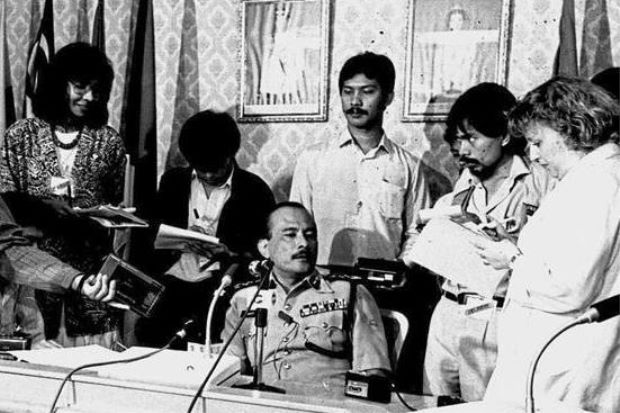
Police crackdown: The reasons the police gave for the mass arrests under Ops Lalang was that racial riots were imminent.
Thirty years after the operation, some of the same issues – race, religion, language – still plague some of our politicians.
MOST Malaysians are familiar with the popular rationale in politics, that there are no permanent enemies, or permanent friends, but only permanent interests.
The saying was made famous in the 1960s by African American politician William Clay who was heavily involved with civil liberty groups and unions, but never pretended to be above the practicalities of political battleground.
But the congressman would himself be surprised by what’s happening in Malaysia. Just 30 years ago, then Prime Minister Tun Dr Mahathir Mohamad ordered a crackdown on more than 100 politicians, non-government organisation activists, academicians, students and more.
Ops Lalang, literally translated to mean Weeding Operation, saw what was probably the biggest arrests of dissidents under the Internal Security Act, although some opined that the arrests during the May 13 racial riots were bigger.
The reasons given now is that the police had to reduce racial tension, which had reached a “dangerous proportion” and that “racial riots were imminent.” Dr Mahathir has pointed the fingers entirely at the police.
But some of the victims, till now, have insisted that it was “designed to control his opponents” through the ISA.
In a nutshell, the mass arrests took place against the backdrop of a divided Umno, with Team A led by Dr Mahathir, and Team B led by Tan Sri Tengku Razaleigh Hamzah and Tun Musa Hitam.
Razaleigh is the Gua Musang MP and Musa was the deputy prime minister. Dr Mahathir narrowly won but faced a legal challenge which led to Umno being deregistered later on.
Then, there was the emergence of the NGOs, which irritated Dr Mahathir, including consumers, environment and civil societies, calling them “tools of foreign powers.”
The MCA and Chinese education groups, meanwhile, protested the switch to Bahasa Malaysia as a medium of instruction for optional courses in the departments of Chinese and Tamil studies at Universiti Malaya, and the Education Ministry’s move to appoint some 100 senior assistants and supervisors – all non-Chinese speaking – to Chinese-medium primary schools.
A demonstration was held in Kuala Lumpur, attended by prominent politicians, including those from MCA, DAP and Gerakan. The meeting called for a three-day boycott in Chinese schools if these issues were not resolved, but it was never seen through.
However, 50 schools went ahead, probably because they didn’t know about the call off or disagreed with the postponement.
Meanwhile, Umno Youth retaliated by holding a gathering in Kampung Baru, up in arms against the pressure applied by the Chinese educationists. Prime Minister Datuk Seri Najib Tun Razak was then the Umno Youth chief.
There is a myth that Najib waved a keris and asked for the weapon “to be soaked with Chinese blood.” But none of my colleagues, other reporters or photographers who were there saw such a thing. Believe me, there would have been photographs to prove the point. However, there was a placard with those seditious words and that is documented in the Government’s White Paper on Ops Lalang, which was tabled in Parliament on March 28, 1988.
Without doubt, there was tension at the rally but fortunately, rain fell that day and took away the rising temperature after the thousands of angry people ran away to take shelter.
But the air in KL was still toxic with fear gripping the city as shops began shutting down.
And just to help tip the scale, the rampage of a mentally-challenged Malay soldier, killing a person (a Malay) and two others, with an M16 rifle in the Chow Kit area, set sparks to more rumours.
Fast forward to 2017 – Dr Mahathir is now an Opposition leader who heads Pakatan Harapan. He plans to meet many of the former Ops Lalang detainees today in Penang.
The irony is that many of the politicians he threw in jail are now on his side. They include DAP leaders who were then arrested under the ISA.
And of course, the DAP has publicly declared that they want Datuk Seri Anwar Ibrahim as Prime Minister if the Opposition front wins the next general election.
It was also Dr Mahathir who locked Anwar up under sodomy charges, saying the latter was not fit to be a prime minister. But they are now allies, even if, for a while.
There is also another irony. The fact remains that when Anwar was Education Minister, he directed all state education departments to allocate land reserved for schools, solely to national schools. He was also the one who sent non-Chinese speaking headmasters to Chinese schools.
Anwar will also be remembered as the Education Minister who publicly announced that he was giving only RM10 to Chinese schools, which was widely reported in the media. In Catholic schools, the crosses had to come down.
The DAP leaders who were detained during Ops Lalang paid a price for standing up against Anwar, but today, they are calling for him to be PM.
Clay would have choked to see how his popular adage is being played out in Malaysia.
Our younger generation obviously have no idea what took place in the months leading up to Oct 27, 1987.
Some journalists, who are now in their 30s (who were only born after 1987, or were in primary school then), have no clue of the detailed political games that went on.
Dr Mahathir shut down The Star, Sin Chew Jit Poh and Watan for five months. And most of us, including this writer, lost our livelihood. In the case of The Star, we had taken a strong stand on the Chinese school issue.
On the morning of The Star’s suspension, a Special Branch officer, who was a friend, called me up to say we should have breakfast.
We went to a nearby coffeeshop, and as he discreetly inquired about my work, I was unaware how the day would pan out. Working in Penang, I had no idea the Home Ministry would deliver the suspension order to my editors in KL.
My SB friend had come to see me too early – he just wanted to know what the reporters would be doing next, as he had to file a report. I told him later that we had been asked to go on leave indefinitely.
But as the day proceeded, we were glued to our computers as news kept pouring in, almost incessantly, of people being arrested.
While we were familiar with the Opposition politicians, some names just drew blank looks. It was very much later, that the police revealed that some were arrested for communist activities, and some church leaders taken in accused of converting Muslims. And since they were ISA detainees, it was decreed there was no need for details to be provided.
One person I kept updated of the arrests was academician Dr Chandra Muzaffar, who called me. But since I was on my lunch break, I told him I would call him back. And, to my word, I called him back, though it was his wife who answered the phone and told me, “they took my Chandra away.”
There was another rude shock. Someone I met for tea at Gurney Drive, where the Consumer Association of Penang office was located, was subsequently arrested. She was CAP’s legal official, Meenakshi Raman.
Frightened and shaken, the National Union of Journalists held discussions with the Home Ministry and police, and was assured that no reporters would be arrested, but not many believed what they were told.
Just months earlier, Dr Mahathir had already lost his patience with the NUJ for getting its members to wear black armbands to Parliament and to stage protests outside their newspaper offices nationwide against amendments to the Official Secrets Act.
A few of my editors fled, fearing their names were on the list, and in the days before the mobile telephone, it was impossible to reach them. Well, they would not be using any device today either, for fear of being detected.
Few of us slept peacefully at night, worried that the cops would come knocking. We learned that the cops preferred to make arrests in the wee hours of the morning since the targets’ defences would be down.
But it was the five months’ suspension that hit us the hardest. Christmas and Chinese New Year passed, without any news of us returning to our jobs, and funds were running low.
There were many sympathetic employers, but they, too, expressed belief that we would return to our newsmen jobs, and they were not wrong. We love our jobs too much.
Paradoxically, the loss of a job did not deter me from winning the heart of my future wife, Florence. Even though I was jobless, penniless and possibly, without a future, they were not issues with her. For me, I didn’t have to think twice, this was the woman I wanted as my wife. And she is the best thing that has ever happened to me.
More than 30 years into the job, like many seasoned journalists, some of us have grown cynical and lost our sense of idealism. We do not see the world through rose-tinted glasses, and prefer to lump politicians in the same category.
The so-called heroes we once looked up to, may not be the same people we idolised, and for politicians, for all the good things that they may have done, harsh judgment is par for the course.
Many of us have forgotten that it was Najib who abolished the ISA. He also took away the need to renew the printing permit for newspapers, but of course, the obsolete law still requires the application of a printing permit – which is ridiculously odd in the digital age.
Najib’s biggest decision as Education Minister was to give up his power – as then provided for under Section 21(2) of the Education Act – to close down Chinese schools and convert them to national schools.
That single act of giving up his authority surely removed the uncertainties that hung over the heads of the Chinese community.
And on the eve of the 30th anniversary of Ops Lalang, Najib approved the setting up of 10 new Chinese primary schools in Johor and Selangor, and the relocation of six other Chinese schools.
Shifting political interests have seen politicians, who thumped their chests in the name of political principles, actually discarding their values.
DAP who fought PAS for years suddenly asked voters to back the Islamist party in 2013 and now, they are squabbling again.
Now in 2017, after decades of fighting, Dr Mahathir and DAP have become bosom buddies. Meanwhile, Umno and PAS, both long standing rivals, are playing footsie and heaping praises on each other.
Some of us remember how their rivalry was so bitter at one time that supporters of both parties refused to even pray together in the same mosque.
As American writer Mark Twain, once wrote “truth is stranger than fiction but it is because Fiction is obliged to stick to possibilities; Truth isn’t.”
And 30 years later, race, religion and language still consume Malaysian politicians, adding to the melodrama. There are many same old actors on stage who never seem to fade away. They are still acting, you may say.
A moderate Malaysia, the way to go
The recent actions of the Rulers and the strong statement issued by the Conference of Rulers are a beacon of hope, just when things seemed a bit pessimistic.
IT can get pretty daunting being a Malaysian frequent traveller, what with the silly questions we have to deal with from foreigners about our country.
I can’t be the only one getting annoyed or becoming overly sensitive to these inane queries.
And Americans top the list of clueless foreigners, who are generally poor in geography. A large number of them struggle to locate our country on the atlas or globe.
Many can’t seem to wrap their heads around it when I tell them Malaysia is sandwiched between Thailand and Singapore, and I get nothing more than blank looks. It’s the same story in some parts of Europe, too, except for England, Ireland and Scotland.
As loyal Malaysians who love our country dearly, we get hurt when foreigners, especially those who have never set foot on our patch, form bad impressions of our land.
Unfortunately, Malaysia has found itself in bad light lately, with many instances being self-inflicted.
We have even become the butt of jokes in some American talk shows, which have massive following the world over.
Malaysia has become a punch line, and that’s certainly not the handiwork of wit. We can’t just shrug off this source of embarrassment or dismiss it because these nasty remarks will invariably impact us sooner or later.
Malaysia is part of the international community, with boundless resources spent on wooing foreigners and tourists to spend their money here.
Statements by national leaders and government officials that are ill-conceived undo all the hard work and energy contributed by the Government and private sector to project a good image of our glorious nation.
On a recent trip to Britain and France, I engaged in conversation with several top bankers and businessmen.
They wanted to pick my brain about the “investment climate” in Malaysia, so I duly anticipated questions about the impending general election, political scenario, whether the present Government would remain, and even the 1MDB issue which are essential deliberations for anyone hoping to invest in Malaysia.
Instead, I was queried about the controversial ban of a beer festival, gay tourists and the launderette issue. I was flabbergasted.
I was caught unprepared because I had assumed these were domestic concerns, and given that we’re in the run up to the general election, dubbed the silly season by the journalistic fraternity, politicians and public figures are known to stoke the fires of controversy. Perhaps I was naïve.
But information travels swiftly, and unfiltered, and even unexplained, in the age of digital media. No one cares about the follow-up explanations and rectifications. They only remember the initial report, which is often the most damaging.
For a taste of the extent of such negative news, just Google, and count the number of countries that have reported these controversies – and this is just those we can track in the English language media.
The Muslim-only launderette issue made it all the way to France, Hong Kong and Britain, among others.
As the Sultan of Johor, His Majesty Sultan Ibrahim Ibni Almarhum Sultan Iskandar rightly put it, Malaysia is not a Taliban country.
But we are in danger of the world thinking we are headed that way if our leaders aren’t prepared to stand up for our moderate image.
It looks like moderate Malaysians have to rely on the royal institution to uphold the principle of moderation.
Perhaps our Rulers do not need to canvass for votes, unlike our politicians, but surely, we must stand up and speak up for what we think is right.
Some misguided groups and individuals are already using bullying and intimidation tactics on those attempting to defend our moderate way of life.
Liberal Muslims are being threatened and dismissed in a derogatory manner, and they are put together with non-Muslims, tagged with the term kafir or infidels. Never mind that the Federal Government has been promoting moderation.
Incredibly, liberals are being lumped into the category of atheists and hedonists, instead of being viewed merely as progressive, as clearly espoused in the Rukunegara, which calls on Malaysians to uphold the liberal approach.
Christians and non-Muslims are being treated by some misguided individuals as if they pose a threat to the country. These self-serving people are also giving a twisted interpretation of Christian evangelism.
Even the royal institution has been criticised, given what has been splashed in social media. At least a couple of individuals, using deeply offensive words, have crossed the line and stepped into the realms of sedition.
It is important that our figureheads are aware of the long-term implications of the democratic institution if theologians, who are not elected, become more authoritative and louder than our national elected leaders.
Malaysia has a solid track record for its parliamentary democratic system, despite its flaws, because it has managed to pull the country together.
The predominantly Malay leadership has also exercised readiness and willingness to uphold the power sharing concept, which we must recognise and appreciate, though sometimes, it gets lost in the heat of the political climate.
The Malaysian royal institution has been a unique one and the respective Rulers, despite being the heads of Islam in their states, have demonstrated exemplary leadership qualities and fairness to Malaysians of all faiths.
We can’t allow the royal institutions to be challenged by anyone in any way. And we won’t allow those who harbour such outrageous agendas to proliferate.
The recent actions of the Rulers, and the strong statement made by the Conference of Rulers, are a beacon of hope, just when things seemed pessimistic.
My message to my foreign listeners remains the same – I believe in Malaysia, and the majority of us remain committed to moderation, regardless of our race or religion.
There’s a lot more to Malaysia

IT’S fair comment to say that most Malaysians have probably never heard of Datuk Nasrun Mansur (pic). After all, he is seldom in the news.
But this Sabahan is the Deputy Plantation Industries and Commodities Minister serving at federal level. He is also MP for Silam, which has the highest number of Umno branches in the country.
With close to 500 in his constituency, he has the respect of Umno leaders. However, many self-proclaimed political experts barely know the existence of this place, which is bigger than some states in the peninsula even.
Commuting between Kuala Lumpur, Kota Kinabalu and Silam, this soft-spoken law graduate of Universiti Malaya has no idle time when he is at his parliamentary constituency.
On a given day, he can be seen meeting at least 15 supporters and workers at a coffeeshop, right opposite the Lahad Datu airport at about 8am.
Nasrun looks set to retain his seat, but Silam is a complicated constituency.
That’s how Sabah’s east coast politics have always been, though. Much is based on a sense of family and ethnicity.
Forget colossal political rallies parading issues like 1MDB, the bane of Semenanjung folks’ existence, it seems.
The key to retaining the seat is ensuring he has the ear of the various ethnic groups like the Bajau, Suluk, Idaan, Cocos, Kadazandusun, Sungai, Iranun, Banjar, Bugis, Chinese, Indians and more.
On paper, Silam looks homogenous, with 80% of the voters Muslim, but there are plenty of differences, and even a hint of tension. To add to the complication, there are also later migrants, like the Filipinos.
The area’s proximity to the Philippines led to the intrusion of 200 Sulu militants into Lahad Datu in 2013, and that tragic blood bath is probably the singular thing that Semenanjung folks, who have never stepped into Sabah, know of this district.
It takes plenty of political skill to deal with the ethnic complexities of Silam. Although it has a little more than 50,000 voters, they are spread over and found in small communities, and some reside in isolated areas, too.
No leader can succeed by banking on the support of one ethnic group, and Umno has somehow managed to stitch together the multi-ethnic dynamic like an indestructible fabric. Perhaps, it helps that Nasrun is three quarters Suluk and one quarter Idaan.
Silam is part of the 10 east coast parliamentary seats, which have traditionally been the bastion of Barisan Nasional.
The so-called fixed deposit seats are Kalabakan (MP Datuk Abdul Ghapur Salleh), Kinabatangan (Datuk Bung Mokhtar Radin), Libaran (Datuk Juslie Ajirol) and Beluran (Datuk Seri Dr Ronald Kiandee). Even the Tawau and Batu Sapi seats, held respectively by PBS’ Datuk Mary Yap and Datuk Linda Tsen, are safe bets.
But Silam, located next to Parti Warisan Sabah president Datuk Seri Shafie Apdal’s Semporna parliamentary constituency, is under Putrajaya’s glare.
For starters, Shafie’s brother, Datuk Mohd Yusof Apdal, is the state assemblyman of Lahad Datu, under the Silam parliamentary seat. Interestingly, Yusof is the Silam Umno division head who defeated Nasrun in the last party polls. The other two state seats are Kunak and Tungku.
Some see Silam as an extension of the Semporna families, while supporters of Nasrun said that Shafie had to bring in “busloads of Semporna voters to Silam to make up the crowd (there)”.
Nasrun won by a scale-tipping 13,387 majority in the 2013 general election, where he competed against three opponents. This time, with the inclusion of Shafie’s Warisan, the opposition will likely be further fragmented, which should play nicely into Barisan’s hands.
Shafie is Sabah-centric and has refused to work with the other peninsula-based opposition parties. However, he has milled quietly on the ground. He has, in fact, disappeared from the national news, and that’s because he understands the workings of rural Sabah campaigning.
If Silam is regarded a political jungle, then Lahad Datu is also the home of the world famous Danum Valley.
It is probably one of the most beautiful places on Earth with its 130-million-year-old jungle, established as older than the Amazon in South America.
Following conversations with politicians, community leaders and voters in Silam, I took a three-hour bumpy road ride into the jungles, where TV, Wi-Fi and the Internet are non-existent.
The Danum Valley Conservation Area is a 438sq km tract of relatively undisturbed lowland forest with an extensive diversity of tropical flora and fauna.
In many ways, this is the work of Sabah’s Chief Minister Tan Sri Musa Aman, who has built a good track record protecting huge forest areas, using the resources of Yayasan Sabah.
I trekked through the jungles of Danum Valley for three days and saw at least five orang utan, gibbons, red leaf monkeys, mousedeer, snakes and colourful insects, such as the Chinese lantern bugs, which I have never seen up-close.
I also had the pleasure of seeing the flying lemur, stick insect, Borneo tarantula, bearded wild boar and giant forest ants, all in their natural habitat.
As night fell, in the complete darkness, I saw sprinkles of fireflies, dancing elegantly in their glow, and as I glanced at the clear skies, I saw stars like I never saw them before, shining brightly.
I cannot remember the last time I saw the sky filled with that many, shining like diamonds. Not in Kuala Lumpur, for sure. These were magical nights for me at Danum Valley.
I woke up at 4am in the morning, took a 45-minute ride in a jeep, to catch sunrise and see the sprawling blanket of mist and low-lying clouds hovering over the rainforest of the valley, aptly described the “skyscraper of trees”. I’ve never felt so peaceful and calm before. It was like experiencing heaven on Earth, I would think.
At the pristine rivers, I slipped my tired feet into the crystal-clear waters as little fishes came nibbling at my feet.
The leeches, mosquitoes, and other minor discomforts might seem discouraging, but I left Danum Valley with a heavy heart. I simply long to go back.
At the airport, while waiting to board the plane for the flight home to KL, I bumped into Nasrun again. Ever the legal man, and armed with a John Grisham book, he told me he was “working hard”.
Silam and Danum Valley have something in common – they are both jungles, and are beautiful and dangerous at the same time.
If you think you know Malaysia, this could be time to reassess that opinion.
Another government department, seriously?

YET another government department is going to be set up. Isn’t it common knowledge that the Government has serious budget constraints and is not recruiting to add to an already bloated civil service? And now, another tale of bureaucracy is being spun.
No wonder Malaysian Anti-Corruption Commission chief commissioner Tan Sri Dzulkifli Ahmad is upset over the planned formation of the National Integrity and Good Governance Department (JITN)
Minister in the Prime Minister’s Department Datuk Paul Low has said the proposed department is expected to improve good governance in the civil service.
How would the JITN as a new and probably tiny department be able to do the job? It would probably involve plenty of miracles since there is a reported 1.6 million civil servants to deal with, although Cuepacs says the figure is only at 500,000. It will be a Herculean task to move this mountain of manpower for what’s needed.
Low must surely have good intentions in wanting to set up the JITN, but its objectives and plans remain, at best, vague, at this point.
Its name and role seem almost identical to that of the Integrity Institute of Malaysia (IIM) and Enforcement Agency Integrity Commission.
The IIM, the brainchild of then Prime Minister Tun Abdullah Ahmad Badawi, was set up in 2004 and continues to function.
Its website reads: “IIM’s role is to facilitate the aims and objectives of the National Integrity Plan (NIP). The main objective of IIM is to act as a machinery in the implementation of the NIP towards developing a nation that is of high integrity, resilient and that embraces universal good values.”
The key roles of the institute are: to conduct research related to the integrity of institutions and that of the community; to organise conferences, seminars and forums; to elicit opinions from various sectors on the progress made or on the obstacles faced in implementing integrity; to publish and circulate printed materials as well as formulating and implementing training and educational programmes; to recommend new policies for the enhancement of integrity and ethics; and to advise the Government on strategies and programmes in enhancing integrity.
The voice of cynicism is growing loud and people are questioning the functions of this department, more so if it has no bite. MACC has strongly objected to it, with Dzulkifli labelling it a waste of public funds.
Who can blame the graft buster for being disgruntled? His investigators are overworked and the department understaffed, under budget and now, suddenly, the MACC learns that a new department is to be set up.
If it has no powers and does not concern the MACC, then it is on its way to being another government department which publishes more reports that nobody reads and which will most likely end up gathering dust.
Dzulkifli, who is hard-pressed to secure a heftier budget for his department, has publicly objected to the setting up of JITN, saying the funds could be better used to enhance current enforcement agencies and the wellbeing of its staff.
“What needs to be done is improve and strengthen the laws, human resources and welfare of existing agencies.
“The Government should oversee the welfare of law enforcers. Go and see the conditions of police barracks. They are poorly maintained,” he said.
Dzulkifli urged the Government to re-examine the salaries and housing schemes of law enforcers.
“If we want to decrease corruption and abuse of power in enforcement agencies, the problem will not be solved if law enforcers do not have their welfare taken care of.
“I will defend them (law enforcers) when needed, and take action against them (if they do wrong).
“But we also need to see the state of their welfare,” he told reporters at a corruption-free pledge signing ceremony in Sungai Petani recently.
“Forming a new department will be costly and require hiring new staff. Their scope of duties will be similar to (that of) other law enforcers,” he added.
And even in less-than-ideal circumstances, the MACC has continued with its crime-busting duty, its stats backing up its hard work. Up to last month this year alone, the commission has arrested 728 individuals, including 349 civil servants, 215 members of the public and 151 from the private sector.
So far, 316 people have been accused of corrupt practices this year. Nearly half of them – 155 individuals – are from the civil service. Last year, only 113 civil servants had the long arm of the law catch up with them.
MACC statistics reveal that 1,629 cases (up to last month this year) involved civil servants, compared to 2,008 the whole of last year, with 654 cases concerning members of the public and 174 involving those from the private sector.
Until September this year, 432 investigation papers were opened against civil servants, compared to 526 last year. Half of that figure – 215 – implicated members of the public, 102 members of the private sector, and seven from other categories, including politics.
Up until last month, 756 investigation papers were opened.
Low said the Cabinet has given the green light for the setting-up of JITN to serve as a coordinating body to lead transformational changes in the public and private sectors.
He said the department would focus on good governance, integrity and human rights. How it will co-exist with Suhakam (Human Rights Commission of Malaysia) is something which needs explaining.
JITN received the Cabinet’s nod on July 28, and is currently under review by the Public Service Department pending final approval. The department was previously a division under Low in the Prime Minister’s Department.
There isn’t much the MACC can do now since the Cabinet has already approved the move.
But what the Government should consider doing is to beef up the MACC where manpower and resources are concerned, given the flurry of cases flying its way.
Stop racial and religious hatred

Let’s hear more voices of reason amid the din from critics who assume that being liberal means being hedonistic instead of believing in the universal values of compassion and acceptance.
IT had to take a Sultan and a Raja Muda to settle the Muslim-only laundrette controversies in Muar and Kangar, which raised a ruckus the past week.
The Sultan of Johor, Sultan Ibrahim Ibni Almarhum Sultan Iskandar, spoke at length about his unhappiness with the laundrette and demanded the owner apologise to him and the people of Johor.
The Raja Muda of Perlis, Tuanku Syed Faizuddin Putra Jamalullail, visited the laundrette up north with his mufti Datuk Dr Mohd Asri Zainul Abidin to tell its owner why his business model was not acceptable.
The pin-drop silence of politicians and community leaders was deafening, and it was certainly disappointing to Malaysians in their embrace of moderation.
Worse still, a few people chose to justify the discriminatory act of the laundrette owner in Muar by legitimising it as a business decision, effectively rendering it out of the authorities’ jurisdiction.
None of these explanations were, of course, convincing. In fact, the impression given was that these leaders were prepared to look the other way, be it for political or religious expediency.
By adopting an attitude of indifference, these leaders, because of their own selfish political interests, are prepared to let extremism flourish.
Then there are the near-hysterical comments plastered on social media, which take on racist and seditious undertones, minus rationale or civil discourse, in the process exposing the tyrannous approach of the majority and their intimidating indignation of questioning the issue.
Deep in our hearts, though, we certainly know that such discrimination by the laundrette owner is out of line. Any rational and level-headed person would know the difference between right and wrong.
No one would tolerate nor accept any non-Muslim laundrette owner applying the same discriminatory policy. In fact, one would shudder to think of the wrath such an action would generate.
In all likeliness, it would be absolute pandemonium. Can we even cast a blind eye to the obvious and pretend that this was a decision based on commerce?
Honestly, none of us will condone job advertisements denying access to specific races in job applications. We should stay away from employment opportunities that have racial prerequisites like “Chinese only”, when the job scope merely demands basic requirements. It’s time for employers to be hip to the benefits of having racially diverse human capital.
However, if the job involves a language requirement, for example a travel agency dealing with Chinese tourists, the tour provider would obviously want Mandarin-speaking applicants. Likewise, a Chinese media house would require candidates who read and write the language.
The non-Chinese could naturally feel marginalised, but it’s interesting to note that many Chinese in Malaysia, including this writer, can’t read or write Chinese. Many of our Malay and Indian brethren find themselves in a similar predicament, so the playing field is level in this respect. So, if we think there is economic benefit to the language, the only way forward is learning the lingo.
Similarly, companies doing business in Arab nations may insist on having Arabic-speaking applicants and surely many Malaysians, including Malays, may find themselves unsuitable for the task. We can’t cry “discrimination” in these circumstances.
There are other examples, too, like putting out a notice to say that a property will only be rented out to those of a particular race.
So, when Malaysians engage in heated and accusatory rants against Africans, they are ultimately making derogatory and racist remarks, too.
While we’re generally careful in commenting on the racial make-up of Malaysians, at least publicly, we barely give it a second thought when it involves foreigners. Suddenly, sensitivity flies out the window.
Then, there are those who believe that the minority must bow to the majority. It’s now being shoved down our throats that the liberal minority has to accept the conservatives’ majority.
So, who decides that being a liberal is now a crime or even a dirty word? None of these “geniuses” would be able to explain why our Rukunegara has enshrined that it “guarantees a liberal approach towards her rich and varied cultural traditions”.
For inexplicable reasons, these critics of liberalism seem to believe – in their imaginative minds – that being liberal means being hedonistic, atheist, agreeable to the practice of free sex and homosexuality.
It never crossed their minds that it could mean believing in the universal values of democracy, human rights, compassion, tolerance, acceptance, moderation, gender equality, respect for multiculturalism and diversity – values all religions stand for.
In Malaysia, liberalism is now a word abused by religious authorities and extremists to demonise those with alternative views on race, religion and politics.
But as the voices of bigots, racists, religious extremists and right-wingers grow louder and more demanding, our politicians are maintaining an eerie, unnerving silence as they are desperate for votes, even from these fringe groups.
Unfortunately, the majority of decent Malaysians are not ready to speak up, preferring to cheer on the few outspoken advocates of moderation to do the job and face the firing squad on their own.
But that’s not good enough. The private discontent can only be addressed if effective and strategic measures are put in place to tackle this at the source.
So, when no voice of reason seemed to be in sight, His Majesty Sultan Ibrahim spoke up for all of us Malaysians.
Tuanku’s strong words of fairness and justice, and the true teachings of Islam – to respect other religions as well – was a beacon of humanity. More importantly, he reminded his subjects that he was the head of Islam in the state.
His Majesty is right – if the Muslim-only laundrette was allowed to continue its operations, it would only encourage others to follow and soon, the situation could spiral out of control.
Soon, we will have ride-sharing drivers who only pick up passengers of their preferred races. It will have a dangerous and detrimental domino effect.
Recently, a spa in Selangor was said to only accept female Muslim clients, another disconcerting incident which went viral on Wednesday. But when this newspaper investigated, the wellness centre said it accepted customers of all races.
We can’t be sure if the centre was the target of business rivalry or truly embraced that policy, but the owners certainly shuffled their feet to set the record straight when the accusation was hurled.
Sadly, the emergence of such claims is heart-breaking for many of us. It’s appalling, and must stop.
Just pause for a moment to think – when we are on a hospital bed, does the race or religion of our blood donor even matter?
In those dire moments, we would only be asking for the best doctor and nurse to treat us, or at the very least, to keep us alive. The race and religion of the medical practitioners are not even called into question.
And certainly, none of us who desperately needs an organ transplant would bother to deliberate the racial and religious origin of the donor. Isn’t that the truth?
For those who preach racial and religious hatred, think about this seriously. God has a way of making people remember, or regret, especially those who dare use His name in vain.
Moderation, the way to go
PAS, or any other group, should not be allowed to use religion to challenge Malaysia’s social climate and political system.
THERE have always been beer festivals in Malaysia, with St Patrick’s Day and Oktoberfest celebrated on a large scale annually by beer drinkers. It is common knowledge that the target crowd here is the non-Muslims, and drinkers are left to enjoy themselves during these celebrations.
Then, there is the Better Beer Festival, which has been held five years consecutively, without incident or complaint.
Malaysians are known for many things, and most prominently, their degree of acceptance and respect for each other. But that open-mindedness is worryingly corroding. The world, as we know it, is no longer the same. And Malaysia is no different.
Last week, the Inspector-General of Police Tan Sri Mohamad Fuzi Harun said the beer festival could not go on for fear of possible attacks by militant groups.
He said the police had received intelligence indicating that a militant group was planning to sabotage the event and that few parties planned to cause trouble during the event.
This is certainly disturbing. It means the level of tolerance here is being challenged, and if this is allowed to go on, we are pandering to extremists, at the expense of our moderate way of life.
Foreigners will be struggling to make sense of this event’s cancellation, and wonder how it now even involves security concerns. It was bad enough when word went around that the reasons were political.
While the police have not revealed much about the militant group, we are thankful to them for their unerring vigilance against emerging terrorist cells, including those sympathetic to the Islamic State (IS).
Terrorism cannot be taken lightly, and that’s the scary truth. The arrests of Abu Sayyaf militants in our capital proved that it is not fiction – the threat is real. These agents of destruction are in our midst.
No one knows when and how they will strike, which is why we must back the police unconditionally in the continued fight against terror activities.
A brewery in Shah Alam was once a target, which turned into a botched job in the end. So, it’s no surprise if a beer festival finds itself in the crosshairs of a terrorist group.
The task for all of us, especially the police, is getting more challenging, with threats targeting the KL SEA Games, even.
But while the shadowy figures in our midst remain unknown, what’s obvious is that PAS has stepped up its demands.
The beer festival has been held for half a decade straight, but suddenly, this year, PAS turns up with a demand for Kuala Lumpur City Hall (DBKL) to cancel the event. And in its typical templated press release, claims that the festival will only lead to moral decay, as it would most likely descend into a pesta maksiat or “vice party”.
This is not only disturbing, but upsetting, because it is clearly an infringement on the rights of non-Muslims.
DBKL could have handled the cancellation better. If the police had advised them to cancel it because of security reasons, it should have just said so. It would be legitimate and more acceptable.
But the local council gave the impression that it was entertaining the demands of the Islamist party, giving rise to speculations that this was the result of a kind of political expediency.
PAS’ clout in pushing DBKL’s hand for a swift course of action, has been rightfully questioned. The party does not even have an MP in Kuala Lumpur, or even a member on the DBKL advisory board.
The precedence set by this beer festival cancellation is intriguing. Threats like these will always exist, but does this mean that from now on, beer events and concerts might be cancelled for security reasons?
Is it not more logical for the police to increase its presence at the event and protect the rights of non-Muslims, instead of allowing such a group to get what it wants?
The Better Beer Festival was supposed to take place on Oct 6 and 7 at Publika Shopping Gallery, KL, featuring 250 different craft beers from 43 breweries worldwide.
The DBKL announcement came a week after PAS central committee member Dr Riduan Mohd Nor spoke out against the event, calling it a “pesta maksiat”, and claiming that it would turn Kuala Lumpur into the “largest vice centre in Asia”.
PAS has attempted to stop nearly every concert and even Valentine’s Day celebrations. When I was a student at Universiti Kebangsaan Malaysia in the 1980s, the party tried to halt a concert by Alleycats on grounds that the show would be a pesta maksiat. Imagine the incredulity of it all?
A combination of terrorist wannabes, extremists, racists, right wingers and politicians posing as theologians is certainly a recipe for disaster for multi-racial Malaysia.
Tan Sri Mohd Sheriff Mohd Kassim, a spokesman for the G25 group of prominent Malays, said: “In future, business organisations will be very reluctant to organise any kind of exhibition or festival for fear that when a political party intervenes with a religious voice, the Government will react immediately to cancel an event.
“Who will dare organise an international event risking last minute cancellation?” he said.
If we subscribe to PAS’ rhetoric, every concert or event will degenerate into a riot of sexual immorality stemming from mingling genders.
Due to its paranoia, check-out lanes in supermarkets are segregated by gender, and the lights in cinemas must remain on at all times. In the party’s state of origin, no unisex salons are allowed to exist, either, and unfortunately in some cases, owners were non-Muslims. A watch shop owner who put up a poster of a Bollywood actress wearing a watch was also fined because it was deemed “provocative”. Again, this involved a non-Muslim owner.
More recently, the Kota Baru Municipal Council (MPKB) fined the organiser of a private fundraiser for not seeking a permit to hold performances during the event, in which three Chinese primary schools with low enrolment were expected to be beneficiaries. The entertainment element of the event only constituted cultural performances in a hotel ballroom, and was not even a public event.
Still, MPKB demanded the event be immediately halted, but the organiser rightly ignored the stop-order and proceeded, since tickets had already been sold, and it was a private function.
The absurdity continued with MPKB recently instructing the organiser of a fun run – which has operated smoothly since its inception in 2015 – to segregate men and women at this year’s event.
Buddhist organisation Soka Gakkai Malaysia’s Kelantan branch said the council made the “gender segregation” request before the application was approved a month ago.
Branch chairman Chew Moi Luan said a notice was put up at the flag-off of the 7km Run for Peace, complying with the request, but most of the 1,400 participants ignored the directive. Bravo!
While what we’re seeing is shocking, let’s get this straight: Malaysia has not become a Taliban country, not as we know it, anyway.
Malaysia is not Afghanistan, Saudi Arabia or an IS-held territory where theologians hold the reign of power. Can non-Muslims be blamed for asking what’s next for Malaysia with heavy-handed approaches by religious bodies?
Understanding and acceptance are essential if we want to keep our beloved nation moderate and rational. The worries of religious intolerance will add to the loss of confidence, so, PAS and the like shouldn’t be allowed to erode our way of life, which we have valiantly protected and represented the past six decades.
PAS, which has been running the Kelantan state government for decades, should get its puritanical priorities right. Fix your own backyard first, because you have bigger moral problems that need serious attention.
Statistics revealed that next to those in Terengganu, Internet users in Kota Baru are the biggest surfers of porn sites, it was reported.
And presumably thanks to Kelantan’s proximity to Thailand, from 2001 to 2016, Kelantan recorded 11,000 HIV-positive cases. A total of 2,255 Kelantanese died of AIDS-related illnesses during that same period.
Deputy Home Minister Masir Kujat has revealed that the state’s Health Department attributed the rising number of HIV cases to promiscuity, and people there adopting morally-questionable lifestyles, such as “switching sex partners”.
Masir noted that HIV infections caused by homosexual activities doubled from 10 in 2015 to 20 last year, with HIV infections through heterosexual relationships also increasing from 40 to 50.
Recently, it was reported that drug addiction among students in Kelantan is at a critical stage, requiring immediate redress.
National Anti-Drug Agency (AADK) director-general, Datuk Abd Halim Mohd Hussin, disclosed that 280 students from 31 secondary schools in the state were tested positive for drugs (mostly for methamphetamine) during urine screening tests carried out on 3,797 students between January and Aug 13.
“Pasir Mas recorded the highest number, with 70 students, followed by Pasir Puteh (44), Kota Baru (43) and other districts,” he was quoted saying.
It’s curious that with such strict imposition of rules and incessant blaming of rape on “scantily dressed women”, the conservative state continues to have the worst record for many social issues.
Simply Google rape cases in Kelantan, and what will roll out will be the most nauseating incest cases involving fathers of underage victims, or their relatives, or someone known to these poor minors – someone they had trusted.
Kelantan may not be the worst state, with cases mostly involving rural areas. But how on earth are we to accept the illogical and warped arguments of PAS leaders, that these young girls were supposed to have provoked their male aggressors by the way they dressed?
Malaysia cannot afford to let PAS or any groups using religion challenge the present social climate and political system, which has successfully seen this country through good and bad times. Our way of striking a balance has catered to a culture of compromise and, respecting and accepting one another.
Our country was built on a bedrock of moderation, and for us to continue to live in peace and harmony, the onus is on us to preserve it.
Malaysian Hospitality, it’s my choice

Golden service: Our cabin crew are the best, and truly deserve the many accolades that have come their way. — EPA
SURELY, we must have heard from frequent flyers that Malaysia Airlines Bhd has lost its lustre and vigour. Our planes look derelict compared to those of Cathay Pacific, Singapore Airlines and Emirates Airlines.
The complaints run the gamut, from food choice to movie selection. The management of Malaysia Airlines must have received this feedback, surely.
Yet, like many Malaysians, I remain loyal to MH. I believe in its Malaysian Hospitality. I have travelled to many countries, got onboard a variety of airlines, and I can vouch that our cabin crew are the best, and truly deserve the many accolades that have come their way.
However, all that can’t gloss over the national carrier’s need to be competitive again. Its troubles haven’t been erased from memory, but faith in the brand is slowly but surely returning.
The airline’s losses in 2014, in the wake of MH370’s disappearance, and the shooting down of MH17, will continue to haunt it. Those massive losses of human life have hurt both the airline and country’s image in a horrible and devastating way.
It didn’t help that the old MAS was declared “technically bankrupt” in 2015. But the dark clouds have blown over. The management has done a remarkable job in turning things around, earning media coverage which said, “so much growth that it doesn’t have enough aircraft to match the demand.”
In June, MAS announced it was buying six second-hand Airbus A330s, and last week, Prime Minister Datuk Seri Najib Tun Razak revealed that the country intends to make Malaysia Airlines buy more Boeing planes, saying: “We are committed to 25 planes of 737 MAX 10, eight 787 Dreamliners and there is a strong probability, not possibility, that we will add 24 or 25 more 737 MAX 10 in the near future.”
So within five years, with the additional purchases, the deal will be worth in excess of US$10bil (RM41.87bil), it was reported.
The 737 MAX 10 will be the airline’s most profitable single-aisle airplane, offering the lowest seat costs ever, while the 787 Dreamliner is a long-haul, mid-size wide-body, twin-engine jet airliner.
The Prime Minister also witnessed the signing of a Memorandum Of Understanding between Malaysia Airlines and The Boeing Company for aircraft purchases and the setting up of a Maintenance, Repair and Overhaul facility in Sepang, worth US$4.86bil (RM20.35bil).
The discussion with Donald Trump was the highlight of Najib’s 911 working visit to the US, where he was invited by the 45th US President.
Najib said the Government would also try to persuade low-cost carrier, AirAsia Bhd, to purchase US-made General Electric engines.
Reading purely into the political spin, the PM is seen spending lavishly, which the country can ill afford at the moment, but Malaysia Airlines needs those new planes badly, as its chief executive officer Peter Bellew attested, “even after buying six used A330s, it seems the airline is still short of empty seats for its aggressive regional expansion plans.”
A recent report states “this purchase of 40-plus long-haul aircraft is a huge deal for an airline that currently has just 21 long-haul aircraft in active rotation (15 Airbus A330s, six Airbus A380s – which it recently considered selling).”
According to AirFleets, “Malaysia has an additional 24 wide-body aircraft currently stored, half of which are (understandably) Malaysia’s retired 777 fleet, which was the aircraft model involved in both the 2014 tragedies. Three others are Boeing 747-400s, which are known for their fuel inefficiency, compared to more modern aircraft.”
Malaysia Airlines also needs to regain premium destinations it lost. Malaysians can no longer fly MH to New York, Los Angeles or San Francisco. It’s disappointing that we have to hop on another airline to get to these prime locations.
The Paris and Amsterdam routes ceased operations early last year, and before that, in 2015, Frankfurt and Istanbul also lost their service, leaving London as the airline’s sole European destination.
This certainly doesn’t bode well for an international carrier since these are golden ticket routes – popular and profitable.
Incredibly, at one time, the old MAS flew direct into Zimbabwe and Argentina even, when decisions were made by leaders without considering commercial concerns.
Malaysia Airlines now has to consign its past to the history books and move on to compete in the highly-competitive aviation business.
The Government has wisely left the job of running the airline to a professional. Who cares if he’s a foreigner? As long as he does it right.
The management has whittled down its staff size because the airline was simply “bloated” at one point. It has stopped the practice of having over-priced food items for passengers.
Malaysia Airlines must, however, remember that it is a premium brand. It is not a low-cost carrier and passengers expect to get what they pay for.
No compromise can exist in the food quality, entertainment offerings and luxury of the business class, where airlines rake in the bucks. Now, even Wi-Fi is a prerequisite.
Two “new” movies in a movies package doesn’t cut the mustard, especially when other airlines offer hundreds of selections from multiple genres.
Frequent travellers also want the menu to be regularly updated, even if they are able to pre-order their food before boarding (for high-paying passengers). Certain things simply cannot be compromised for long hauls, though.
Our national carrier could do well to remember that we are not mere passengers, but customers, too. As the client, it’s fair game to expect some pampering.
Najib has made the right call to buy more planes for Malaysia Airlines. It is long overdue, more so because planes are not delivered to the buyer the day after purchase.
My choice is clear – a Malaysian airline comes first – whether it’s Malaysia Airlines or AirAsia – because I believe in supporting a Malaysian brand. Give me the satay and sincere smiles, any time.
Same country, different world
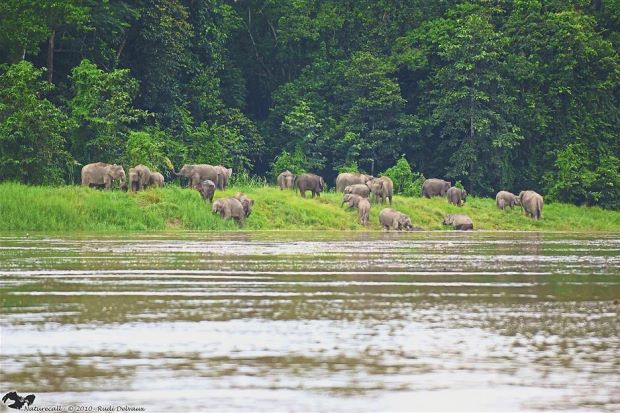
Rare sightings: Foreigners camp out for months along the Kinabatangan River just for a glimpse of the pygmy elephants.
The beauty and simplicity of Kinabatangan remain lost to Malaysians who are caught up in their own political bubble.
MANY Malaysians, especially those from the peninsula, are probably clueless as to where Kinabatangan is.
In fact, were it not for the notoriety of Datuk Bung Moktar Radin, the four-term parliament member for the constituency (which is the size of Pahang), most would never have heard of the place.
His off-colour, sexist and offensive remarks in the Dewan Rakyat are still remembered two decades on.
Tongod – a remote district in Kinabatangan – is bigger than the state of Selangor. Amazingly, Sabah can fit four states into its borders and still have room. That’s the colossal size of the state.
Following a recent visit to Sandakan to suss out the political sentiments ahead of the general election, I made a detour and went to Kinabatangan on National Day.
I’ve learnt that the danger of living in the Klang Valley is that many of us assume the rest of Malaysia shares similar electoral aspirations. That typifies the hazard of living in a political bubble. We form conclusions which eventually develop into wishful thinking, simply by talking to our like-minded peers.
However, the key to winning elections is to secure the votes of the heartland, as attested to in the United States recently, a scenario reflected here, as well.
The opinions of people from New York, Los Angeles and Seattle count for little. While he expected the barbs from urbanites, US president Donald Trump also knew he had rock-solid support from South Carolina, Kansas and Alaska, and those from rural areas. He was right in expecting the votes to arrive.
Back in Sabah, I was summoned by the call of the wild. After meeting political stakeholders in Sandakan, talking and listening to politicians, voters and community leaders in this Cantonese-speaking town, I had to see for myself what the jungles of Kinabatangan were all about.
It took me over two hours, via a bumpy trunk road, from Sandakan, to reach Kampung Bilit – a small river bank village with a population of 200, comprising mostly Orang Sungai (river people).
Coincidentally, Kampung Bilit is Bung Moktar’s village. He grew up there. As a kid, he had to take risky boat rides on the Kinabatangan river to get to school in Sukau, having crocodiles for company along his journey.
The people there have built their lives around the 560km river, about 25km upstream from Sukau and 130km from Sandakan city centre, where they catch freshwater prawns (udang galah) and fish for a living.
The village is obviously a Barisan Nasional stronghold as most of the houses were flying the party banner, along with the Jalur Gemilang and the state flag.
Ecotourism ensures villagers are busy ferrying tourists from the banks of Malaysia’s second longest (Sarawak’s Rajang is the longest) river to various accommodation spots along that stretch of water. During our two nights’ stay at a lodge, my wife and I were the only Malaysians there. The rest were from Europe, the United States, and even South America.
The lodge staff revealed Malaysians hardly come to the place, or to Kinabatangan, for that matter.
I was repeatedly asked why I chose to visit the remote place, where WiFi doesn’t exist, cellphone reception is abysmal and there is no television to while away the time.
However, decked in heavy boots and armed with torchlights, we enjoyed the nightly treks (at 8pm), which took us through the jungle and puddles of mud.
Bedtime was routinely 10pm, and we were up by 5.30am for the morning boat rides to watch the animals.
The excited foreigners, with their mouths agape every time they encountered an animal (be it even a bird or insect), travelled halfway around the world to get to Kinabatangan for the experience.
There’s a simple reason to why I made this journey: as a Malaysian, I felt terribly ashamed that I had never ventured to many parts of my own country.
Kinabatangan is a world-famous wildlife sanctuary, renowned for its unique fauna, including the proboscis monkey, pygmy elephant, freshwater dolphin, hornbill, orang utan and freshwater shark.
The world pretty much congregates in this incredibly well-preserved place to catch a glimpse of these animals. Some foreigners stay for months, only hoping to see the rarely-sighted Asian elephants.
These trips come with a caveat, though – sightings are not guaranteed, a condition tourists readily accept. The only creatures we were not keen on seeing were the mosquitoes and leeches that accompanied us on our jungle treks.
While most of what we saw involved pristine beauty, there were the ugly sides, too. Most villagers appreciate the importance of tourism for their livelihood, but are still stuck in their ways.
Plastic bottles littered the river, their source an insignificant detail. I felt embarrassed because as a Malaysian, I would want these foreigners to form a good impression of our country.
Kinabatangan’s rise to fame surely hasn’t gone unnoticed by the lodge staff. Those who can speak basic English, including the receptionists and guides, have prospered from job opportunities.
However, they understand that for Kinabatangan to continue providing them a living, their villages should remain isolated, underlining the need to preserve the jungle as is.
It’s an amazingly beautiful place. It’s not just the array of animals on parade but, as one report said: “Scattered in the area are limestone outcrops, many with caves that harbour large nesting colonies of swiftlets, as well as endemic limestone-inhabiting flora and fauna. The largest and best-known of these limestone hills is Gomantong.”
Kinabatangan, or Kota Kinabatangan (three other towns in Sabah exist with the Kota prefix – Kota Kinabalu, Kota Belud and Kota Marudu), is hardly a town by Klang Valley standards. The Kentucky Fried Chicken outlet there seems to be the nerve centre for the population, which numbers more than 150,000. Foreigners working on the oil palm plantations also make up the community.
My visit to Kinabatangan has been an eye-opener, and not just from a political perspective.
The parliamentary constituency, created in 1966, has been under the control of the Alliance and Barisan from Day One. Voters are scattered all over the vast area, and sometimes, it takes days of travel to reach them. There are regular reports of people losing their way in the jungles, once even including a ranger.
Given what I saw and heard, the outcome of the general election there is anyone’s guess, though history has a way of repeating itself.
Malaysia is all about us
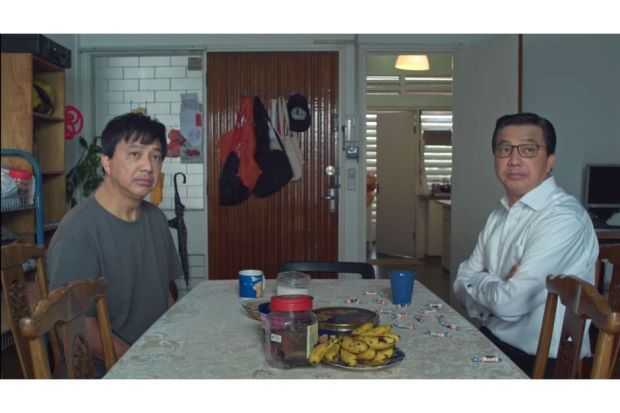
A scene of "Citizen Liow".
A National Day video has sent out a stark reminder to all that we must work towards making Malaysia a better home for all.
NO MCA politician has generated this kind of buzz on social media. The last one who set the Internet on fire, a parliamentary candidate who contested the Bukit Bintang constituency in the last general election, did so with an embarrassing bit of footage.
It was so stirring to the senses that the clip wormed its way into newsfeeds of foreign television stations, at the expense of poor, unsuspecting viewers.
So, it was unprecedented when a video – featuring MCA president Datuk Seri Liow Tiong Lai as a minister, citizen and husband – of this nature generated more than 200,000 views over the last four days, the number still on the rise.
The MCA has sometimes found it difficult to ignite the imagination of the Chinese community. Perhaps, the job of rubbishing the Government is more appealing to the reading, listening and viewing public. Truth be told, it is easier to do that than explain and defend government policies. No surprises then why MCA leaders often end up preaching to the converted, ie, their own party members at its ceramah.
But that changed last week. The six-minute National Day clip has become the talk of the town. It caught on so well that it exceeded the views of videos of the recent SEA Games KL 2017, on YouTube on Aug 30.
In the video, Liow, portrays himself as the Transport Minister engaged in an honest conversation with a citizen (a double act of himself), who is distinctly disgruntled by the way the country is being run.
It is Liow like we have never seen before – the citizen version of him, shabby, dispirited and a little rude, even.
“Citizen Liow” vents his frustrations, echoing the country’s current mood, and brings up the demeaning “balik tongsan” remarks and endemic corrupt practices, among others. At one point, he even throws a fistful of “rabbit” sweets at the minister in his home. The on-screen sparring between both Liows is brutally frank, mirroring the general sentiments of the local Chinese community.
Professional filmmakers, Pete Teo and Liew Seng Tat, have done a truly respectable job for Liow in addressing issues confronting the community. To call this short film a piece of propaganda is surely missing the deep-rooted points presented.
Come to think of it, not once were words like MCA, Barisan Nasional, One Malaysia or unity, so associated with Liow and other Cabinet members, ever uttered. This National Day, no one was asked to be grateful to the Government.
In fact, we should have reminded the elected leaders to be grateful to the people, instead, for placing them in those lofty positions in the first place.
At a time when politicians are put under the microscope, their every move scrutinised, Liow has taken a fresher route. He has addressed and opted to deal with issues that have not only bothered, but hurt the community for the longest time.
It is pointless telling the Chinese that Malaysia is their home, only to have extremist groups heckle them to “go back to China”. Inexplicably, these groups seem to enjoy unparalleled immunity and are spared any kind of punishment for their public display of disdain.
Liow has attempted to grab the bull by the horns, as depicted in this video, as he genuinely admits his failings and shortcomings, conceding that he could have done more for the community, but was crippled by stinging criticism of how the country is increasingly being divided by race and religion.
He has chosen a difficult subject, one which Malaysians prefer to grumble about within the community or in hushed tones, and certainly not at a time when the country celebrates its 60th year of independence, with flag-waving initiatives aplenty.
In fact, the MCA president’s throw of the dice has paid off, and quite handsomely, too.
A writer on a pro-Malaysiakini forum, known for its critical MCA stance, said “the MCA president has never ever before experienced this level of publicity. This scares many groups of people.”
“For his opponents, the enemy whom they deemed ‘inconsequential’ suddenly has access to a large audience. The opposition has gone into defence mode by attacking. As they unleash their trolls and attempt unlettered interpretations of what is basically a film calling for national unity and hope, they shame themselves by taking a tribal hardline to a non-partisan message.”
The writer added that “the video tugged at the heartstrings even. People of all races have seen it as a unifying force. It has created a greater understanding of how the Chinese in Malaysia feel, and imparts the importance of understanding each other’s grouses if we want to heal the nation.”
The reality is, Malaysia is our home. There is no other place for us. Not Indonesia, Saudi Arabia, China or India. As Martin Luther King Jr said, we came in many ships but we are now in the same boat. For better or worse, we have been brought together by destiny and we must work to make Malaysia a better place to live in.
Criticising the government of the day is fine, but running the country down is unacceptable because politicians come and go, but not our country. Our home stays the way it always has. And who else to better take care of her than us?
Liow, in this National Day season, has sent us this reminder, particularly to the Chinese community.
It is easier to be the champion of a particular community by ramping up the single-race rhetoric, but much harder to balance the demands of the ethnic groups which make up Malaysia.
But because we have practised a culture of understanding and acceptance, there is no reason why this shouldn’t continue to work. After all, Malaysia is about all of us.