Author Archives: wcw

Stand up for Team Rimau

The world is divided by well-meaning doers and self-serving whiners, so we should try to remain on the right side of that divide and not be plagued by negativity.  

LET’S be honest and look at the bigger picture. Most Malaysians currently consumed by the Kuala Lumpur SEA Games 2017 are only concerned with the country wrapping up the tournament with the heftiest gold medal haul.

Minor glitches have reared their heads, but that’s only natural at any international sporting meet involving thousands of participants.

I think it was grossly unfair, and even smacked of prejudice and bias, when some groups picked on the organisers of the games for these negligible oversights, attempting to give the perception that the KL SEA Games has been shambolic.

It’s fair to say most of us believe that, from the stunning opening ceremony to the steamrolling momentum of the Malaysian team in collecting gold, we are radiating with pride for our country and our Team Rimau.

The multi-racial teams which have been scooping up the medals have restored much-needed national morale and pride, which, rightly or wrongly, appears to have slid down a slippery slope in recent years.

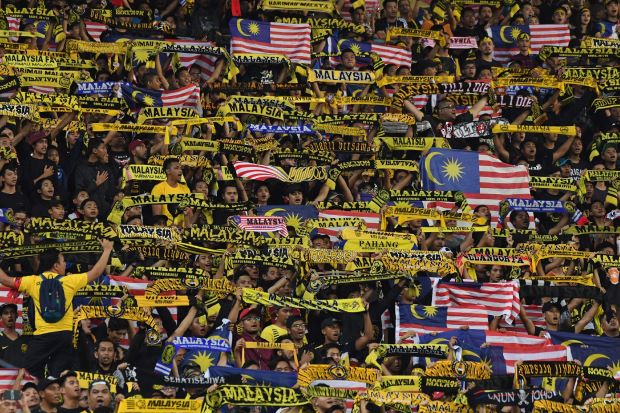
But suddenly, in absolute tribute to the games, a feel and sense of togetherness has washed over us. Malaysians of different races and religions are celebrating as one people, cheering Team Rimau in a unison voice of support in every competing event.

That’s all we really need to care about. It’s what matters most ahead of National Day and Malaysia Day. And the timing couldn’t have been better.

The biting reality is that controversies are par for the course at these events, and the SEA Games is no exception.

In the 2015 Singapore SEA Games, their countryman, Rajendran Kurusamy, was charged for fixing a football match between Timor Leste and Malaysia.

Deputy public prosecutor Nicholas Khoo described Rajendran as “Singapore’s most prolific match-fixer, in terms of convictions” and noted that the jail term was the “highest sentence imposed on a match-fixer on a single charge”.

Rajendran, 55, pleaded guilty to two charges under the Prevention of Corruption Act. He was handed a 42-month jail term for agreeing to slip S$15,000 to the Football Federation of Timor Leste’s technical director Orlando Marques Henriques Mendes to buy the game for Malaysia.

The second charge, for which Rajendran was meant to serve 48 months’ jail time, involved him offering S$4,000 per piece to at least seven Timor Leste players as inducement to lose the match.

The games-opening hoodoo struck the 2015 SEA Games unannounced. Sharon Au, an emcee for the opening ceremony, had to apologise for her purported insensitive actions.

In an audience exchange segment before the ceremony proper, Au apparently approached an Indian girl, and after speaking to her, adopted a strong Indian accent in her commentary.

Posting on Facebook, AFP journalist Bhavan Jaipragas branded the move a display of “racism”, saying Au also “made fun” of the girl’s name, and demanded an apology from the Games organisers and Au herself.

But before even pointing fingers elsewhere, closer to home – in Kuala Lumpur yesterday – RTM admitted making errors when displaying the flags of certain participating countries during its SEA Games showcase and vowed action would be taken to prevent similar occurrences.

The national content provider’s director-general of broadcasting Datuk Abu Bakar Ab Rahim confirmed apologies have been extended for the mistakes which appeared during the news segments on Thursday and Friday. He explained that the mistakes occurred at production level while attempting to update the medal tally, which was constantly evolving.

And with variety being the spice of life, what else is there to look forward to? Upside down flag? Well, the hottest news two years ago was how Filipino winners for the men’s and women’s 100m sprints were left embarrassed when it turned out they had been wearing their country’s flag upside-down.

The strips of men’s champion Eric Cray and women’s winner Kayla Richardson both sported upside-down flags – the red on top – sparking a minor outcry back home.

It’s not clear who messed up and how these runners, said to have spent more time in the United States than the Philippines, were not even aware of the gaffe.

And that’s not even the end of it. Believe it or not, there are even more instances of name and shame.

Singaporean journalists were accused of jeering Malaysia’s netball team during the finals.

They were overheard heckling “balik kampung” (go home to your village) during the game, according to the head of the Sportswriters Association of Malaysia, who said he was “shocked” when he heard about it.

Most of us may have forgotten or have simply been unaware that at the 2011 SEA Games in Indonesia, a Malaysian flag riddled with flaws was used during an awards ceremony.

In fact, the Jalur Gemilang was depicted with less than her 14 stripes.

The Indonesian media, in its take on the misdemeanour, pointed out that its own country committed similar blunders six years ago during the hosting of the Palembang games.

The country was hung out to dry by local website Kompasiana.com, pictures of mismatched flags with participating countries dotting various locations, including a bank, restaurant, hospital, university and hotel, not boding well for the organiser.

Malaysia’s Jalur Gemilang was flown upside down at the Gedung Asuransi commercial centre on Jalan Jendral Sudirman, the canton containing the crescent and 14-pointed star at the bottom.

We neither threatened to attack websites, nor lodged a protest. And we certainly didn’t get so riled up that every figurehead had to figure into the unfortunate circumstance.

Sure, the Indonesians requested an apology for the error, but to their credit, the heads of the Malaysian and Indonesian delegations firmly had their thinking hats on, and so, didn’t persist with the issue.

Granted someone, presumably from a public relations company hired to put the guidebook (which was distributed to VIPs during the opening ceremony) together, fumbled. It was human error, and unfortunately, a bad one.

Poor Youth and Sports Minister Khairy Jamaluddin and Foreign Minister Datuk Anifah Aman had to apologise for it.

If the Indonesians were upset, and legitimately so, some of us lost the plot and went further by demanding a police investigation. For goodness’ sake, it was a sloppy mistake – that’s all. Let’s not go overboard and demand for heads to roll. There are people who put their heart and soul into this work, trying to make an honest living off it.

And surely our police have more important things to do than volunteer to investigate this guidebook bungle, which is likely borne from our fear of offending the Indonesians, above all else.

Of course, there are some of us who love kicking ourselves, too. One melodramatic columnist highlighted this blunder, but mid-way through the rant, went off the rails, complaining about gangsterism in schools, the indestructible spectre of 1MDB, auditor-general’s reports and traffic jams, suggesting all is not hunky dory in this country.

That said, the headlines on cases of food poisoning aren’t covering ourselves in glory either. But even in squeaky clean Singapore, during the 2015 Games, several cyclists at Marina Bay South were dealt a similar blow.

The affected also included Singapore’s Dinah Chan who lost her women’s individual time-trial crown and had to settle for the bronze.

At the 2013 edition in Myanmar, the 29-year-old was forced to pull out of the women’s 100km/128km individual road race, also owing to less-than impeccable F&B.

Singapore’s Darren Low, who finished 9th out of 16 cyclists in the men’s individual time trial, said: “The effects of the food poisoning came in. I couldn’t concentrate. That (performance) was the best I could do.”

The point to all of this is: let’s not be too quick to shoot ourselves down. Instead, why don’t we strive to do better, be more effective and competitive, rather than spend needless time dragging Malaysia through the mud to pander to political plots? And why are some of us still struggling to differentiate between love for country and government disdain?

I agree that we should not follow the follies of others and that we should stand on the right side of things. And we must strive to see the forest for the trees.

Truth be told, the world is divided by well-meaning doers and self-serving whiners, so we should try to remain on the right side of that divide and not be plagued by negativity.

Think about it, we could be just days away from repeating history. Surely, we can come together for a common cause, one that has traditionally fused more than divided us.

Let’s unflinchingly support Team Malaysia, because they have earned and deserve it. They have made us proud of our country and for being who we are first and foremost – Malaysians. We tip our hat in sincere gratitude.

Disciplining kids begins at home

A vicious cycle: Bullying, gangsterism, drug abuse and other problems persist due to the inability to stem the tide.

HERE we go again, talking about so-called “hotspot” schools tainted by disciplinary problems, like bullying, gangsterism and drug abuse.

A list of 402 schools nationwide marked as schools saddled with these issues, and requiring special attention from the relevant authorities, has leaked on social media.

Deputy Education Minister Datuk Chong Sin Woon said, of the total, 311 were in the category of schools with disciplinary issues while 91 are “hotspots” or have the potential of becoming problematic schools.

A furore has exploded because the list is now in the public domain. And stoking the fires of controversy even further, “good schools” are also to be found on the list, with parents demanding explanations for these tarnished images a natural consequence.

However, the “sinister” reality is, this issue has remained unresolved for decades, quite like an unsolvable case from a crime caper. Every education minister who has come and gone has flashed the badge and shot from the lip.

Almost all have spun that proverbial cliché, “kita tidak akan kompromi” (we will not compromise) in their oath to deal with these delinquents.

Like a rehashed script, the false promises have rolled out; “will take action,” and “take this seriously” or “go after the culprits”.

In the end, though, the problem continues to persist, and worryingly, has now even flourished. The authorities have been able to do little to stem the tide.

To put it succinctly, these education ministers have failed miserably. The countless meetings between the police, educators and parents, are sadly, wasted resource. And from these shindigs, a silly number of committees and sub-committees have been set up over spreads of kuih and coffee, while their reports are likely languishing in the dust.

Of course, no one wants to concede failure. But, for amusement’s sake, hit the search engines on this issue, and see the cyclical nature of the problem. It is rampant and repetitive.

In 2004, 16-year-old student Farid Ibrahim was killed when he was bashed up by seniors at the hostel of SM Agama Datuk Klana Putra Ma’amor in Seremban.

Earlier, in 2000, then Education director-general Datuk Dr Abdul Shukor Abdullah had urged school principals not to sweep cases under the carpet, “as has happened in the past”, when they encounter gang activities in schools.

Former Inspector-General of Police Datuk Seri Mohamed Bakri Omar revealed in 2003 that there were 5,320 criminal cases involving students, crimes including drug abuse, stealing, robbery, extortion, rape and murder – in statistics, a 22.7% increase from the 2002 figure of 4,200.

Then in 2010, when Tan Sri Muhyiddin Yassin was the Education Minister, he also did the tough cop talk. That was the time when schools were experiencing the situation of their boys extorting money from fellow students to provide protection services, a racket which made a splash in the media.

There were also the violent attacks, rapes, alcoholism and cases of schoolboys swearing at nearby residents.

According to a report, residents outside the school were just as afraid of the gang members, who were described as not just backyard school bullies, but full-fledged gangsters and now, sadistic rapists.

“It cannot be looked at lightly. I consider this a very serious problem. We will investigate further and the police should be notified for action to be taken,” Muhyiddin said.

Fast forward to 2017. Has anything changed? Not much, of course, going by the state of affairs. In fact, the problem has probably become more pronounced because students have begun to use social media to (inadvertently) expose their indiscretions.

Videos of gangsters on their bikes outside school gates or cases of students being bullied, are quickly shared on social media.

The positive to be extracted is that Malaysians, especially the police and school authorities, can now easily identify the offender and swiftly mete out punishment, sparing victims the ordeal of sharing their experiences.

Now, an action committee comprising the police, Armed Forces, Parents and Teachers’ Association (PTA) and NGOs, has been set up to implement the appropriate measures to nip this in the bud.

Fact sheets indicate that over the past five years, the annual rate of students involved in disciplinary problems stood at around 2%.

Among the problems recorded were criminal intent, bullying, obscene behaviour, truancy and down-line issues like lackadaisical attitudes towards self-care and time management.

As has been traditionally so, truancy is reportedly the main contributor to disciplinary issues at schools, and to address the problem, the ministry has set a key performance indicator (KPI) to reduce cases to 0.02% from the current KPI of 0.04%.

On the allegation that bullying has become prevalent and disturbing, Chong disagreed, insisting that only 0.06% of such cases were recorded over the past five years.

Bullying in schools has three main categories, namely, bullying with language (abusive language), physical bullying (pushing/shoving) and gestures (eyes, body language). A new category, cyberbullying, is currently being studied, too.

This act of ill-intent is a problem Chong’s predecessors escaped during the dark ages of communication. But it is certainly a headache for him and he should be wholeheartedly supported to crack this nut once and for all.

With that said, he also has to be realistic … this won’t go away overnight. As long as there are schools and students, there will be disciplinary problems. It is only the degree of seriousness that is worryingly variable.

What are we doing blaming teachers and principals? Parents should not treat schools as care centres – the responsibility of parenting starts at home.

And we could do better than run to the press every time a student is punished at school. None of us in our 40s and beyond would have told our parents about being caned in school. We’d fear getting a second round.

But it’s probably this culture of correction which needs to be put in place if we’re to ever see real progress. Old values, it seems, remain fundamental ones.

For the love of Malaysia

Come SEA Games time, we couldn’t care less for our athletes’ skin colour or beliefs. We are only interested in the colours of our Jalur Gemilang. There will be cries of jubilation and groans of despair, all in unison. Let’s remember that.

I HAVE worked at The Star for over three decades. It has been my one and only employer, I’m proud to say. I’ll make an educated guess here and assume that this kind of allegiance would shock most millennials, who rarely stick with an employer for a sustained period. Apparently, three years is almost an eternity for them.

The biggest draw, for me at least, when I joined, was that The Star, as a predominantly English language media group, had a multiracial work force, a scenario which has reassuringly remained status quo to this day.

More than 1,500 staff work, and share their lives in the various departments and subsidiaries, the environment boasting an even racial makeup.

So, we stand tall for being truly Malaysian. This means, my colleagues of all races and religions, including Sabahans and Sarawakians of various ethnicities, bring our collective experiences together to make decisions.

Naturally, in this kind of ideal setting, the views of every group are considered and taken into account when facing challenges or making plans. Everything is consistently based on consensus.

A diverse workforce thrives in these settings, the comfort in communication and mutual respect generated providing for a larger pool of ideas and experiences.

Above all else though, genuine friendships have forged, grown and strengthened over the long years of service in the company, which celebrates its 46th anniversary next month.

We are so familiar and at ease with each other that harmless banter and jibes rarely offend or hurt anyone.

We might have earned this luxury and good fortune for having been products of English medium schools or institutes of higher learning, which emphasised the language.

However, this kind of neutral ground has not been accorded to those who grew up in (and continue to study at) vernacular schools, or the many mono-ethnic sekolah kebangsaan these days.

From my experience, students with similar upbringing and exposure to mine, were a multiracial lot.

Friendships were put through the grinder over the years, and came out stronger, and in many cases, life-long, as an end product.

Of course, we fought and sulked but made up, too, because we could all see the bigger picture.

And as was the practice in my time and before, we visited each other’s homes, celebrated our various festivals, ate from the same plates and slept in the same beds, as well. That was how close we were with our schoolmates – we existed in a racially-borderless world.

These are solid friendships built through the years, which is a far cry from the functional relationships of today, where meals are rarely communal affairs and visiting friends’ homes is becoming an alien concept.

I’m grateful to be able to say that it’s great to be serving at Star Media Group because of its multiracial staff, where everyone subscribes to our primary value – moderation.

In fact, I extract greater satisfaction in denouncing this as marketing ploy and instead, celebrate it as a way of life, ahead of the National Day.

It’s also heartening to know the good luck we have, because come the festive period, we are able to cover for one another – no festivals are celebrated simultaneously, after all. So, a multiracial workforce is clearly an asset.

However, I’m compelled to spare a thought for my fellow journalists who work in the Bahasa Malaysia, Chinese or Tamil dailies, because I know of their frustrations during the three major festivals.

It can’t be easy, not at all. I can only imagine how they feel, but the nature of their medium makes it difficult for them to have a mixed-race workforce.

The lessons learnt from this? Not much, it seems, because for inexplicable reasons, some employers fail to see the need and benefit of a strong, racially-mixed work force, this malaise including government-­linked companies, and mirrored by today’s civil service.

And no, token representation doesn’t count – only a genuinely multiracial makeup can lead the way forward.

Often overlooked is the better communication a multiracial workforce is able to provide, with greater linguistic skills reaching out to a larger customer base.

Any employer will extol the virtues of a diverse collection of skills and experiences, professing that languages and cultural understanding will enable a company’s staff to provide better service to clients on a global scale, and not just within the limited confines of the Malaysian market.

Breaking it down further – an organisation that embraces diversity will be successful and competitive.

It is practically common knowledge that when organisations actively assess their handling of workplace diversity issues, or develop and implement diversity plans, multiple benefits surface, such as increased adaptability and sustainability.

Likewise, a multiracial country like Malaysia is a blessing.

Sure, the ugly examples are bound to crop up, like how a school principal, who surely needs professional help, insists on separating the drinking cups of Muslim and non-Muslim students.

Generally, though, Malaysians understand and embrace the importance of maintaining our multiracial society.

No doubt, there are those who insist on imposing certain “values”, but the majority of us share more well-meaning and holistic ideologies. If we feel stifled, we simply need to speak up. Together as Malaysians we can do wonders, as we have for a long time now.

Just take a look at our athletes competing at the upcoming SEA Games.

Almost all of us couldn’t care less for their skin colour or beliefs. We are only interested in the colours of the flag – our Jalur Gemilang. After all, isn’t that what defines us as Malaysians, the hues of our nation in our hearts?

From the deep recesses of remote villages in Sabah, to swanky penthouse suites right smack in the capital, this Saturday onwards, cries of jubilation and groans of despair will pierce the air as our heroic athletes strive for the targeted 111 gold medals.

It won’t be easy, but it all starts with a dream – the same kind of dream that sought to see Malaysia as a diverse nation. Malaysia memang boleh.

This is the real Malaysia

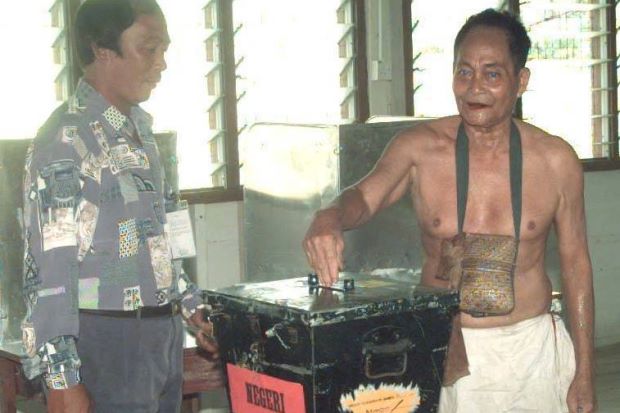
A voter in Pulau Banggi casting his vote. – Filepic by RAPAEE KAWI

I HATE discussing politics with strangers, especially if it’s at a wedding dinner.

As much as I accept this as an occupational hazard, I try my best to politely fend off attempts from those seeking my two cents on all things politics.

It gets even more annoying when my sole focus is devouring that piece of abalone on my plate. My thoughts are definitely not of any self-serving, ambitious politicians, believe me.

I am also reluctant to share my views on political issues, particularly since these people have clearly already made up their minds.

The silly season looms ahead of the general election and the growing anticipation is understandable.

However, many Malaysian urbanites, who are traditionally anti-establishment, like in major cities around the world, assume their political sentiments are shared by the entire nation.

In the United States, city folks in New York, Los Angeles and San Francisco, are under the impression that the whole country thinks like them.

Well, those in South Carolina, Nebraska, Alaska and Kansas don’t think like them if the US presidency result is anything to go by.

My colleague, Philip Golingai, a Sabahan, who is now criss-crossing the country to learn how Malaysians view the current political climate, has an appropriate summation – the sentiments of armchair critics come from what they assume, based on the reflections in their echo chamber.

It is a classic case of “living in a bubble”, without really knowing what is happening in the other bubble and assuming the political mood in the other bubble is the same as in their own bubble.

Simply put, this means that we should not expect a voter in Banggi, Sabah, the largest Malaysian island at 440.7 sq km, to have the same demands as voters sipping wine in Bangsar, Kuala Lumpur.

I am certain that many Malaysians reading this now don’t even know of the island’s existence and location, a land mass bigger than Langkawi and Penang.

Surprised?

It is located off the northern coast of Sabah, in the district of Kudat, which makes it the easterly most tip of Malaysia.

The island is home to the Bonggi people, an estimated 2,000 of them.

Pulau Banggi   

Most of these self-sufficient fishermen and farmers are influenced by animistic beliefs and lead a lifestyle that many in the peninsula simply couldn’t fathom.

But they are just as Malaysian as you and me. And Banggi is one of the 222 parliamentary constituencies in our country.

For someone living in Petaling Jaya or Johor Baru, where infrastructure is better developed, buying a loaf of bread, or a bottle of cooking oil, merely entails a drive down the road.

But for the Bonggi, acquiring such simple essentials involves travelling three hours by boat, via a treacherous sea stretch, just to reach Kudat, the nearest town.

By air, from the capital Kota Kinabalu, it means flying through a seemingly endless mass of sea.

Travelling in a helicopter, I remember morbidly wondering what the consequences would be if our copter went down.

Then just 50km outside Lahad Datu, one has to pass through Silabukan, which has a picturesque coastline.

When not blighted by poor visibility, a land mass, part of the Tawi-Tawi islands off the Philippines, is within sight.

Bongao Island, Tawi-Tawi’s capital, is also clearly visible.

Originally a backwater village, Bongao, a Muslim-majority location, is rapidly developing.

Incredibly, it takes only 20 minutes by speedboat for the Filipinos to reach our shores.

That’s how close we are geographically.

But there is also another dimension to our close proximity.

The locals are fond of telling outsiders that it is normal for their Filipino relatives to come to Malaysia for a game of football or volleyball and then return to the Philippines on the same day.

Obviously, there is no immigration clearance involved here.

The Filipino influence on our Malaysian side is so strong that some of the grocery stores are referred to as sari-sari (shops, in Tagalog).

At the Danggan Tungku fishing village, one can scan the horizon and spot Sibutu, which is also part of the Tawi-Tawi islands.

I have been to Kampung Tungku, a coastal village of Lahad Datu, under the parliamentary constituency of Silam, which is home to the Suluk community.

Facing the sea, the locals tell me that during low tide, one can paddle a boat across to the islands in the Philippines.

On a clear day, the opposite coast is quite visible.

The traditional living style of these people, who largely comprise fishermen, blew me away as many of them allowed their chickens into the living rooms of their squalid homes.

I wasn’t sure if these feathered friends were pets or prospective meals.

In Sarawak, I have ventured into the interior, sitting among a company of local men to enjoy their very potent rice wine.

I quickly became hip to the custom – a single cup exchanges hands in that circle of people.

And typically, the cup makes a swift round. To be able to hold your drink is a rite of passage, one which earns their respect and acceptance.

Try telling them that it is unfair to have three parliamentary seats in this rural heartland, which I did, like most naïve orang semenanjung. And what was their response?

They laughed in my face.

It can take us an hour or two to get from Petaling Jaya to Cheras, especially in snarling traffic conditions, but it takes these villagers, and MPs, three days to travel by boat and a jungle trek to reach a village.

This is unimaginable for us because we take our conveniences for granted.

And by the way, there will be 500 people sharing one address, because they all live in a long house – they are not phantom voters.

In the darkness of a village in Kelantan, I have sat among a sea of villagers, listening to a PAS ceramah, where the speaker asked the audience if Prophet Muhammad were alive today, who would he have voted for PAS or Barisan Nasional.

And of course, they roared “PAS.” That’s how PAS politics works.

And non-Muslims who rooted for PAS in the last general election would probably have had second thoughts had they sat through the chilling political talks of PAS information leader, Nasaruddin Hassan Tantawi, at his Temerloh constituency in Pahang.

GE14 will be decided by the Malay-Muslim votes.

Period. That’s the reality.

Out of the 222 seats, only 29 have more than 50% Chinese votes, and they were all won by the DAP in the 2013 polls.

Don’t expect any extra seats.

According to research firm Politweet, 138 out of 184 seats in Peninsular Malaysia had an increase in the percentage of Malay voters between the 2008 and 2013 elections, transforming previously ethnic Chinese-majority seats – Serdang, Rasah, Kluang and Taiping – to mixed seats.

But the votes of the minority, including the Chinese, can decide the outcome of the tight, three-corner fight between Umno, PAS and Pakatan Harapan.

It wouldn’t be wrong to assume that many of us don’t even know the existence of this group of Malaysians who will be voting in the coming general election.

Their priorities in life are different and they will view issues and demands in many different ways, and naturally, according to their circumstances and way of life.

Welcome to Malaysia – it isn’t just Petaling Jaya, Kepong, Cheras, George Town, Ipoh, Lembah Pantai, Kota Baru and Johor Baru.

Polls likely next year?


Too many events are on the cards this year, especially from now on, with the SEA Games and Budget just round the corner.

SIMILAR to how it is for other journalists, I am also frequently asked if I know if the general election will be called soon. Honestly, we wouldn’t know any better.

But let me put my reputation on the line here: I doubt the Prime Minister will dissolve Parliament and make way for a general election in the next few months.

Everything indicates that preparations for the elections have begun, but there is still much groundwork to be carried out by the ruling coalition. It’s clear that it is not ready to call for polls anytime soon as many loose ends still need to be tightened.

The general election must be held no later than 60 days after the expiry of the Government’s five-year term. The start of the five-year term is measured from the date MPs are sworn in at the Dewan Rakyat. And since the parliamentarians were sworn in this term on June 24, 2013, the Government has until Aug 23, 2018 – the deadline – to call for elections.

Over the next few weeks, many Muslims, including Umno members, will be observing their religious obligations with the haj season beginning. The pilgrimage to Mecca, which every adult Muslim is encouraged to undertake at least once in their lifetime, forms one of the five pillars of Islam. It is a life-changing event.

This only means many key figures in the various political parties, who could be involved in the election machinery, will likely be absent during this period.

Then, there are preparations for National Day festivities, what with the nation celebrating its 60th year of independence in August. It’s currently in full swing and involves many links in the chain, particularly government officials at all levels. These resources will surely not be compromised for political work.

The National Day jamboree involves a month’s celebrations coinciding with Kuala Lumpur 2017, the brand name of the 29th South-East Asian Games and the 9th Asean Para Games. The SEA Games will take centrestage from Aug 19 to 31.

Many flag waving events – with pledges of unity, diversity and moderation – have been planned ahead of Aug 31. Quite a few involve the private sector, as well.

But one thing is certain: Datuk Seri Najib Tun Razak will surely want to align Budget 2017 to his advantage. Last week, he took the opportunity to highlight the achievements of his administration over the last four years.

Very noteworthily, the International Monetary Fund (IMF) has raised Malaysia’s gross domestic product (GDP) growth projection for this year to 4.8% from 4.5%, on the back of savvy economic management and commendable monetary policies.

Malaysia registered a GDP growth of 4.2% last year, down from 5% in 2015 and 6% in 2014. The country posted a 5.6% GDP expansion in the first quarter (ending March 31) compared to the same quarter a year ago.

IMF economic counsellor and director of research department Dr Maurice Obstfeld noted that the fund remains optimistic of Malaysia’s economic outlook moving forward.

“We have upgraded our growth outlook for Malaysia this year as we see successful efforts undertaken to increase the sustainability of debt which is on a downward trend.

“Additionally, the country’s steady hand in monetary policies is commendable. Looking at the potential upsides, moving forward, we are optimistic of Malaysia,” Obstfeld shared with the media.

The Asian Development Bank (ADB) also upgraded Malaysia’s growth outlook to 4.7% from 4.4% last week, based on stronger GDP growth in the first quarter of the year and driven by rising exports and continued growth in the manufacturing sector.

The forecast by IMF is pertinent because it comes from an independent party and not someone with government links.

Importantly, these rosy numbers should be felt by ordinary Malaysians, or else they remain meaningless figures. In fact, it won’t help the government one bit if the trickledown effect is not felt by the people. These fancy stats will be cynically dismissed by voters.

Malaysians generally feel the market is still soft, so, they are cautious of loosening their purse strings. Many employers have frozen job intake, telling staff tales of increasing operational costs against a declining revenue, a profit trend still in rotation.

The PM would surely want to use the Budget in October to announce a slew of measures aimed at lightening the people’s burdens.

Certainly, the bulk of the civil service – regarded as reliable voters of Barisan Nasional – will want to hear what he has in store for them. It will likely be an election budget, though questions are sure to surface on how we are going to afford these privileges.

By early November, the monsoon season will wreak its havoc, not quite the suited time for voting. Expect plenty of heavy rainfall and floods, particularly in the east coast states. It will hardly be the ideal time to send the nation to polling stations.

December is also the month when most Malaysians begin their holiday season, so there will be a human resource deficit. Again, not a good time to decide fates and fortunes.

Weighing all those variables, it looks like the general election will only be called in 2018, March onwards, meaning, after the Chinese New Year.

We’ll just have to wait and see.

Phrase that again, please?

Many writers and even some officials fall into this trap – using the same expressions over and over again, it’s almost automatic.

Ten worst clichés used by journalists (and maybe officials) in their news reports (and at press confe­rences):

1. Certain quarters: For some inexplicable reason, the Malaysian media and the country’s officials, particularly politicians and the police, are enamoured with the word “certain quarters”, or the Bahasa Malaysia equivalent, pihak tertentu. That phrase is hardly used anywhere else, but seems to pop up time and again here.

No one seems to be able to explain why it has to be “quarters” and never “certain groups or parties”, so, inevitably, it ends up being “certain quarters”. It’s almost the equivalent of tiga suku in Bahasa Malaysia, and there’s a joke somewhere in there for sure.

2. Neighbouring countries: Our authorities seem to have a phobia naming criminals from our, ahem, neighbour countries. It’s always negara jiran, and the last time I checked the map, only Singapore, Thailand and Indonesia can claim to have that kind of proximity with us. The Philippines, Brunei, and further away, Myanmar and Cambodia, somehow, do not (pardon the pun) “fit the profile” of the police and other officials when they reference negara jiran.

Likewise for the media. So, negara jiran has to be one of those three nations. And given our prejudices and sense of bias, the guessing game can become an interesting and funny one at times.

Malaysians can never understand the impeccable courtesy and manners of our officials, especially the kind extended to most foreigners.

But if a Malaysian is caught for an offence in Singapore or Thailand, you can bet your bottom dollar we’ll be named and shamed. They won’t say from a “neighbouring country”, which could just be 10 minutes away on a clear traffic day.

3. Go all out: This has to be one of the most over-used and annoying phrases in Malaysian news. It’s difficult to be sure if this is down to poor vocabulary on the part of the reporters or just tardy approach to work, or simply, unimaginative officials. And this doesn’t exclusively apply to cops or politicians, but also sports coaches.

Classic examples include, “we will go all out in the general elections”, “we will go all out to nab the gangsters” and “we will go all out to win the title”. We must really be an out-going bunch because we simply love to go all out. We will go all out to make sure we keep using “all out” in our news reports and at press conferences. (It’s essentially lazy writing and lazy talking).

4. Leave no stone unturned: Our crime reporters and cops love this term passionately. So we keep reading about how “the police will leave no stone unturned” in their investigations. Of course, it will invariably be followed by the predictable “we will go all out” – these phrases are partners in crime almost.

Every Malaysian newspaper reader or TV viewer can tell what’s coming – “we are taking this very seriously and we will leave no stones unturned in our investigations”. What else were we expecting? “We will take this lightly and we will leave the stones as they are?” I’m not even certain if this is exactly what the police officer says, or what the reporter interprets and then creates. But possibly, after reading so many reports like these, I’m starting to wonder if there’s actually a vicious cycle at play, making the police officer to automatically use it.

5. Shock of my life: Another classic unimaginative and embarrassing bit of news reporting. I don’t think the legendary Michael Chong even uses it. So, for example, we have a 10-year-old boy who had a shock of his life when he discovered his dog was killed by a cat. Never mind that he hasn’t even lived a full life yet, since he is only 10 years old, but it has to be a shock of life. A jolt or even a shock, is never sufficient, it seems. It has to be the shock of his life.

6. Like a scene from a movie: Every fire drill, every security exercise often has to start with a snooze-worthy introduction – like a scene from a movie. This kind of news reporting has to be from a bad horror movie, if its source is indeed the cinema. And of course, the real story unfolds in the standard subsequent paras of bad reporting that “it’s a relief” that this is only an exercise. For goodness’ sake, Malaysians can tell the difference between a real disaster and a drill.

7. The ball is round: Another one from Captain Obvious’ handbook. Why not “difficult to predict”, or “I am too daft to predict” or “anything unexpected can happen”. Of course, we all know the ball is round. Even someone who barely knows how football – or soccer – is played can tell the ball is round. So, we don’t need a sports reporter giving himself a more respectable title of football analyst to tell us that he dare not guess the outcome of the game because the “ball is round”.

8. Agenda: The only agenda that most Malaysians have to deal with daily is the agenda of a meeting. But in Malaysia, based on media reports, it can be of a political nature … sometimes with subversive subtexts. So, we read and hear of “people with agenda” or (wait for it …) “certain quarters with an agenda” or ada pihak tertentu dengan agenda. Once again, the guessing game begins on what exactly this agenda is about. No one is clear.

On the bright side, “agenda” sounds far better than anasir anasir jahat, which was widely used in the 1960s and 1970s. Again, no one knows why it has to be jahat but the authorities came up with something better, and presto, we now have “agenda”.

9. Authorities: The media loves this cliché and they keep readers guessing. What constitutes “authorities” exactly? The Federal Government or state government? The Home Ministry, the police, immigration, the council, your employer? Or the wife or husband, who both also wield tremendous influence over our daily lives. They are serious authorities.

Come on, let’s confess, our spouses decide what we eat, what we watch in the cinema and where we go on holidays. So, when we read and hear the words “the authorities have decided”, we have to be sure which component of this influential (ahem) quarters. But the media prefers using this word pretty vaguely.

10. Do-or-die: With the general election looming, we will get to hear many of our politicians making these statements and the media will predictably pick up this mother of all clichés. Some of the politicians who have been using this worn-out script for decades, are still around.

Old soldiers, it is said, never die but fade away. But for politicians in Malaysia, they seem to continue forever and in some cases, refuse to retire, so they’re not about to ride into the sunset just yet. Old foes can even become new friends in our incredible Malaysian political landscape.

For sure, it will be a “do-or-die” battle for them in the impending elections, but we can be sure they will still be around if they lose. And we will be treated to the same boring clichés again the next round … like a scratched record.

All in a day’s words in politics

Some phrases have become jargon for lawmakers. Many have been overused, and in most cases misused, by this category of people. 

Ten most incredible remarks by our (or any other) politicians:

1. Playing politics – One politician accusing another politician of “playing politics”. If politicians are not playing politics, then what are they supposed to be doing? We expect politicians to, well, play politics and to engage in politicking. That’s their job and that’s the skill they’ve honed. Can we imagine, say, a footballer accusing another of the same act – “he is only playing football.” It’s bizarre when politicians point fingers at their counterparts for playing politics, often with negative connotations, as it amounts to accusing their reflection in the mirror.

2. Serving the people and country – Every politician in any given country says the same thing. They are supposedly only interested in serving the people, the country, religion, race, pets, families and everything they can think of – except themselves! And we are expected to believe that that’s their noble cause and that they don’t have any ulterior ambitions. Yet, they will spend their entire time and resources kicking, back-stabbing, bad-mouthing and clawing their way to the top! Of course, we will duly be told that they can serve the people “better and effectively” the higher they reach, all in the name of the people’s benefit, of course.

3. I will “take note” of the proposal – Which means the politician will do nothing. In fact, if your staff or colleague spouts the same phrase, it only amounts to the person not deserving a pay rise. Lazy bones syndrome? Highly likely! It’s almost an expression of inertness. Amazingly, it has now become the standard “tactical response” used by politicians to answer fellow Members of Parliament on the opposite bench during Question Time.

4. I “will study” the proposal – This gives the above a run for its money.

The same disinterested, non-committal reply, aka, “I am doing nothing about it”. This merely amounts to, “We will form a sub-committee/a committee/a task force/action committee to study the matter and a report will be submitted to another committee, which will then deliberate the findings.” In short – nothing happens for a while, or probably in the end, nothing happens at all.

5. “I have been misquoted by the press” – This means the politician has screwed up by putting his foot in his mouth (foot-in-mouth disease?), and the only way to get out of the mess, is well, to deny having said it all together.

And if he did say it, then blame the media for taking it “out of context”. And in their minds, this equals: the media has an ulterior motive; the media is biased; the media has an agenda; the media creates fake news.

Well, if the media produces audio or visual evidence to prove the politician’s folly with the said contentious remarks, then the standard operating procedure would likely be “well, I did say it, but I did not mean it THAT way,” or “you did not quite understand what I said”.

6. Fake news – It has frighteningly and sneakily crept its way into Malaysian politics from the United States, President Donald Trump its greatest purveyor. The fake news accusation is a good tactical move to defend illogical/embarrassing situations created by politicians, and used to near perfection by Trump.

It is just as handy for scatterbrain politicians.

7. Trust me – When a politician requests this faith, you know you should believe in your own instincts and scurry in the opposite direction. But it has to be the most overused and, consequently, misused phrase by politicians everywhere, perhaps perfected by North Korean leader Kim Jong-un, who doesn’t even have to worry about standing for elections!

8. Dementia – It’s a disease all politicians should contract if they wish to survive long in the merciless business of politics. You are expected to lose your memory of past actions against your opponents, if it means, you are now required to swallow your indignation to forge a new political partnership.

“What? I took action against you? Did I? It can’t be, it’s someone else who did it. Not me. If I did, well, I hope to pardon you soon.” Sound familiar?

9. The opposition is only interested in toppling us – Well, that’s exactly their job scope, isn’t it … to take over from the present administration? If they are not interested in toppling existing governments, then aren’t they wasting their time in the opposite side of the camp?

10. There are no permanent enemies, only common interests – In Malaysia, our politicians have turned this into a near artform, hopping in and out of bed so much so voters end up losing track of the number of strange bedfellows.

Let’s not even get into the pillows and strange dreams, or nightmares that have been created for getting in the same sack. One day, a party is accusing another of being an “infidel”, and the next, it is actually working with “infidels”. Almost predictably, after that, it is seen to be friendly with the same party that it has been crossing swords with for decades.

Meanwhile, divorces are announced for the break up with the infidels, yet, the desire to stay in the same house remains, because, well, the rakyat needs to be served.

That’s not all, and this one is even more incredulous – a leader once threw his opponents into the slammer for all kinds of offences, ranging from threatening internal security to sexual perversion, but in the very next instance, touted his once greatest enemy as the leader-in-waiting and probably gave him a BFF status on his FB. Of course, our voters are expected to subscribe to all of this and believe it’s for their own good.

Tale of two ‘hippie’ cities

Penang has some things in common with San Francisco – the island, too, is unconventional in many ways.

IT’S summer time in San Francisco but it is no ordinary season. Yes, this is the 50th Summer of Love – so branded because exactly 50 years ago, in 1967, this American city was the centre of a cultural revolution. This was where it all happened.

In those epic months, San Francisco embraced hippie culture – the so-called flower children – where young people joined forces in the name of love and peace to protest against the Vietnam War.

It was the age of The Beatles and their psychedelic experiment with Indian gurus, Scott McKenzie with his monstrous hit song San Francisco (Be Sure To Wear Flowers In Your Hair), Jimi Hendrix, Fleetwood Mac, Jethro Tull, and The Rolling Stones, among others.

As my pick-up van crossed the iconic Golden Gate Bridge, the music of that era automatically played in my head. Vivid memories suddenly flooded my mind – not just about San Francisco but Penang, too.

It was a time when the phrase “Make Love, Not War” caught the imagination of the world, with young men sporting long hair and beards, and in Malaysia, it was Penang that probably experienced this counterculture movement more than other states – or perhaps it was just the island state.

You see, Penang was part of what was called the Hippy Trail (along which Americans and many Australians and Europeans made a low budget hop overland to Asia) beginning with Istanbul and encompassing Katmandu, Goa, Bangkok, and other parts of Asia. Penang was one of the preferred choices. Unbelievably, many hitchhiked all the way there.

These young people claimed that they were searching for spiritual enlightenment (after all, “all you need is love”, say The Beatles in their Magical Mystery Tour album), standing up to rigid, conventional lifestyles and the Establishment. But really, was it just an excuse to smoke pot and have free sex?

I was in primary school when Penang was suddenly invaded by hippies (hygiene was surely not their priority!) in their colourful tie-dyed clothes, walking the streets of George Town, especially along Chulia Street and Rope Walk with its line of low budget hotels.

A new industry sprang up in Penang, as young locals who embraced hippie culture sold burgers and other Western food to cater to these Caucasian hippies.

Homes in the beach areas of Teluk Bahang and Batu Ferringhi were opened to these foreigners for US$1 a night and I suspect many illicit items were also sold by some locals.

For students in the island’s St Xavier’s Institution who had to walk past these streets and strange-behaving hippies, it was an eye opener but for most Penangites who were long exposed to foreign culture and visitors (Penang being a thriving port) it appeared to be just another phase of life and culture.

The smell of weed could always be detected in some cafes and the authorities began to frown on the free spirited behaviour of the hippies. After all, these were not exactly the kind of tourists that could contribute to the state coffers.

There were many complaints from locals about the topless – some even nude – hippies who flocked to the beaches and soon, the police acted. There were even reports of some hippies getting kicked out of Penang.

Innocent Boy Scouts like us, who were on camping trips in Batu Ferringhi, would go to the nearby Chin Farm to swim at the waterfalls where we would run into these hippies. But, of course, we didn’t report our encounters to our Scout Master as we wanted to go back the next day!

But Penang in the late 1960s and early 1970s was an unusual place. As much as these hippies wanted to run away from the war and the Establishment, in Penang they ran into the many US Marines who stayed on the island as part of the American military’s “rest and recuperation” (R&R) programme.

The hippies hated these men in uniform but Penang was one of the few approved holiday destinations for the soldiers fighting in Vietnam.

All US military personnel serving in Vietnam were eligible for R&R during their tour of duty – a minimum of 13 months for Marines, and 12 months for soldiers, sailors, and airmen – and for many, on their first visit to Asia, this could also mean their last as the war took its toll on these young Americans.

The other approved destinations were Bangkok, Hong Kong, Kuala Lumpur, Manila, Seoul, Singapore, Taipei and Tokyo.

Needless to say, Bangkok was the most popular choice as Penang was regarded as “too mild” for these GIs (a noun used to describe the soldiers of the United States).

Americans from Vietnam would be flown into the Royal Australian Air Force base in Butterworth on the mainland side of Penang before they took the ferry across the channel to Penang island.

It was an interesting cultural experience for me as a kid. Suddenly, there were many GIs at my Penang home as my aunt, who worked as a hotel receptionist, would invite some of them to visit a typical Malaysian home. Whenever she played tour guide, I was always asked to come along as the “chaperone” in case these Americans had naughty ideas.

So I was in the company of both hippies and soldiers as a boy growing up in Penang. Even in the 1970s, some of these hippies didn’t leave Penang after developing a liking for the island, and they became long-term residents at the low budget hotels and homestays – a term which was already in use in Penang in the 1960s.

Strangely, these colourful memories of a bygone era have never been recorded in school history books; perhaps they are regarded as inconsequential but they will be remembered as part of popular history.

Not many Malaysians are aware of the hippie era and the American GIs in Penang.

Fast forward to 2017. The hippies are gone. Mostly dead. The Summer of Love has been commercialised to get tourists to spend money on nostalgia.

Urbane, ambitious and trendy hipsters, busy with their mobile phones and note books in fashionable cafes, have taken over from the hippies.

Silicon Valley, located in the southern San Francisco Bay Area, is home to many start ups and global technology companies including Apple, Facebook, and Google.

It’s still very unconventional and very anti-establishment even if making money is on the agenda – although these hipster CEOs, who prefer jeans to suits, see themselves as advocates of social causes. To be represented in a Pride Parade is also a commercial consideration in San Francisco.

But Washington DC and Donald Trump are hugely detested here, and that perhaps is something that hasn’t changed in 50 years.

San Francisco is one of the most expensive cities in the world. Penang still has a relatively low cost of living but in terms of properties, it’s among the highest. But I love these two cities for their many unconventional ways and openness.

The Trenglish way to better English

I CAN’T remember the last time I went to Kuala Terengganu. It must have been decades ago. The occasional trips to Berjaya Resort in Redang by air from Subang do not count, I guess.

But I am glad I went there recently to support Petronas’ efforts to promote English in schools via The Star’s Newspaper- in-Education (NiE).

It might be surprising to learn that the Terengganu state government is determined to improve the level of English in schools.

That is a mammoth task, since this is a predominantly Malay state which is still rural in many ways. It has been reported that 85% of its people struggle to speak and write in English.

In short, English is only taught in schools. Forget about having students converse in English among themselves, attending English tuition classes or using the language at home.

It seems almost like a lost cause but Petronas, Yayasan Terengganu and the state education department are determined to give it their best shot.

So, to make it interesting, the state has introduced its Trenglish programme – or Transforming English in Terengganu. The Trenglish programme was introduced in 2014 as a collaborative effort between the state government and state Education Department.

The results are beginning to show as almost 75% of students who signed up for the Trenglish programme passed the Sijil Pelajaran Malaysia (SPM) English paper in 2016.

State executive councillor, Bazlan Abdul Rahman, was quoted saying that this was an improvement from the 71.43% who passed in 2015.

“This proves that the Trenglish programme has managed to improve the English proficiency of our students.

“Unfortunately, the programme is only implemented in 50 schools, which merely makes up about 10% of the 501 schools in the state.

“Therefore, I hope the state government will review the programme (so that) it can expand to more schools, maybe to 250 in the near future,” he reportedly said, while debating the royal address by Sultan of Terengganu Sultan Mizan Zainal Abidin at the state assembly.

Trenglish employs an interactive and fun approach by teaching English through language camps, mock interviews, drama and even nasyid performances.

No one can blame the state for making an effort to improve the standard of English among its students. The state has reason to be worried since, according to reports, 5,500 or 27% of students who sat for the Sijil Pelajaran Malaysia (SPM) examination in Terengganu failed the English Language subject.

This was based on statistics by the Terengganu Education Department over the last five years, which displays a disconcerting trend since English was made a compulsory subject to pass in the SPM.

It’s a scary situation as most urban Malaysians already feel the English standard taught in schools and in examinations is low, with some saying the passing rates are compromised.

Like it or not, even if the medium of instruction in public universities is Bahasa Malaysia, the harsh reality is that the reference materials, whether books or online documents, are mostly in English.

Job prospects on the many island resorts in the state hinge on basic English proficiency. The management of these establishments would surely want to hire those who can converse in English.

But what is impressive about the Terengganu state government’s efforts is that it has carried out a well-structured plan to improve the command of the language among students through Trenglish.

The state has hired graduates in English from local public institutions of higher learning to teach, focusing on Forms 3, 4 and 5 students.

Getting local graduates to teach has been more effective here as American graduates, whose mother tongue is English, have not been able to communicate effectively with their students.

(Under a programme between Malaysia and the United States, American scholars are invited to teach English in various public schools in Terengganu, Kelantan, Pahang, Perak, Kedah, Perlis, Sabah and Sarawak for a full academic year.)

But that’s not all. Terengganu is flexing its might to ensure that its plan works and this includes roping in Petronas as a partner. The oil and gas producer’s group human resources management senior vice-president, Datuk Raiha Azni Abdul Rahman, who was selected as a Petronas scholar 30 years ago, understands the importance of the language.

A native of the oil-rich state, she is determined to ensure that the NiE programme benefits students in her state.

“Give it a year or two, we will see changes in students’ ability to speak in English,” she said. I can feel her excitement. I have attended many government-type functions, but I was surprised by what I saw this time.

The event, where 54 SPM school leavers from Terengganu were awarded scholarships under the Petronas Education Sponsorship Programme (PESP), was conducted in Bahasa Malaysia and English.

Even the emcee, who conducted the doa (prayers), made it partially in English. At the conclusion of the event, I made my rounds to thank Petronas and Yayasan Terengganu officials for joining hands with The Star on this project.

Everyone spoke in English — the state education department, Petronas and Yayasan staff all chose the language they are propagating.

Either my Bahasa Malaysia is bad or they wanted to send a clear message that the state was passionate in ensuring that Trenglish succeeds.

Before we headed back to Subang, my colleagues and I already began talking about our next trip to Terengganu.

We are prepared to roll up our sleeves and dive in deep. We are so primed and ready for this.

See the beauty in all religions

This writer’s collection of books, including the Quran, often surprises his visitors but to him, no one should shy away from reading up about another faith.

I HAD one of the most interesting interviews last week – my fellow journalists from Sinar Harian, the most widely read Bahasa Malaysia daily in the nation, wanted to feature me on my collection of books on Islam and the Quran.

The media group had just kicked off its annual Malaysia #QuranHour, with Muslims around the country congregating in mosques to recite the Quran en masse for an hour.

As part of the campaign, Karangkraf (which publishes Sinar Harian) chairman and group CEO Datuk Hussamuddin Yaacub, had called me to seek the support of Star Media Group, for which I readily agreed.

I told him my collection of books on Islam and the Quran made up only a modest section of my library but the newsman in him, and its editorial adviser, Datuk Abdul Jalil Ali, caught the news angle.

My fellow Universiti Kebangsaan Malaysia alumnus also wanted me to talk about my private library as a human interest story to generate support for the event.

Visitors to my home often express surprise – which amuses me somewhat – after seeing for themselves, how much of an interest I have in this subject.

After all, I also have a decent collection of Bibles, books on Christianity, Buddhism, Hinduism, even Baha’iism.

While I am Christian, I do not see why non-Muslims should be afraid of learning Islam and broadening our knowledge in this religion.

Non-Muslims in Malaysia should have an open mind about this and it is, of course, favourable to deepen our understanding of Islam as we live in a Muslim majority country.

Malaysians, regardless of their race and faith, should also not be afraid to understand and appreciate another religion.

Let us remind ourselves that all religions preach good values and, surely, there are more commonalities than differences in these books on religion.

My journey in understanding Islam probably began when I was sitting for my Sixth Form examination, which was then known as the Higher School Certificate (HSC), now known as the Sijil Tinggi Pelajaran Malaysia (STPM), which is regarded as the university entrance examination.

I signed up for the Islamic History and Malay Literature subjects, which required me to read and memorise the entire Sejarah Melayu (Malay Annals) and several Indonesian classics.

The first few months were terrifying, and I wondered what I had gotten myself into as preparations for the exam involved mostly studying on my own. I began to have doubts about my own choices.

But soon, I fell in love with these subjects as I began to learn more about them, treating it as part of a journey, if not, an adventure.

By the time I gained a place at UKM in the 1980s, I voluntarily asked to be included in the Malay Letters Department, as a minor course during my first year, where I had the chance to listen to speeches by the biggest Malay literature icons in the country.

But I also learned that in UKM, every student was required to pass the Islamic Civilisations paper conducted by the Islamic Faculty. It was a compulsory course, and if a student failed it, there was no way the person would graduate. This was more than 30 years ago and the requirement has remained.

The thought of having to pass an examination on Islam must have horrified the majority of first-year non-Muslim students, but for some reason, most of us took it as another step in education.

I wasn’t sure if we were young, reckless or just innocent, but I kept an open mind about the whole thing. And having towering figures like the late Datuk Fadzil Noor and Datuk Dr Haron Din, both becoming big names in PAS eventually, to teach us, was inspiring. Haron, in particular, was a good storyteller and could render the lecture theatre awe-struck, as we hung on to his every word.

It was merely a course on basic Islam. And when it was time to sit for the exam, most of us were pretty confident of passing and most of us did. I did not get an A but my interest grew from there.

It amused many of us UKM graduates why politicians made a fuss by creating controversies when they learned about such a course, which we had gone through decades ago. It wasn’t something new to me.

I can say that most non-Muslims did not become Muslims and vice versa, Muslim students who attended Catholic schools, didn’t become Christians. Fears are manufactured by politicians and wannabes only. The Christian brothers were missionaries and certainly evangelists.

By the time I started working, it was almost natural that I started to build up my book collection on the Quran, with the most recent one being Al Quran Al-Karim, a gift from Hussamuddin.

But it is the world class quality publications from our Islamic Arts Museum which truly inspire me, including Faith and Power: The Role of Women and Al Quran: The Sacred Art of Revelation.

Despite not knowing enough about Islam, that did not stop me from appreciating the beauty of Muslim calligraphy in Nun Wa Al Qalam, another publication of the Islamic Arts Museum.

My passion for collecting these books has grown, although this can be an expensive pursuit.

But the point is this – see the beauty and positives of all religions, and from there, we will see more commonalities, especially the values on compassion, patience, forgiveness, and acceptance.

The Quran is truly unique compared to other holy books. For one, it is the only book that begins each chapter with praises to God, declaring “in the name of God, the Most Gracious, the Most Merciful”.

Quran readers are constantly reminded of the values of being gracious and merciful. Surely, even non-Muslims would readily accept such virtues.

My favourite aunt – my mother’s sister – is a Muslim and I have plenty of Muslim family members. This is nothing unusual. We are all human … period. And at the end of the day, it is the heart that matters.

And on this special occasion, I wish all Muslims “Selamat Hari Raya, maaf zahir dan batin!”