Author Archives: wcw

Remember the sacrifices

THE Bersih 4 rally, as you read this, is still in progress. It will officially end at the stroke of midnight. The crowds are still there.

At the time of writing, the protest has been carnival-like and the crowd has exercised much discipline and self-restraint while the police, to their credit, has showed minimal presence this time, very much so compared to the previous Bersih rallies.

Ironically, if we are able to travel back in time, it was at the stroke of midnight on Aug 31, 1957, that the Union Jack was lowered and the then Malayan flag raised to signal the birth of a new nation. The crowds were there, at the same venue, in full force as well.

I have been an observer since early yesterday morning, watching the people gathering at various points.

In the lead-up to this event, we have seen how, in true Malaysian manner, some officials have reacted with sledgehammer directives over misguided fears of riots and mayhem.

Some, on the other extreme, seem to take it too lightly, thinking it’s just a weekend ­family stroll, forgetting that as in all protests, it can always take a turn for the worst.

Some just showed up, hoping for a showdown with the police, and to get their moment of fame.

But from what I have observed so far, it looks like we will survive this big protest – in fact, the fourth in the series and we have all survived every single one of them.

But there have been moments when I felt the parties involved were really testing each other – without fully understanding the ­ramifications of their actions.

But let us look at the bigger picture as we also prepare to celebrate our National Day tomorrow.

The Bersih 4 participants have their grievances, mainly political, but I know there are many Malaysians, right now, who are angry and sad with the many external and internal factors confronting the nation.

There is a sense of hopelessness and, when the pockets have been hit, there is also a sense of resentment.

It has reached a point that for some misguided Malaysians, they cannot even differentiate between love for the country and love for the government of the day.

The hoisting of the national flag can invite scorn from some Malaysians, who wrongly associate it as an instrument of the government.

Politicians come and go but our loyalty to the King and country remains steadfast. That means there should be undivided allegiance for the Jalur Gemilang at all times, more so in this Merdeka season.

Our politicians must understand and accept that in a democracy, there will always be a sizeable section of the electorate who will not support them. They just have to look at the election statistics to know that getting into power is not necessarily synonymous with having the majority of the popular vote.

In modern democracies, leaders have found that the majority that they obtained in general elections would keep diminishing as voters want to keep their government in check.

Party members must come to terms with such changes and should not expect their party leaders to deliver victory with unreasonable huge majorities. That is a thing of the past.

Malaysia is a not a dictatorship and the people won’t allow any directions, subtle or otherwise, towards that. The people have a right to love or loathe their leaders.

Likewise, those who take to the streets, demanding popular changes, must also not assume that they represent the majority.

You cannot change the government by merely staging protests because like it or not, the reality is that the present government is legitimately elected with still two years to go, no matter how unpopular it may seem to be to some at this point in time.

Without doubt, the leadership’s credibility has been challenged, if not severely dented, but any change can only come from within the ruling party and no one else.

It must also be recognised, no matter how difficult it is for some, that the current leader­ship has the support of its dominant party and other parties within the Barisan coalition.

But it will be foolhardy, at the same time, for the leadership to just ignore the sentiments of urban Malaysia, especially when they play a strong influence in shaping ­opinions – especially those that work against the leadership.

As in Bersih 4, surely no one can dispute that the sentiments of the protesters are fairly representative of the views of a large number of the electorate, especially in the urban areas.

In fact, our government should sit up and understand the ground rumblings.

There has got to be a better and more effective method of addressing the concerns raised instead of shifting the blame on non-existent ghosts and bogeymen. Haven’t we all grown tired listening to those who blame all the woes of Malaysia on the Jews, Christians and the shrinking Chinese community?

As a nation, we can face the storm ­together because we have gone through worse times. There have been dark hours before but we have survived.

We need to come to terms with reality. This country does not belong to one race but all races. This is a multi-racial, multi-­religious and multi-cultural country.

I am sure the government accepts that the nature of our racial composition is an asset. The country’s tourism promotions boldly proclaim that we are a country worth visiting because we are a plural society. There is great beauty in our diversity.

Despite the inefficiency of some of our ministers, including those who make racist rumblings occasionally, we must acknow­ledge that the Prime Minister has recognised the importance of multi-racial representation in the Cabinet.

Having to accommodate all races and all states, especially from Sabah and Sarawak, has resulted in what some cynics say is a bloated Cabinet. But it is a small price to pay.

We may compare ourselves to bigger countries with smaller Cabinet set-ups, but we fail to realise that these countries do not have the complexities of our racial dynamics which we have to grapple with.

No Malaysian government, at state or ­federal level, can claim legitimacy without the representation of the main races. Politicians who make bravado statements of not wanting the Chinese votes are just ­myopic or plain arrogant.

The last two years have been difficult ones for all of us.

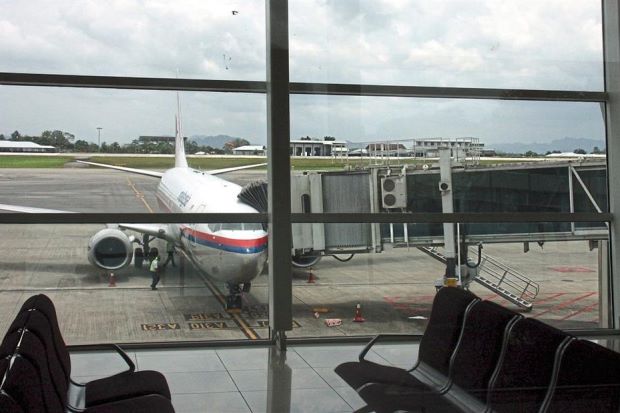
Last year, we had to cope with the loss of two MAS planes and just as we struggled to move on, we ran into the unforeseen collapse of the crude oil price.

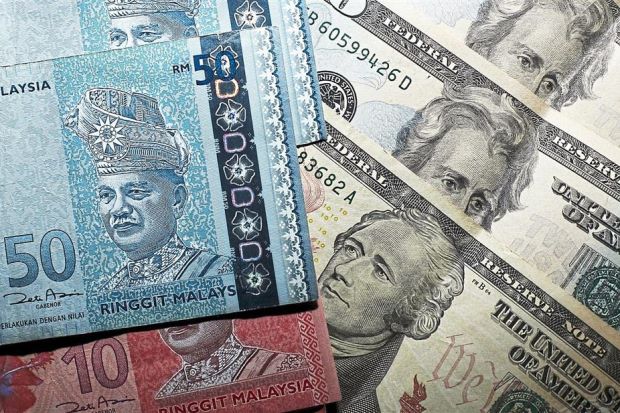
The plunge in oil price, which makes up over 30% of our revenue, has thrown our Budget projections upside down and, even after we revised our targets, the drop has continued and put our ringgit down to a level we cannot even imagine.

Without doubt, the domestic issues, especially political ones, have had an impact on our pockets and it is crucial that we come together to face the strong headwinds ahead.

The blame game won’t help and neither would the grumblings, understandable as they may be, to reverse the current financial nightmare.

It won’t be a happy Merdeka this time. But we can safely say that our forefathers, who fought for our independence, expected us to do better and surely, we must live up to what they have sacrificed for this country.

As anak-anak Malaysia, we must rise to the occasion. For Malaysia!

Time to woo tourists now

Malaysia must push itself to be more competitive if the country wants to see more visitors. And it is crucial to gather the best business brains to get ourselves out of this rough patch.

THE amount of time spent on politics by Malaysians is remarkable. One wonders if our politicians from both sides have anything else to do besides issuing daily press statements and calling for press conferences.

The 1MDB issue, without doubt, needs clear answers and a conclusion. The investigators have not come up with anything. Neither have they revealed what they have discovered to date.

The Public Accounts Committee, meanwhile, has had to put its own probe into the issue on hold following the promotion of some key members to be deputy ministers, which makes them ineligible to sit on the committee.

But even as this issue continues to captivate the people, and it must, we must also not lose sight of another important front – our economy.

Malaysia is hurt by the collapse of crude oil prices, the flow of funds, plunge of the stock market, devaluation of the yuan, strengthening of the US dollar and the shrinking ringgit. And it doesn’t help that investors see Malaysia as politically unstable now.

At meetings with foreigners overseas, Malaysian businessmen can tell you that they are asked point blank about the 1MDB issue and, most of the time, they can’t really tell much beyond what’s reported in the media.

And because we want to keep the Malay­sian flag flying, we have to speak well of this country. But we must remember that investors have plenty of choices as to where to put their money. We need to end this political controversy soon and move on.

Yes, we maintained the 2015 economic growth target of 4.5% to 5.5% despite potential external shocks.

Bank Negara governor Tan Sri Dr Zeti Akhtar Aziz has pointed out that economic growth will be anchored by domestic demand, continued expansion across all economic sectors while the external sector is expected to remain resilient.

Domestic demand, which is projected to maintain at 6% growth, will continue to drive economic growth, supported by robust private investment and spending.

On the trade side, she said an expected narrowed current account surplus of 2% to 3% of gross national income (GNI) is in line with global rebalancing and structural transformation in the local economy.

But she also spoke of a lower projected current account balance of RM21.4bil due to low oil price and a higher deficit in income account.

It is obvious now that we have to look at other sources of revenue as crude oil prices continue to drop, with no sign of stopping anytime soon.

The tourism sector is crucial. The weaker ringgit will help make Malaysia into a ­cheaper tourist destination.

Even though 2015 was Visit Malaysia Year, we can still put in more resources to boost Malaysia as the ultimate tourist destination for 2016.

For a start, we need to tone down negative impressions, often caused by overzealous theologians and crime cases, that make headline news overseas.

I attended a Malaysian Philharmonic Orchestra concert recently, where it paid tribute to the music of Queen. The American singer subtly asked if Malaysians were allowed to stand up and sing and dance along. And at the David Foster and Friends concert in Genting Highlands, he also made various jokes relating to the conservativeness of Malaysia.

We all know the world thinks lowly of Malaysia as a concert destination and those who shoot off their mouths do not realise how much our neighbours have capitalised on such a perception.

Our authorities need to realise concerts bring in tourism money and are not about promoting free sex and gender mixing.

Tourism Board chairman Wee Choo Keong said “there is no doubt that Malaysia is being ‘outshined’ in the region in terms of advertising”.

“You only have to turn on the TV and there are ads on campaigns such as ‘Amazing Thailand’ or ‘It’s More Fun in the Philippines’,” he said.

For example, after the outbreak of the Middle East Respiratory Syndrome (MERS), South Korea is fighting hard to get its tourists back, with the Korean Tourism Organisation (KTO) embarking on an aggressive promotional blitz worldwide.

For the upcoming national-level MATTA Fair to be held at the Putra World Trade Centre between Sept 4 and Sept 6, KTO has taken 24 booths and is bringing in top K-Pop stars and other artistes to promote what the country has to offer.

It is shocking that instead of pumping up the advertising and promotion budget to sell Malaysia, we are actually slashing it by RM50mil, which is 25% of the RM200mil that has been allocated for the past 15 years.

Tourism brings in close to RM70bil annual­ly and is the second largest foreign exchange earner and among the largest contributors to the economy.

Some 27.4 million people visited Malaysia last year but the numbers could drop if not enough is done to woo tourists.

It is quite perplexing that Malaysia conti­nues to insist on visas for Chinese tourists even though it is free now. It is just not good enough.

The summer season is usually when ­tourists from temperate countries, including China, travel and it looks like we have missed the window period. Wake up, Malaysia!

We recorded a shocking drop of 500,000 tourists from China for the first quarter of this year. The second quarter is just over and we can expect the numbers to go down further.

The records show that each tourist from China on average spends RM3,401 in Malaysia, therefore for the first quarter of this year, Malaysia has lost RM1.7bil from this sector alone.

Strong political will is necessary here to push through the implementation of visa application online like in other countries. Malaysia needs to be competitive and acco­mmodative if we want to see more tourists.

Anyone visiting the major shopping outlets in Europe, especially Paris and London, will know that Chinese-speaking sales assistants are hired to cater to the Chinese tourists, especially at branded outlets. That is how they treat their Chinese customers.

It is crucial now for the Government to pull together the best business brains in Malaysia, not just the academicians and bureaucrats, to work out how we can rough through this difficult period. It will lift a huge burden off the Prime Minister and the Cabinet.

We need to identify the key sectors that can stimulate the various sectors of the ­economy to increase our revenue. Special incentives and stimulus packages need to be announced soon.

At the same time, it will be good for the Government to help ordinary Malaysians cope with the cost of living by reducing transport charges, including the price of LRT and KTM tickets. It is also time for electricity tariffs to be reduced in tandem with the fall in oil prices.

It can also look at reducing water supply charges to help consumers and as this is within the state’s jurisdiction, surely the ­various Mentris Besar and Chief Ministers can make it happen.

We need our leaders to focus on the econo­my. Their daily political charade isn’t going to help the people put food on the table.

Unite under common values

HOW we all wish that some of our leaders, including Cabinet Ministers, would think before they speak. If there is an occasional slip, we can let it pass, but a few are simply serial offenders.

The days of playing communal heroes, using a different line to speak to different ethnic audiences and actually believing that they can get away with it, are over.

Even if the press is not there to record their stupidity, you can be sure that their distasteful remarks will make its way into the social media. These are the analogue age politicians who forget that the rest of Malaysia has gone digital. The moment they open their mouth, someone in the audience would have the smartphone ready.

Some of our leaders appear to be still caught up in a time warp and remain disconnected with Malaysians, especially the young.

Last week, Rural and Regional Development Minister Datuk Ismail Sabri Yaakob called for an alternative digital mall solely for Malay traders.

Most Malaysians, judging from the response in social media, found Ismail’s proposal outrageous. More so, when he said it could be a second Low Yat Plaza, which just reminds everyone about what happened there recently.

It was strange, however, when he said that while these traders should be Malays, he was not sure if the suppliers would be Malays.

Earlier in the year, Ismail Sabri posted on Facebook allegedly urging Malays to boycott Chinese businesses that refused to reduce their prices despite a drop in fuel costs.

The Prime Minister’s Office later issued a statement saying Ismail’s comment was targeted at unscrupulous traders and not at any particular race.

Those who know Ismail Sabri can vouch that he is really a nice bloke and ever helpful but they can’t understand why he keeps shooting himself in the foot.

In the last general election, the Bera MP beat his PKR opponent and an independent candidate with a majority of 2,143 votes.

The seat has 50,997 voters of which 16,319 are Chinese, 30,088 Malay with the rest under the “others” category.

Ismail Sabri was apparently upset over why he failed to secure the Chinese votes in his constituency despite the huge amount of financial assistance given to the Chinese electorate.

The Pahang leader also got into hot water when he singled out the Old Town White Coffee chain, claiming that it was owned by a Perak DAP leader. He had to wriggle himself out of the situation when he could not back his allegation.

Ismail Sabri must understand that he cannot continue to sulk over the loss of Chinese votes. And he shouldn’t give up on his electorate. If they had backed him previously, but rejected him in 2013, he has to try harder to win them over.

As an MP, he should never turn away his constituents, whether they voted for him or not. If the constituent is upset, he has to find out why and do the necessary to win back his support.

A good businessman, for example, will listen to his customers and improve his products to meet their expectations.

If you look at Malaysian electoral history, you will know that the Chinese vote can swing one way or the other.

The Chinese voters have even kicked out DAP veterans like the late Karpal Singh and party adviser Lim Kit Siang before.

On his proposal for the alternative digital mall, even if his intention was to encourage Malay youths to be entrepreneurs in this lucrative business, he could have said it better without sounding communal, more so, when many rational and moderate leaders are trying to play down the racial elements.

As Datuk Saifuddin Abdullah, who heads the Global Movement of Moderates, said: “If you promote the idea of a second Low Yat, you are not helping but further polarising the communities. I don’t think this Low Yat 2 for bumiputras is a good idea.”

MCA publicity bureau chairman Datuk Chai Kim Sen meanwhile called Ismail Sabri regressive for making the proposal.

Newly-minted Education Minister Datuk Seri Mahdzir Khalid also found himself in the news for the wrong reasons after he claimed the corruption allegations made by whistleblower portal Sarawak Report was an attempt by Christians and Jews to split the Muslims. The Wall Street Journal has also been labelled as a Jewish product.

Mahdzir, who is an Umno supreme council member, had made the controversial remarks at the opening of the Hulu Langat Umno division meeting last Sunday.

If we really want to use the Jewish conspiracy line, then we should just stop using Facebook and stop watching Hollywood movies as many are financed by the Jews.

And if you do a Google search for anything connected to this community, then you will have to stop using the cardiac pacemaker, forget about undergoing chemo­therapy treatment, throw away the TV remote control and give up a long list of medicines.

Blaming the Jews, the Christians and the Chinese for all the ills, or more precisely, fiascos, in Malaysia has become terribly tiring. It’s not working anymore, really.

With just two weeks to go before the National Day, Malaysians would prefer our politicians to focus on Malaysian commonalities. The moderation campaign, after all, is championed by no less than the Prime Minister himself.

We should talk about our common values, how people of different races can come together and pull our talents and strengths together to make Malaysia strong. We should stop dividing the nation with racist remarks.

No leader or government can be legitimate if the support comes only from one race. Malaysia is a multi-racial, multi-religious and multi-cultural country. That’s the reality, accept it.

Focus on the economy

While the political drama in the country is the most talked-about topic now, it’s time to turn our attention back to money matters. Our livelihood depends on it.

OUR ringgit hit another new low last week and there is every likelihood it will continue to be under heavy pressure as the price of crude oil keeps collapsing.

The prediction is that the price of crude oil will continue its slide and that Malaysia, as an oil-exporting country, will continue to bear the brunt.

Unlike Saudi Arabia and Russia, which have huge financial reserves, other oil-­exporting nations, especially the smaller ones like Malaysia, and those in Africa and South America, are in a real dilemma.

Malaysia is in a position it does not need. It is something that even our policy-makers could not have foreseen. The situation is made worse because of the drop in commo­dity prices.

Since the implementation of the GST in April, most companies have seen a huge drop in revenue and, by extension, their profits. As the second quarter results are rolled out in the coming weeks by the public-listed companies, we can expect most of them to post lower revenue and profits, if not losses.

Consumers have to cope with the increasing cost of living and market sentiments are weak.

Our stock market has also been hit with the anxiety over the slowdown in China, which is a major export market for many Malaysian companies. The local political sentiments have certainly not helped inspire confidence among foreign investors.

Why does the price of crude oil continue to slump when we are made to believe that we need to seek alternative sources of energy as the world is running out of oil?

According to reports, demand is now low because of weak economic activity, increased efficiency and more opting to switch from oil to other fuels.

Interestingly enough, the turmoil in Iraq and Libya – two big oil producers with nearly four million barrels a day combined – has not affected their output, it was reported.

News reports also said that unknown to many people, America has become the world’s largest oil producer. Although it does not export crude oil, it now imports much less, creating a lot of spare supply worldwide.

Total American inventory of crude oil and refined fuels are at the highest levels now since records began. The oversupply situation is global and refiners are now reducing their run rates.

But even a major player like Saudi Arabia has refused to cut down supply to bring stability to the price as it believes it would only benefit its rivals, Russia and Iran.

This is a form of geopolitical rivalry which the world can only watch but do nothing about.

No one foresaw that sanctions against Iran would be lifted by the United States, resulting in another drop in oil price.

Saudi Arabia is able to sit pretty, do nothing, and watch the price of oil plummet because it is said to have a lot in its reserves. However, the latest issue of Financial Times has reported that Saudi Arabia’s foreign reserves is now at US$672bil (RM2.6 trillion), down from a peak of US$737bil (RM2.8 trillion) in August last year.

The other advantage for the Saudis is its low production cost to pump oil from the ground, reportedly only US$5 to US$6 (RM19.60 to RM23.50) per barrel. It is still making a huge profit margin even if the price of oil drops below US$50 (RM196) per barrel. Other producer countries have to deal with their high production costs.

All these uncertainties affect Malaysia. It is a costly venture for Bank Negara to take out huge sums of money to defend our ringgit as no one can tell how far the oil prices will be dragged down in future.

So far, most of the analysts and experts have failed to get their readings right. It is rather ironic that the Indian currency exchange traders at our malls have a better understanding of the currency situation.

If this bad run continues, it will have implications for our economic and political situations. The ordinary consumer is unlikely to have an understanding of how the price of global crude oil will affect his wages and cost of living.

The politicians are likely to put the blame entirely on the national leadership for their purported incompetence.

Malaysia has already revised its growth rate and it will certainly need to take a hard look again when the Budget is presented in the coming months.

Bank Negara keeps us updated fortnightly on our international reserves situation. On Friday, it issued a statement declaring that our international reserves totalled RM364.7bil or US$96.7bil at the end of July, which is a decline of RM14.7bil or US$3.8bil from two weeks ago.

It said the reserves position is sufficient to finance 7.6 months of retained imports and is 1.1 times the short-term external debt.

Our reserves had fallen from RM379.4bil (US$100.5bil) as at July 15 while the ringgit has weakened by nearly 12% against the US dollar year to year.

Last week, The Star quoted Equities Research estimating that cumulative net ­foreign outflow from Malaysian equities rose to RM11.7bil at the end of July, significantly surpassing the RM6.9bil outflow for the entire 2014.

In its report issued on Monday, it said ­foreign money outflow from Bursa-listed companies continued unabated last week.

“Foreign investors have now been net sellers on Bursa for 14 consecutive weeks, the longest stretch of back-to-back weekly selldown since the 2008 financial crisis,” it said.

MIDF Research pointed out that in the week ended July 31, investors classified as “foreign” sold equity listed in the open market on Bursa (that is excluding off-market deals) amounting to RM845mil on a net basis, edging up from RM830.1mil the week before.

Foreign selling was heavy on Monday to Wednesday, with daily net sales exceeding RM200mil, but less than RM300mil.

This means that the daily threshold has already been exceeded 26 times this year compared with the whole of 2014, when there were only 23 days when net sales surpassed RM200mil.

The combination of domestic and external factors is hurting our economy. We need our leaders to put their focus back on the economy.

Malaysians may think that a topic like this is too dry compared with the many political dramas unfolding in our country. But we should look at these economic issues closely to understand how we are faring as a nation. At the end of the day, all these developments will affect our pockets or, to put it more ­seriously, the food on our table.

Monitoring the ringgit

FOUR ringgit to a dollar – that’s what currency traders are looking at as the value of our currency continues to slide.

The ringgit, which slid to a fresh 17-year low on Thursday – RM3.8288 against the US dollar before closing at RM3.8190 – has been under tremendous pressure as weak sentiments continue.

It has been almost eight months since the value of the ringgit began shrinking.

Consumers may cheer each time the price of petrol drops (like what happened yesterday), but they have to be mindful that the ringgit will continue to be hit each time there is a slump in crude oil prices as Malaysia is an oil-exporting nation.

And it certainly does not help that the prices of other commodities, including palm oil, have been on the decline in this same period.

Since January, the price of Brent Crude has sunk to levels not seen since 2009 primarily on speculation that US crude stockpiles will increase, resulting in a global supply glut.

Unless there is some form of stability in the crude oil prices, Malaysians can expect rocky times ahead for the ringgit.

Bank Negara has been defending the ringgit, but so far it has not been able to stem the decline. Even upgrades by rating agencies such as Fitch have not helped.

It is learnt that our central bank has been talking to dealers to persuade them not to accept orders to sell the ringgit but to take the buy orders instead. But this gentle persuasion method has not yielded results.

Year to year the ringgit has lost about 8.4% against the US dollar, making it the worst performing currency in Asia.

What does the continued depreciating ringgit mean for us? Well, we will have less money to spend when we are travelling after converting the ringgit to a foreign currency, particularly the US or Singapore dollar. In fact, it has become more expensive to buy the Thai baht now.

We will also have a bigger bill for our food items as we are a food-importing country. In January, the import of consumption goods – which accounted for eight percent of total imports – expanded by RM85.4mil (+2.0%) to RM4.4bil.

The main components contri­buting to the increase were food and beverages, processed, mainly for household consumption (+RM58.3mil, +5.1%), semi-durables (+RM50.1mil, +6.9%) and food and beverages, primary, mainly for household consumption (+RM43.6mil, +6.2%).

While our bill for food has shot up, our exports have taken a dip, especially palm oil and palm oil-based products. The government derives about 31% of its income from oil-related sources, according to reports.

Malaysians can expect to pay more for their food items, especially processed food, and it will not be easy as we are already grappling with the increasing cost of living in the post-GST era.

Employers, staring at declining revenue as we enter the third quarter, are already combing through their books on how best to cut operating costs. Controlling recruitment and reducing wages are among the immediate actions being taken.

Last week, Royal Dutch Shell announced that it was preparing for a “prolonged downturn” by cutting thousands of jobs and slashing billions of dollars in investment over the next two years. It also said that “today’s oil price downturn could last for several years”.

A Malaysian business weekly reported last week that Petronas has abruptly ended or plans to end the contracts of 14 of its 18 oil rigs within a year to save the company millions of ringgit yearly as “it recuperates and plans its rebound”.

Malaysia relies heavily on Petronas for most of its oil and gas revenue as out of RM66bil in oil revenue last year, RM29bil came in the form of dividends paid by Petronas, according to a report. That dividend would be cut to RM26bil this year, Petronas said.

In simple language – we already know the government will have less money to spend on development now and it has already revised its growth forecast.

If the ringgit continues to slide, it will have a serious impact on our international reserves, which stand at a five-year low of US$100.5bil (RM384.3bil), down from US$105.5bil as at end June, according to a report in The Star.

A Singapore-based analyst at Bank of America Merril Lynch predicted the ringgit could weaken against the dollar to RM3.86 by the end of this year and RM4.05 by the end of 2016, while Malayan Banking Bhd in Singapore forecasted “the lowest the ringgit could go would be 3.85 against the US dollar but we still think the ringgit’s exchange rate could average at 3.82 against the greenback in the current quarter, before strengthening to 3.78 in the fourth quarter of the year”.

Well, for the sake of Malaysia and Malaysians, we hope the optimism of this analyst is right. While Malaysians are glued to the drama of the current political controversies, they should also follow closely how the ringgit is performing or not performing.

The government currently has its hands full on many fronts with many raging political battles but the sooner it gets back to refocusing its energy on the economy, the better it will be for us.

Clear minds are needed to make sure we can defend the ringgit as we look at other revenue streams to boost our economy and the livelihood of ordinary Malaysians.

Don’t forget to remember

Unlike those of the past generation who tend to remember things better as they need to commit everything to memory, we rely a lot on modern gadgets to do our remembering for us. In a way, we have forgotten to make use of our most important tool – our brain. 

IT has taken me a while to finally watch the movie Still Alice, a 2014 drama about a linguistics professor at Columbia University who was diagnosed with Alzheimer’s ­disease.

Award-winning actress Julianne Moore plays the role of Dr Alice Howland whose fight with the disease began soon after she celebrated her 50th birthday.

She began to suffer memory lapses of words which she wanted to use at her lectures and, at one point, she even got lost while taking a jog around the campus.

That was the early onset of Alzheimer’s and her condition would deteriorate and take its toll on her and her family. At one stage, she could not even remember where the washroom in her home was located.

Alice could not even remember appointments or names of people she had just met a few minutes ago.

Her eldest daughter tested positive for the Alzheimer’s gene but fortunately her unborn twins tested negative. As the story goes, Alice’s son, a doctor, also did the test and it was negative. Her youngest daughter, an aspiring actress, decided not to be tested.

It is an incredible and amazing story and while Hollywood may sometimes use its crea­tive licence to dramatise the situation, I believe that many families with an Alzheimer’s patient in their homes can identify with this movie.

Alzheimer’s disease is a type of dementia and as it progressively worsens, patients sometimes cannot even carry out a conversation.

There are reported cases of patients who cannot perform even the most basic activities of daily living like brushing one’s teeth and putting on clothes.

In Malaysia, it has been reported that there are 50,000 people who are suffering from this disease which has no cure.

Famous figures diagnosed with Alzheimer’s included former US president Ronald Reagan, singer Glen Campbell, actors Charles Bronson, Charlton Heston, Burgess Meredith and singer Ray Robinson.

Peter Falk, who was the star of 1980s TV series Columbo, reportedly could not remember the famous role he played towards the end. Closer home, we have just read reports of the legendary Malaysian musical maestro Ooi Eow Jin who is also suffering from Alzheimer’s.

I don’t usually have time to watch movies at the cinemas but I finally managed to watch Still Alice on a long haul flight on a recent overseas trip.

By the time the movie ended, I was already sobbing quietly. It was that emotional. I walked into the toilet of the plane and had a good cry. I just had to let it out.

I kept thinking of my 90-year-old father throughout the entire movie. He does not suffer from Alzheimer’s but his old age is causing him to lose his memory fast.

My Langkawi-born dad is still remarkably healthy for his age. He has no problem with any kind of food and his early years of ­physical hard work have helped him to be strong.

He has no sins like smoking, drinking or gambling, insisting that people should sleep early – as early as 8.30pm – if they wish to live long.

But the lapses in his memory are beginning to show. Many times he cannot remember what he just ate and recently, my mum, who is 84 years old, narrated how he ate the shells of the mussels instead of the flesh.

He also has to be reminded to take his bath and sometimes does so with great reluctance, claiming the cold water could kill him.

There have been times during my trips home to visit my parents when he would ask if I had just returned home, when I had actual­ly been back for three days.

Once, he spoke to my well-tanned daughter in Malay because he mistook her for my Indonesian maid, whom he has met only a few times.

Thank God, he never fails to remember me, his youngest son. My brothers and ­nieces who stay next door are still not a problem for him.

His long-term memory is intact. He can remember clearly he was born in Kuah, Langkawi, in 1925 and speaks fondly of his childhood days in Kedah.

I have made it a point to see my ageing parents at least once a month, no matter how busy I am with my packed schedule in Kuala Lumpur because I know time is running short.

There is no way we can fight against the biological clock and it will be a shame that I cannot spend time with them when they are still alive.

I do think a lot about them, especially in my moments of solitude. I think about how my dad or mum would cope if one of them were to depart first. It is a reality that we all have to face as much as we hate to think of such unpleasant moments.

I am 54 but think of myself as still being in my 40s, with songs from the 80s playing away in my head. But lapses of memory have begun to surface.

I would jokingly tell my family and friends that the brain cells have burnt out, a classic case of overwork and stress.

I have to jot down the things I need to do in case I forget, which is probable, as my colleagues can testify.

At my age, I have accepted that such physio­logical changes can cause glitches in brain functions, as one medical report aptly describes my predicament.

I have been reminded that the slowing down of mental processes should not be regarded as true memory loss.

The fortunate part is I also usually cannot remember the foul-ups of my colleagues that caused me to lose my temper in the first place. My assistants are the ones who have to remind me to issue follow-up memos.

I think we don’t use our brain cells that much to remember things these days because of the convenience of modern facilities. My parents, and people from their ­generation, have amazing abilities in committing telephone numbers to memory.

For us, we just add the numbers to our contacts function and just press a button when we need to call anyone.

I am travelling in Europe as you read this, and despite the different time zones and the holiday mood I am in, I am sticking to my schedule of filing this column. Nope, I ­haven’t forgotten.

Stand together for our M’sia

A photo publication: The cover of the book The Holy Month of Ramandan - A Visual Celebration.

A photo publication: The cover of the book The Holy Month of Ramandan – A Visual Celebration.

Moderation is key to a stronger nation and we must pursue it, no matter how difficult it is, for the sake of this great country.

EVERY few months, the Islamic Arts Museum Malaysia would send me a copy of its latest coffee table book.

Through its generosity, my collection of books on Islam has grown over the years, and as a result my knowledge of the religion has grown too.

The museum is located right in the heart of Kuala Lumpur between the Lake Gardens and the National Mosque. It is certainly a world-class museum which houses more than 7,000 artefacts, as well as an exceptional library of Islamic art books.

For this Ramadan, the museum has produced a 334-page collection of rare photographs from around the world capturing the beauty of Islam’s holiest month. The Holy Month of Ramadan: A Visual Celebration brings together the works of the best photojournalists and amateurs around the world who visually captured the spirit of Ramadan.

It is probably the world’s first and only photo publication dedicated solely to the fasting month, with over 300 pictures.

One picture that caught my attention was that of a Palestinian Christian who served as a Musaharati to wake up his Muslim neighbours for sahur in the old city of Jerusalem.

The Musaharati, or public waker, is the person who rouses Muslims in his neighbourhood during the holy month of Ramadan to take their meals before starting the fast.

The Musaharati’s job starts an hour ahead of daybreak when the Muslims start a new fast with the sunrise, according to a report.

He is used to calling each of the sleeping residents by his name and doesn’t hesitate even to knock at each door to make sure that they would not miss the pre-dawn meal.

These wakers carry out their job by banging a small drum and chanting a rhyming song learnt by heart while walking through the old alleys. They are rewarded with tips or food, depending on the generosity of the neighbours.

The point is this – the fasting month isn’t just about Muslims but also non-Muslims joining in this special month.

Although the Western media prefer to dwell on the conflict of the Middle East, the people-to-people relations are entirely different.

On a trip to Jerusalem more than a decade ago, I have seen how the Palestinians, both Muslims and Christians, live together, sharing the same wishes and aspirations, like any ordinary people.

It was perfectly normal for Muslims to sell Christian religious items such as crucifixes at biblical sites located at Muslim areas and it was normal for Muslims to attend church services during Christmas.

Interestingly, it is a Muslim family that holds the key to the Church of the Holy Sepulchre, one of the most revered shrines in Christiandom. It is a tradition stretching back more than 1,300 years and passed down through the generations.

This is the site where most Christians believe is the site of the crucifixion, tomb and resurrection of Jesus.

According to one report, since the arrival of Islam in Jerusalem in the seventh century, the key has been handed to a Sunni family to avoid clashes among rival Christian sects for control over the church.

Although the role is purely symbolic, the arrangement is a reflection of tolerance and inter-religious harmony, giving the Nusseibeh family (the current key-holder) a visible role in Christian activities in Jerusalem, as a report aptly puts it.

But what about our own country? I have had the privilege of breaking fast with my Muslim friends and contacts over the last few weeks. In fact, I am deeply honoured to have hosted a buka puasa for my fellow moderates including Anas Zubaidy, Zainah Anwar, Lyana Khairuddin, Marina Mahathir, Noor Farida Ariffin, Azhar Harun aka Art Harun and my colleagues on the second day of Ramadan. We had so much to discuss that we were the only ones left in the restaurant when the workers started to clean up.

Marina has also been hosting her #Puasa4Malaysia, organised by Malaysians For Malaysia, with non-Muslims at a mamak restaurant in Jalan Telawi, Bangsar, at 4.30am.

Then, there is Syed Azmi – a man with a heart of gold – helping the poor and needy in the streets of Kuala Lumpur during this fasting month.

Lyana, a Universiti Malaya virologist, is supporting Syed Azmi as well as Ramesh Vadiveloo’s Meals For All initiative which supplies food to a number of soup kitchens around the city.

“We started last Ramadan, and over the past year, I’ve noticed the increasing number of urban poor. It’s a matter of realising that people are finding it hard to survive out there. Just talking to them humbles me,” she said.

But the events of the past weeks must have also surely broken the hearts of many Malaysians, especially those who genuinely want only the best for our country.

Rationality seems to have flown out of the window and worse, many Malaysians seem to have taken sides, unable to differentiate between a right and wrong when it involves a dispute between different races.

A simple criminal act can become racial when inflammatory remarks are posted on social media. Many of these remarks by Malaysians of all races have been downright shameful.

Many are quick to jump into the fray without first checking the facts. We seem to swallow whatever is posted on social media and act without any self-restraint.

For too long, the authorities have refused to use the Sedition Act but it is time for the full force of the law to be used against those who make inflammatory racial remarks. There are those who feel they can get away with anything because action is not taken against them.

Malaysia is truly a beautiful and blessed country with so much greatness ahead – what we don’t need are politicians who harp on race and religion to win votes.

We need to pursue the quest for moderation in a stronger manner now, no matter how difficult it is, for the sake of Malaysia.

This Hari Raya, more than ever, we must display a sense of togetherness as a nation. We have proven the naysayers wrong and again, we will, as we believe most ordinary Malaysians are good people.

There are only good or bad people – look beyond race, religion and culture.

I wish all my Muslim brothers and sisters Selamat Hari Raya!

Cool heads should prevail

An anti-austerity banner depicting former (L-R) Prime Ministers George Papandreou, Antonis Samaras and current Prime Minister Alexis Tsipras reads "We have bled enough, we have paid enough," hangs off the tallest building in the port of Piraeus, near Athens on July 11, 2015.-AFP

An anti-austerity banner depicting former (L-R) Prime Ministers George Papandreou, Antonis Samaras and current Prime Minister Alexis Tsipras reads "We have bled enough, we have paid enough," hangs off the tallest building in the port of Piraeus, near Athens on July 11, 2015.-AFP

The people should not jump to conclusions but take into account the final outcome of investigations regarding any incident before they pass judgement.

NO one would have imagined that Greece, which gave so much to the world, would be in such a sorry state today.

From Socrates to Plato to Aristotle, the foundations of Western philosophical thought were rooted in ancient Greece. The Hippocratic Oath which all medical doctors subscribe to had its origins in Greece. Malay­sia is still waiting to win its first gold medal at the Olympics which was birthed in the ancient city of Olympia more than 3,000 years ago.

Demokratia, Greek for “power of the people”, was born in Athens in the 7th century BC. Athens also introduced to us the concept of trial by jury. And surely, the world will be much the poorer without the heroes and villains of Greek mythology which we are so familiar with.

Today, Greece is bankrupt and unable to pay off its debts. Banks are shutting down and the people cannot even get cash from the ATM machines. The unemployment rate is high with all the marks of a failed society and, worse, the people have voted in a populist, leftist government that has refused to conform to the rules of global finance.

Now, we are seeing an actual Greek Tragedy being played out in real life. In ancient Greek theatre, the tragedy happens when the protagonist, often a man of high standing and influence, falls into disaster through a combination of a personal failing and circumstances which he cannot deal with.

According to the Ancient History Encyclo­pedia, Greek Tragedy was a popular and influential form of drama performed in theatres across ancient Greece. It led to the emergence of the Greek Comedy, where playwrights poked fun at politicians and philosophers. Theatre, in fact, is one of the legacies that the Greeks gave to the world.

Unless you are a student of Greek philosophy, all these terms are likely to be well, Greek, to most of us. That is an idiomatic expression that we can always use when we do not understand any difficult issue before us.

Some of our politicians, in fact, should simply say, “It’s all Greek to me,” rather than pretend they know everything and spew out nonsense in the process.

Although Greece is so far away from us, we are also seeing the emergence of the Malaysian tragedy and comedy, all being rolled out at the same time.

Over the past few months, we have grabbed global headlines for the wrong reasons. People are looking at us differently, I am afraid.

From nudist trekkers at the summit of Mount Kinabalu to allegations of corruption over Mara’s purchase of property in Melbourne to the ongoing 1MDB saga, Malaysia has been making headlines repeatedly across the globe.

And, of course, the world media love our passionate, no, overzealous implementation of the dress code that makes Bermuda shorts and above-the-knee skirts such talking points. It is virtually impossible to keep track of the jokes and parodies that creative Malaysians have come up with and openly shared on social media.

There are both tragic and comic elements in what is happening in our country. We are not very good at arguing our cases, and so what may actually be a small issue that could be easily nipped in the bud becomes a major controversy that we cannot handle.

We lack the persuasive powers and the skills to articulate our position. No thanks to our education system and, to a larger extent, our inbuilt cultural heritage, we never encourage our young to speak up, thinking that this is a challenge to the elders and authority.

So, whether in classes or at conferences, most of us Malaysians will not put up our hands to express our views nor challenge the speakers.

I have also noticed that at concerts involving some major world entertainers, Malay­sians are too shy to even get off their seats and move along with the music.

So when we have to defend ourselves, which may include our ministers and top officials having to write letters to the foreign media, they are not able to rebut the allegations with coherent and convincing arguments. Instead, it is usually rhetoric. Well, at least the ministers do take the trouble to respond.

And why in the first place does Putrajaya have to respond when it should be the job of the overseas missions in countries where the reports are published to correct any misconceptions about our country?

This would be the work of the press liaison officers, not even the third secretary. The sad story is that our embassies are not known for defending the country when we are under attack in the media. Perhaps they just lack the ability.

Our institutions are under the spotlight now. Those holding positions of power and influence need to understand what they do and stand for will have serious implications for the country.

The members of the task force that have been given the job to investigate the 1MDB controversy must remember the responsibi­lities they are carrying.

Malaysians expect them to deliver a professional and politically unbiased report based on their own investigations.

Likewise, we expect the same from the Auditor-General and Public Accounts Committee. The MPs who sit on the PAC, be they from the Opposition or Barisan, must investigate in a truly bipartisan manner and not try and score cheap political points in the process.

These investigations by various groups are not just about power but also about credibility and accountability, values that are essential in all the arms of government and democracy. We need to believe that there is still hope in these institutions.

The investigators must go after both the whistle blowers and culprits. The controversy has attracted much attention. But everyone should wait for the final outcome of the investigations before they pass judgment.

We need to believe in our media. Malay­sians seem to have better faith in the foreign media – never mind if they have also been party to many false allegations. From reports about the so-called weapons of mass destruction to recent accusations by CNN that China has banned Muslims from fasting, these ­foreign media are held in high esteem because they question the credibility of the local media.

A Google search for the mistakes by the Wall Street Journal would show a long list of fiascos too despite its powerful brand.

But let us not forget that the Malaysian media is sometimes perceived to be too submissive to the authorities. When the people lose faith in it, the media, which could be a valuable conduit of information between the governed and the government, will be of no use to anybody.

The people will just believe whatever they read on social media. There is so much information, misinformation and disinformation out there that it is extremely difficult to separate the wheat from the chaff. Most people just believe what they want to believe based on their own political stance.

Last week, a report went viral about former cop Sirul Azhar Umar purportedly wanting to testify in an Australian court that he was ordered by the Prime Minister’s wife to kill Mongolian Altantuya Shaariibuu. It was clearly a hoax with Sirul’s lawyer, Hasnal Rezua Merican, having to rubbish the claim.

Likewise, there are now attempts to link the killing of Arab-Malaysian bank founder Ahmad Hussain Najadi in July 2013 to the 1MDB saga. The Ambank founder had relinquished ownership of the bank, which he founded in 1975, in 1982.

The hitman, Koong Swee Kwan, was sentenced to death by the High Court in September 2014 for the murder.

It’s a tragedy, no doubt, but at the same time, it is also comical that Malaysians would actually believe that a retired banker, who no longer had any role in Ambank for ­decades, would be playing a role in the 1MDB case.

At times of uncertainty, every story, even if far-fetched, will gain credence if those in authority are not able to address the issues properly.

Perception can sometimes be more powerful than reality itself. It will be a tragedy for our politicians to dismiss what the people are saying and thinking.

The numerous twists and turns have confused most of us. But all we want is for truth to prevail so that this country can move on.

Focus on the real issues

While the politicking continues to take centre stage, Malaysians are tired of the charade. There are other issues to be concerned about.

I AM tired and I believe many Malaysians are fed up too with the non-stop politicking in this country. Politics has become a national obsession.

Our leadership seems to be losing its grip at a time when we are looking to them for clear directions and for an assurance that the Malaysia we know is still intact.

Perhaps the 1MDB controversy has dragged on too long and has distracted the attention of our leaders, what with fresh allegations on an almost daily basis.

Malaysians, especially those in the urban areas, are greatly disturbed as the players fight to convince their listeners that they are the ones telling the truth.

We want the Auditor-General to quickly complete his report and hand it to the Public Accounts Committee and also for Bank Negara to share with us its findings. It is still our hope that they can reveal the facts, without any tinge of political biasness, for the true picture to emerge.

The integrity of these institutions must be kept intact and we certainly want to evaluate their findings.

The issue of accountability and integrity aside, there is genuine concern among many Malaysians that our nation is drifting towards a mono religious country with greater conservatism while open-mindedness and tolerance are frowned upon.

But many of our Cabinet ministers have, regrettably, chosen to remain silent when they ought to be standing up for the rest of us Malaysians. We don’t even know what they are thinking any more.

Anyone following the news in Malaysia today would know that we have to put up with a whole lot of issues.

Do we really even care about whether eateries should be closed after midnight or if the length of a woman’s skirt conforms to some dress code? And why do we have to spoil the joy of our gymnast winning a gold medal by condemning her attire? Come on, get real!

It is to the credit of some of our Rulers that they have spoken up on these issues while our politicians choose to keep silent.

One can imagine how gymnast Farah Ann Hadi must feel to get a personal letter from the Sultan of Selangor Sultan Sharafuddin Idris Shah congratulating her on her performance and telling her not to take to heart negative comments from narrow-minded people.

There is this perception that the Little Napoleons, or civil servants with their own agendas, are showing their clout because the political leadership is weak. These administrators know too well that they can get away with anything when the leaders are too busy fighting their own battles.

Pakatan Rakyat, with dreams of winning Putrajaya, is another story. It is in total shambles. The marriage could not last more than seven years, and finally the seven-year itch took its toll on the coalition.

Malaysians are confused and amused over what is happening to the three partners.

Are they divorced, separated or still living together because they cannot imagine living alone without the privileges of power that had consummated the marriage?

The bottom line is that with all the turmoils within, it is no longer able to prove itself as an alternative to the existing ruling Barisan Nasional government.

It is not able to take advantage of the black eye that the national leadership is having because the Pakatan leaders are too busy killing themselves.

While urban Malaysia is totally transfixed over how the 1MDB issue is unfolding each day, with the endless claims of greed, corruption and criminal breach of trust, it is amazing that the issue was not even brought up at the recent PAS general assembly.

That probably explains how much interest, or rather the lack of it, such issues resonate with the rural heartland. Or is it simply because the issue is too complicated for the delegates to understand?

If urban Malaysia believes that the so-called ousted PAS progressives will win via a new Islamist party, then they have no idea how rural politics works.

Malaysians, in general, are upset that our politicians are becoming disconnected with most of us. We are losing sleep over the continued depreciation of the ringgit. That is what ordinary Malaysians talk about over meals.

Our ringgit is shrinking and no one is sure if the worst is over, as touted. There seems to be some decimal improvement following the Fitch report, which maintained our A- rating, but there has been no real shift of improvement of our currency.

Malaysians are still struggling with the impact of the GST implementation as we adjust to the rules of the goods and services tax. It has continued to be a major issue among ordinary Malaysians, especially businessmen, who have seen sales dropping since April.

The escalating cost of living has continued to be a major impact on the lives of ordinary workers. Many have little left from their salaries after paying all the necessary bills. It is not wrong to say that it is a struggle for many, especially the urban poor and middle class, just to survive.

The rakyat is simply tired of all the charade.

The mission: service first

A photo taken from Facebook showing what the woman wore when she was denied entry to the Balik Pulau court complex. - Filepic

A photo taken from Facebook showing what the woman wore when she was denied entry to the Balik Pulau court complex. – Filepic

TEACHERS are supposed to teach. And when members of the public visit the hospital, the Road Transport Department, or any government facility for that matter, they are there for a service, and they expect to be given that.

After all, as has been said many times before, the public service exists because the taxpayers are the ones who pay the salaries of the civil servants.

But things do become complicated when some individuals get side-tracked from their job specifications, and start to bring politics and religion into play.

The problem with some Malaysians is that we are also not very good at exercising reasonable discretion. Maybe we fear those who hold higher positions and dare not question their authority, as it is not part of our culture, or simply because of fear of reprisals.

So, if you are a security guard, whether a member of the People’s Volunteer Corp (Rela) or someone from a security firm, you would be expected to just carry out the orders made by the boss, or maybe the smaller bosses, which in most cases, can be more difficult than the real top boss.

Malaysians would know by now, judging from incidents in the past weeks, that it’s always these little guys who get the blame.

If you are being asked to wear a sarong over your skirt which is deemed too short, you will look quite unnatural, and are bound to draw strange looks from others. Wouldn’t the front desk officer enquire from you, in a puzzled manner, why you are wearing a skirt with a sarong on?

But if the officers are indifferent to the ­situation and the head of the front desk does not even bat an eyelid, it is obvious that they are fully aware of what the security guard has ordered the member of the public to do.

Maybe this has been going on for a while, except that no one has complained, and a recording of the event had not gone viral.

Since incidents of such a “humiliating” exercise have been reported, many others, including a former colleague, have shared their experiences on social media.

My ex-colleague took her case all the way up to the JPJ chief, who apologised for the unfortunate incident. But in her case, she has access to the boss because of her job.

I have been following the exchange of opinions on social media and, by now, we are well aware that we are also not very good at articulating or advocating our case well. Many of these views seem racially and religiously prejudiced and, as a result, a sense of reasonableness is lost.

Dress codes are not something unusual. Even casinos, as some have pointed out, have strict dressing codes before anyone can enter. But the question here is how these rules are reasonably enforced in our government departments?

In all fairness, checks by our reporters have shown that most government departments are reasonable and seem to totally ignore even their own dress codes. Their priority is to provide service and the people are served even if the skirt’s hemline is above the knee or they are wearing slippers.

We actually have photographs of inadequate­ly dressed men, including one in a pair of shorts and singlet, rushing into a JPJ office and were properly served.

As with all debate, there are those who argue whether micro mini-skirts and bikinis would be tolerated, which I think is stretching the argument too far. Anyone who wants to dress that way in public, not just in a govern­ment facility, will most likely be hauled up.

No sane person would go to any office, private or public, in a bikini, so such arguments are flawed and unreasonable.

The recent cases whereby the women were asked to wear the sarongs are certainly not in this category. Anyone with a fair and objective mind would surely agree that all the ladies were properly and decently dressed.

Then, there have been a number of cases brought to light recently of teachers who want to play moral guardians in schools.

One incident was when a teacher reportedly confiscated the little crucifix that a student was wearing. A police report was subsequently lodged.

But according to the latest report, the cross has since been returned to the student and the father has accepted an apology from the school principal and also withdrawn the report.

It has also been reported that pressure was exerted on the headmaster and school management board of St Mary Labuk in Sandakan to remove the cross from the new school building. But Deputy Education Minister Datuk Mary Yap stepped in and guaranteed that the cross would remain, saying it had been clearly stated that mission schools are allowed to upkeep the ethos and characteristics of these schools.

It seems to be a phenomenon of the past decade. We all know the crucifix has long been removed from classrooms in mission schools, because of an order from the then minister who is now in the opposition.

About the same time, the symbol of the crucifix was also taken out of mission school badges. The Latin mottos fortunately have remained and presumably no one understands what they mean.

Well, Malaysia’s problem, or rather the Little Napoleons’ problem, is that we seem to channel our energy in a very unproductive way. There is a lot of fire-fighting because these people think they can get away with anything, and only when it becomes an issue do they step back.

Teachers should be striving to make our students top in Maths and Science and be competent in the English language. Instead, in these core areas of education, we have continued to deteriorate further.

Our students are no longer gaining entry into Ivy League schools such as Harvard as we used to. Schools used to be able to boast of these achievements but these days, many of them get into the news for all the wrong reasons.

Even if we seem to be generating many students with a string of As in the public examinations, these premier universities are not that easily impressed.

Meanwhile, no one will deny that our government-run hospitals are providing good service to the people. We must commend our doctors and nurses who toil daily for the public, at wages that are far less to what their counterparts in the private hospitals can command.

But the people who run these hospitals must also focus on keeping the standards high, and even raise the bench mark. The least of their concerns should be to worry about how visitors are dressed.

Just like at the JPJ, surely worrying about the dressing of the public is not part of the JPJ mission statement.

Malaysian taxpayers should be treated as customers who deserve the best service. They should not be sent home, denied entry or asked to wear a sarong, simply because someone takes offence to how they dress.