Author Archives: wcw

No place for extremists

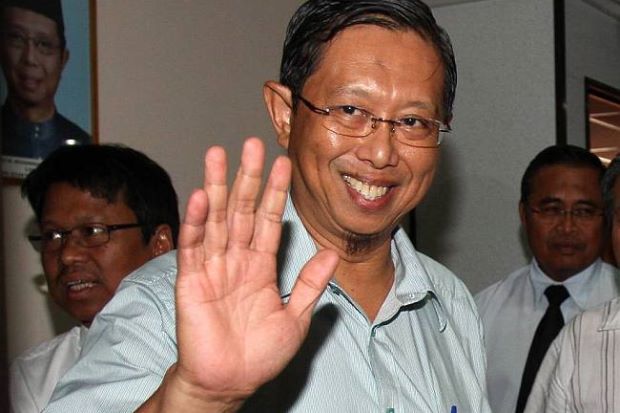
Lembaga Tabung Haji (TH) chairman Datuk Seri Abdul Azeez Abdul Rahim at press conference. - Filepic

Lembaga Tabung Haji (TH) chairman Datuk Seri Abdul Azeez Abdul Rahim at press conference. – Filepic

We may have gotten off from different ships but we are in the same boat now. We need to row in the same direction together or we sink together.

LIKE most journalists, I laughed loudly at the “balik tongsan” remark made by Baling MP Datuk Seri Abdul Azeez Abdul Rahim against an opposition MP in the Dewan Rakyat last week.

His words were not funny. In fact, the remark could be construed as racist and derogatory, but it was humorous to many because it was made by of all persons, Abdul Azeez himself.

Abdul Azeez speaks excellent Tamil, and it is no secret that his ancestors came from India. Not much difference from the ancestors of the MPs he insulted. His forefathers also landed in Malaya by boat.

In fact, he is Indian but of course, the Federal Constitution defines a Malay as a person who professes the religion of Islam, habitually speaks the Malay language, and who conforms to Malay customs.

Malay citizens who convert out of Islam, for example, are no longer considered Malay under the law and hence lose the bumiputra privileges afforded to Malays.

So Abdul Azeez is a Malay, technically and legally, but no one, including Abdul Azeez, can erase one’s roots with regard ethnicity and ancestry. Well, Tun Dr Mahathir Mohamad is open about his ancestry, acknowledging it could be traced to Kerala in India.

Until now, most of us wondered what led Abdul Azeez to lose his cool and make the “go back to China” remark he shouldn’t have made because he is actually a very affable person with very good public relations skills.

Most of us find it hard to turn down his regular personal phone calls to editors requesting for coverage for his humanitarian work.

Even when no reporter turns up because of logistical reasons, as his efforts are mostly in the rural areas, Abdul Azeez continues to make his calls.

That’s Abdul Azeez for you. He lacks the finesse that some politicians have, and even his Masters in Business Administration degree from the unrecognised Preston University USA has earned him some sniggers.

The university’s office is said to be registered in Pakistan but Azeez said he studied in Wyoming. Even as the status of his degree is questioned and laughed at, no one can question his organisational and management skills. There’s really no need for Preston University to appear on his resume.

Earlier last week, he strangely described a woman MP as pondan (transvestite) when the latter was speaking on the deaths of the orang asli children in Gua Musang and raising concerns on the subject matter when Abdul Azeez interrupted. It’s baffling.

Then, Abdul Azeez, who is the Tabung Haji chairman, went on to insult an MP by calling him apek or old man and told him to balik tongsan (go back to China). It’s no different, really, from calling the person a pendatang or immigrant.

He may have been upset with the antics of the DAP MPs, and out of frustration, he must have thrown caution to the wind and blasted the opposition MPs.

Let’s not think that the DAP MPs are angels as they have made equally uncouth remarks in the Dewan Rakyat.

But two wrongs don’t make a right. Such use of derogatory words by people within and outside the political system should be viewed very strongly by the leadership. When no action is taken, the leadership is sending very wrong signals to the people.

It gives rise to accusations of selective prosecution and double standards. Something is terribly wrong when MPs still call fifth and sixth generation Chinese and Indians in Malaysia, who are rightful citizens, pendatang or ask them to go back to China and India.

It cannot be denied that race relations have taken a sharp dip following the 2013 general election when the majority of Chinese voted for the opposition.

There is still a deep sense of hurt among many Umno politicians who found it hard to accept that Chinese voters would vote for PAS. They could accept the Chinese voting for the DAP but to back the Islamist party, they are still shaking their heads in disbelief.

So, many have asked that if the Chinese were prepared to back PAS in 2013, at the behest of the DAP, then what is wrong if Umno works with PAS now?

The 2013 polls showed that the shrinking Chinese electorate, even with the return of many overseas voters, could not result in any change of government. The Bersih 4 protest also showed that if PAS stayed out, as it did, PKR could not rally the Malay crowd.

The reality is that the Chinese cannot change the equation. With only about 38 Chinese majority seats among the 222 parliament seats, the community ought to come to terms with the political reality and perhaps be more politically strategic.

It will take some time before we stop seeing everything from a racial and religious perspective, as the nation still does. It has gone worse, in fact.

Malaysians must come together as a people. For this to happen, the moderates must work harder to emphasise the relevance and importance of commonality. We must not allow the extremists to derail moderation.

Perhaps, those who still talk of balik tongsan should be reminded of what Martin Luther King Jr said – “We may have all come on different ships, but we’re in the same boat now.”

And certainly as Malaysia navigates through the current choppy economic currents, we need to remind ourselves even more that we are all in the same boat. We either row in the same direction together, or we sink together.

Time to get real

The greatest enemies of Malaysia are out there and not within. We must watch what we say and what we do to win back plus points for the country. The real fight is at the capital markets.

SOME politicians are known to suffer from the delusion of grandeur. They have the fixed, false belief that they possess superior qualities such as genius, fame, omnipotence or wealth.

Psychologists say people with a delusion of grandeur often have the conviction of having some great but unrecognised talent or insight.

In Malaysia, not only do we have such politicians, but they also get into the news when they talk about the so-called “imaginary enemies” who are out to create havoc in the country.

These has-been politicians create a potent brew in seeking to make a comeback by waving the racist card.

Last week, National Silat Federation chairman and red shirt rally organiser Tan Sri Mohd Ali Rustam warned that the martial arts group is “ready to go to war” if ever challenged.

The former Malacca chief minister and a former Umno vice-president reminded the Malays that they must live with “dignity” and that “we want to send out a statement that Malays with the art of silat are still in Kuala Lumpur”.

“We do not want to go to war, but if they want war, we will go to war,” he was quoted as saying, adding that Malays were “insulted”, referring to the four Bersih rallies since 2007, which had all called for electoral reforms.

Pesaka was one of the main organisers of the red shirt rally on Sept 16, which was held to counter the Bersih 4 rally as it had suppo­sedly insulted the integrity of the Malay race.

If the warning was meant to get himself into the news, the veteran politician has surely succeeded but it surely didn’t do any good for unity in this country.

The last time he got himself into the headlines was in 2009, when he ran for deputy president and was disqualified after being found guilty of money politics.

Two years later, he celebrated his son’s marriage in front of 130,000 guests in a sports centre, which lasted eight hours, and generated a hefty food bill. It became a controversy naturally.

It must have been challenging for Rustam to try to claw himself back to the national limelight but again, we are not sure if it’s for the right reason.

For one, nobody is challenging anyone. Ordinary Malaysians are too busy trying to earn a living, paying off our bills in an increasingly inflationary environment, and coping with the depreciating ringgit.

Even those who have not bothered to check the daily prices of crude oil are doing so now as they know it has the biggest impact on our ringgit.

All Malaysians, regardless of our race and religion, are in this together, facing the choppy economic waters ahead.

Wake up, stop dreaming and stop imagining things. The greatest enemies are outside Malaysia, not fellow Malaysians.

We should be worried that our rivals, particularly our neighbours, are telling investors that they should stop investing in Malaysia because of our unstable economic and political environment. Any form of racial rhetoric, such as what Rustam said, isn’t helping us.

If it helps, I hope the organisers of InvestMalaysia, the annual Bursa Malaysia Berhad event for the global investing audience, will give Rustam the platform to make the keynote address.

Many people are working hard to showcase the diversity of Malaysia’s capital market and getting key multinational companies and global champions to drive economic growth within the Asean region.

At business gatherings, we all use our networking to impress upon our listeners that Malaysia is relevant and a prime attraction. We stress that we are not a banana republic with tribal and sectarian issues and that we are not doing the war dance and clubbing each other.

Malaysia has a sophisticated economic structure and whatever our weaknesses and failings, we need to move on next year.

The price of oil will be unstable over the next few years and we need to look at new sources of revenue to fill up our coffers. We cannot operate like we used to before.

If we have committed ourselves to taking up moderation to the international platform, we also need to practise it at the local level.

It will be seen as mere empty talk, if not double talk, if we preach moderation to the world, showcasing ourselves as a moderate Muslim country status, but allow those who preach racism locally to go untouched. In fact, they do not even get a slap on the wrist.

Malaysians of all races have been politically critical and, for sure, have been insulting each other for decades.

Umno and PAS politicians have gone for each other’s throats, in much more hostile situations. Fights and scuffles have even broken out.

Likewise, MCA-Gerakan and DAP have been slugging each other, simply because they can’t see eye to eye on many issues, and they also need to score political points.

Let’s admit it – political finesse and the ability to articulate the fine debating points have been never been the qualities of our politicians. Most times, they just shout at each other and, seriously, insult each other in Parliament. Westminster-style debates don’t exist at the Dewan Rakyat.

In my time covering Parliament, I have heard MPs making uncouth remarks, from calling fellow MPs “animals” to outrageous sexist remarks, forgetting that they, too, have mothers, wives and daughters.

Some opposition lawyer-politicians, after hurling insults, just want to get kicked out of Parliament so they can go to the courts next door to handle their cases.

Malaysians have spent too much unproductive hours on politics.

There are some political issues that we cannot resolve. This reality has to be accepted, if not managed realistically, so we can all move on next year.

We also need to stop being insecure, seeing shadows when there are none. It is also crucial that our leadership should be confident enough not to rely on these fringe groups that are taking advantage of the situa­tion.

Putting on silat or kung fu clothes, and waving the keris and sword, are only good for action movies. In modern life, the real fight is waged at the capital markets with traders, in jackets and ties, looking at their monitors.

Let us all get real – we have no time for a costume party.

All together, now

Let’s face the tough times ahead as a nation. It’s going to be a rough ride, so please don’t make things worse.

THE Prime Minister, who is also Finance Minister, has always made it a point to meet journalists to give the outline of his Budget speech a day before he delivers it.

It is an off-the-record session where he emphasises the salient points and allows free flow of questions and answers after that.

This year, Datuk Seri Najib Tun Razak started the session with a straightforward comment. Looking at the journalists, he said 2016 would be a challenging year. Then, he corrected himself, saying that would be an understatement. It would be a tough year.

The country’s economic fundamentals may still be strong but the reality is that the prices of oil and commodities have taken a beating while the advanced economies, including China, have slowed down.

No one would have expected the collapse of the oil market a year ago. The Budget then was made on the assumption that the price of crude oil would be US$100 a barrel but as it dropped, adjustments were made.

But the price of crude oil has continued to be unstable. Late Friday evening, after the PM had delivered his speech, the United States had an upbeat report that the price of oil was holding steady, reportedly finding support from brighter economic data and a global stock market rally after the European Central Bank signalled more stimulus ­measures.

A report said the positive tone has offset persistent concerns over a glut in global crude oil and refined product supplies that have battered the energy market for over a year.

Benchmark Brent crude oil was 8 cents higher at US$48.16 a barrel by 0700 ET after settling up 23 cents in the previous session. US crude for December was down 10 cents at US$45.28 a barrel, having risen 18 cents on Thursday.

The ringgit, having plummeted to 17-year lows in recent weeks, rallied to 4.222 ringgit against the dollar on Friday after the Budget was presented, it was reported, while the stock market ended 0.34% higher before Najib finished his speech. But not many are convinced the price of oil will hold in the short term, or even long term. There is also pessimism of the local stock market, given the coming economic outlook.

It has not been an easy Budget to table, and surely it must be the most difficult in his career, as Najib admitted to the media on Thursday. He had to balance the need to mitigate the increased cost of living and, at the same time, keep a tight hold on the purse.

There are some realities that Malaysians have to face – the price of oil has an impact on our ringgit, as we rely heavily on oil for our revenue, and the depreciation of the ringgit has hit us badly.

It is beyond Malaysia’s control and if we think that 2016 is bad, then we have not been realistic as many expect the difficulties to drag until 2017 and even 2018.

There’s no point in blaming the PM for the depreciation of the ringgit and, for that matter, the decision to increase the toll rates which is part of the deals that were inked long before his term. We can be critical of Najib’s administration but we have to be fair. Admittedly, the current domestic political issues have not helped.

The private sector is struggling to keep down its operating expenses as revenue takes a beating. Already employers, including banks, have started to rationalise their work staff, offering mutual separation schemes.

A business magazine reported that our banks have discovered that it is no easy task to achieve the headcount reduction, given the soft job market and economic uncertainty.

One financial firm’s recent exit scheme for its 17,500 workers could not meet its target of 15% or about 2,600 employees, the report said, after the offer closed last month.

Another bank, which announced its MSS in May, also could not achieve its target as only 11% of the staff responded.

The market sentiments have been poor this year and the hugely unpopular Goods and Services Tax (GST), which was introduced in April, has not helped.

But Najib has said that without the GST, the Government would be hard-pressed to pay the salaries of its 1.6 million civil service.

If sales and services tax was retained, collection would have been only RM18bil compared with GST revenue of RM39bil.

The rating agencies would have also downgraded Malaysia’s credit standing, resulting in more costly borrowings for the country and even individual loans, Najib explained.

From the Government’s point of view, the GST has been a saviour although the large majority of Malaysians would probably disagree.

There is also another political reality – the civil service remains the backbone of the administration and has strongly backed the ruling party. Najib on Friday announced an allocation of RM1.1bil for the civil servants’ salary increases.

The faithful rural voters were also rewarded as more funds were given to the rural areas, with money to improve infrastructure in villages, including building houses, water supply and other projects.

Several infrastructure and social incentives were given to Sabah and Sarawak, two states crucial to the Barisan Nasional.

No toll will be collected when the Pan-Borneo Highway is completed in 2021 while an interest-free loan of RM50,000 would be extended to the building of every longhouse unit.

For the middle class, though they would like to have more goodies, the higher tax relief for their children in college as well as for medical expenses of their parents should go down well.

In planning this Budget, the Government has the uncomfortable task of helping the huge rural base, bolster economic growth in the face of a weak global market, and having to raise money to bring down the fiscal deficit.

Malaysians, in general, understand the difficulties ahead. As loyal and patriotic citizens, we would want to play our part but we also want to see financial leakages and wastage be reduced, if not eliminated.

There should be zero tolerance for corruption, which has made doing business more expensive and, worse, inflate the cost of development, especially projects meant for the people.

We want to see Malaysia recover quicker and for sure, we must stop racist politicians, especially those who appear to have the carte blanche to instigate racial sentiments.

They do not help to make Malaysia be seen as a moderate and stable country, which is essential to attract investors. To put it bluntly, they are a complete disgrace to all of us and surely a political liability.

Let’s face the tough times ahead together. It’s going to be a rough ride and we need all the help to go through the choppy waters.

Changing manners

File pic

File pic

CALL me old-school if you want, but I was brought up in a generation where I am expected to address somebody older than me as “sir” or “tuan”. If it is a lady, then it has to be “madam” or “puan”, “cik” or “kak”.

If the person happens to be your boss, then it will definitely be “sir” or “boss”. Our teachers too retain their formal titles and continue to be addressed as such long after we leave school. I remain in touch with some of my teachers who have since become friends and although they want me to call them by their names, I still address them as Sir or Mister.

Fast forward to the present and we get the feeling that the young generation of today do not care too much about how they address their elders. Some of us can sense a lack of civility, respect and reverence, which these youths probably consider unimportant values in today’s fast-moving world.

I do not know if it is just poor upbringing, indifference, apathy or just plain laziness. But one contributory factor, especially among the urban young, must surely be the handphone. They seem totally incapable of disconnecting themselves from their mobile devices for even just a minute. Well, to be fair, some mature adults also fall into this category.

We often come across scenarios, in the workplace for example, when young workers simply ignore the presence of their bosses as they remain fixated on their phones. The older colleagues will normally put on a smile and exchange greetings with one another.

So if you are caught in the lift with them, you can forget about them even looking up, let alone wishing you a good morning. And from conversations with friends at different management and corporate levels in various companies, one can conclude that such behaviour is fairly widespread.

I doubt that this is something they pick up only when they start work. Our character development begins much earlier, during our most formative years at home and in school. That is why a common term we use in Malaysia is kurang ajar, which basically means that we have not been taught properly from young.

Some of the more colourful individuals in Malaysia have shown us their true colours in the public sphere in the way they treat their elders and authority. The moment they speak, we begin to wonder if their parents ever taught them anything right.

Maybe my expectations are too high, but I have been advised that the days of according respect to authority are over.

It’s the same with the politicians, I am told. They no longer debate with one another with a certain degree of decorum like the politicians of the past.

Many do not fear our men in blue, the police, and this happens every day on the roads when motorists ignore traffic rules and motorcyclists ride with impunity without helmets and even licences. When I was young, the mere mention of the word mata-mata was enough to get us to behave.

Back to the working world – at the risk of sounding like an old fart, which is a term no longer used that much, the young are simply not worried about losing their jobs. In fact, many do not even want to get a job!

After all, many of these middle-class, urban kids know that their parents will take care of their expenses.

Even before they earn their own money, they already have a car to drive to college. Their parents probably had to borrow money just to afford the downpayment for their first motorcycle or car, and it was usually a used car. The popular Malaysian phrase is second-hand and even third-hand.

When we moved to the Klang Valley to start our careers, we would share a rented house or even a room to keep our expenses down. Some of us would still faithfully send back a small sum of money each month from our pay cheques to our parents back in our hometowns.

I had a former boss who told me he never had a room of his own all his life. Coming from a big family, he had to share his room with his siblings.

At university he had to share a room in the hostel and when he started work, he shared a room to reduce the expenses. When he got married, he had to share the room with his wife, of course. He never had his own bedroom – and when he was away on work, alone, he was in heaven with his rare moment of privacy.

Keeping our jobs has always remained our obsession from the day we walked out of campuses. I have stayed in my job with the same employer for 32 years. No, I don’t work at Jurassic World and neither am I a fossil specimen.

I believe in loyalty and commitment to my employer and these days, such values are rare and maybe even odd. No one stays in the same job for more than two or three years. In fact, my younger colleagues say it’s actually bad for their resumes!

Many young graduates also prefer to take a year or at least three months off before they begin their first job.

Studying in a local university, there was no such thing as a gap year where one takes time off, usually for a year, from classes.

But the local graduates also have their own version of the gap year, which is to take a year off before they start looking for a job. Their parents are very understanding, I am told.

The usual excuse is that they need to find space or explore themselves first before committing themselves to full time employment. It’s some Zen kind of thing.

People used to leave their jobs for greener pastures, as they put it, which may sometimes be nothing more than a slight increment in their salaries. But these days, it is not unusual for longer serving staff to leave even without an alternative job in hand. They simply want to head to places like Tibet or Bhutan to think about their future.

I am all for the young seeking out alternative careers, but I am stumped when just about every young person I meet wants to be chef. They have never cooked a single meal in their lives. In fact, they don’t even bother to put their plates in the kitchen sink after a meal, assuming it is what the maid is paid to do.

Many also tell me that they want to be online entrepreneurs. “Hello uncle, nobody goes to the office anymore,” they say.

But I don’t know if anything has actually been sold online. I have never seen any real revenue or profits from such geniuses as they lock themselves in their rooms. After all, why worry about a regular income when all their needs are taken care of?

I suppose these are new challenges that today’s employers, apart from worrying about running their company, have to face as they look at how their workforce is being transformed.

Proud of being multiracial

File pic

Malaysians are proud of our plural society. It’s time everyone sees this for what it is – an asset to the country.

I AM glad that I was born in Penang and that I grew up in the state. Although I moved to the Klang Valley in the early 1980s to work and eventually start my own family, Penang remains home in many different ways.

I make regular trips home to see my parents and to savour the excellent street food. Penang remains warm and welcoming, and it has nothing to do with current day politics.

If there were any elements of politics, the tiny bits of it, that much of what we have today can be traced back to the British.

The colonialists, let’s be honest, did good by leaving us with an established system of administration, education and judiciary.

But more importantly, Penang was a flourishing port and the islanders who are now in their 50s can testify that this was how they were exposed to the cosmopolitan side of life, which opened up their minds. We were very pluralistic in our thinking, that’s for sure.

And let us also not forget that even from the early 18th century, Penang was home to thriving communities of Jews, Armenians, Germans and Scots. In the early 20th century, many Japanese also made Penang their home.

Penangites from my era and earlier were privileged to grow up in such an environment where diversity was rich and obvious.

This is very much unlike many other Malaysians who did not have that privilege as they grew up in mono-ethnic settings, and their exposure to other races only started when they entered universities or head to the urban centres to work.

The port in Penang saw the arrival of all kinds of sailors from Europe and helpers from neighbouring states ferrying commodities from other Asean countries.

A whole industry, mostly restaurants and bars, opened up, even before our independence, to cater to the needs of these foreigners.

When the Vietnam War broke out, the US marines serving in Vietnam were given rest and recreation breaks during their tour of duty. The duration of R&R was five days leave to the approved destinations, namely Bangkok, Hong Kong, Kuala Lumpur/Penang, Manila, Singapore, Taipei and Tokyo.

Due to their greater distance, seven days leave was permitted for those heading to Hawaii and Sydney. Bangkok was reportedly the most popular destination for the single GIs while Hawaii was the best pick for married GIs planning to holiday with their spouses.

In the case of Malaysia, Penang – being an island and with its free-spirited environment – was more popular than KL.

I was then in primary school but was very often in the company of these marines because my aunt worked as a receptionist in Town House Hotel in Penang Road, now the site of Cititel Hotel.

Many of these soldiers – who were well behaved given the fact that they chose Penang over Bangkok – were given a taste of Malaysian family life in our home.

Some of these Americans made it home after the war but many of them died. In Penang, they lived it up, knowing there could be no tomorrow.

This is a part of Malaysia which remains unrecorded in our school history books because it is probably deemed unimportant and irrelevant to Malaysia. But for us Penangites, it had a drastic impact – economically and personally.

Besides our Penang hawker fare, restaurants serving Western food opened up, giving us better and wider choices.

Butterworth was also the home of the Royal Australia Air Force until it was closed in 1988. For us Penangites, it meant decades of friendship with these Aussies and their families.

In my teenage years in the 1970s and 80s, while the rest of Malaysia only had access to RTM, we had the best Australian pop music being broadcast daily via Radio RAAF.

If you lived near the beach areas like Tanjung Bungah, your neighbours would not just be Malays, Chinese, Indians and Eurasians but could also be Australians.

The interaction with foreigners meant many Penangites already had their exposure to many things foreign, allowing their worldview to be wider.

For me personally, I was lucky to have studied at St Xavier’s Institution. Despite it being a Catholic school, the many Irish brothers and German principal allowed a liberal environment to exist.

The school newsletter – our first foray into journalism and many of the contributors eventually became newsmen – was allowed to be critical. And surely in the 1960s, few schools had a full-fledged orchestra with the best composers like Jimmy Boyle teaching! I don’t recall our rival school, Penang Free School, having an orchestra.

The school band, in green shiny kain pelakat and songkok, was always picked to lead the annual chingay or giant flags parade. The students, despite its predominantly Chinese population, just felt natural with these Malay costumes and proudly wore it.

Walking past nearby Pitt Street – now Jalan Masjid Kapitan Keling – it was natural to hear the azan calls to the faithful for prayers, smell incense from the burning joss sticks of the Chinese temple, listen to the chants from the Indian temple, and hear bells ringing from the churches in the same area.

It was just beautiful and we were taught from young that the breaking of coconuts, in Indian temples, was to break one’s ego. It was a lesson learnt from friends – and not from our civic classes.

There was no need for any form of restrictions and prejudices because these differences were not just tolerated but accepted.

At a time when there was no such thing as taking a plane back home to India, the MV Chidambaram ship used to call on the Penang port to take passengers home to Madras, now known as Chennai.

When the ship arrived and before it sailed off, the “Little India” area or the Indian enclave of Penang Street, Queen Street, King Street and Church Street would transform into a carnival-like festival atmosphere as Indians from other states, bound for India, would converge there as well.

It would have been impossible for any Penangite, regardless of their race, religion and customs, to stay away from this excitement.

But the best part of Penang is that we were just far away from the capital. That provided Penangites with an independent streak. We had no Rulers and, in many ways, did not have a proper understanding of protocol and formality.

But the state produced many thinkers, many fiercely outspoken, and for many years, remained the home of many non-­governmental organisations.

Penangites obviously have been outspoken and demanding – they have kicked out three chief ministers and all were serving ones. These leaders were voted out when they were either regarded as subservient, or when Penangites simply got fed up of their inflated egos. So no one should take Penangites for granted.

The message of this article is simple – there is a need for some of our politicians to open their minds and, more importantly, their hearts.

Some still cannot see the importance and relevance of keeping Malaysia multiracial, which is an asset to the country.

These pea-brained politicians cannot see the importance of links to outsiders and how we can benefit from foreign visitors.

Countries which have become more cosmopolitan have done well and many refugees see these countries as their hope, offering them a free society which they can only dream about in their own home country.

The refugees from Syria, Africa and many countries want to flee to the United Kingdom and European countries, and strangely not Middle East countries, because they see hope.

We Malaysians are proud of our plural society. Let’s keep it that way and don’t let any selfish politician tell us otherwise.

Let cool heads prevail

Malaysia cannot afford to be distracted by racial politics at this time and the thuggish behaviour of some lower level leaders has resulted in individuals fighting with fellow Malaysians and even thinking of taking on a giant.

OVER the last few years, I have had the opportunity to visit many primary schools, as part of my work in promoting the use of newspapers to learn English, in particular The Star’s Newspaper in Education programme.

This is also part of our corporate social responsibility outreach.

What struck me the most, when I show up at the Chinese primary schools, is the increasing number of non-Chinese students at such schools.

They include tudung-clad Malay pupils, Indians, the occasional Caucasian-looking kids and even a few with African parents. I have seen, with my own eyes, how the shape of these Chinese primary schools has transformed.

The teachers are just as multi-ethnic as well, which is quite a contrast to some national schools which have become predominantly mono-ethnic and even religious in nature.

If there are doubts over what I have said, then visits can be organised for our politicians to some of these schools. They can talk to the children and parents themselves to find out why they picked Chinese primary schools.

The reason is clear – parents want their children to be able to speak and write Chinese, besides Bahasa Malaysia and English. It is clearly an advantage to know an extra language.

The Chinese schools are also known for instilling discipline and maintaining ­standards, and their method of teaching mathematics is highly efficient.

But many Malaysians of my generation, who are now in their 50s and above, went to English medium schools.

I had my primary and secondary education in a Catholic school. My parents, although Chinese educated, insisted I had to go to an English medium school because it would help us in our future.

England was then the economic power house. Being proficient in English would determine our career prospects.

It was just pure economic consideration and my parents, both local born, had no sentiments with China or the Chinese language.

One of my three elder brothers was enrolled in a Chinese school but he did not do so well and his command of English was poor. It was enough for my father to make the decision.

Twenty years ago, I decided to send my daughter to the Puay Chai primary school in Petaling Jaya because my wife and I could see the emergence of China as the new super power.

English remained our medium of conversation at home and it would not be wrong to say that it was my daughter’s first language as well, despite her going to Puay Chai.

I cannot even write my name in Chinese and I remain the classic Yellow Banana – white inside and yellow outside – where I am more close to Western countries than China.

So, don’t even ask me to migrate to China – because I don’t have any relatives there and I won’t fit into mainland China. So, stop being ridiculous.

Again, sending my daughter to a Chinese primary school was made solely on econo­mic reasons. Not because of racial sentiments.

Today, China has indeed become a super power and it would be extremely foolish for any country or any half-baked racist politician to pick a fight with China.

Malaysia remains China’s top trading partner among Asean’s 10 member nations despite the slowdown in the volume of trade in 2014.

Trade between Malaysia and China reached US$102bil (RM363.5bil), down 3.8% compared with an 11.8% hike registered in 2013, according to data released by the General Administration of Customs (GAC) recently.

Last year, trade between Malaysia and China hit a historic high of US$106bil (RM467bil) with the trade volume exceeding US$100bil (RM441bil).

Malaysia has been China’s largest Asean trading partner for six consecutive years since 2008, and is also China’s third biggest trading partner in Asia after Japan and South Korea.

The two nations pledged to increase ­bilateral trade to US$160bil (RM705bil) by 2017 after Prime Minister Datuk Seri Najib Tun Razak’s official visit to China in May last year.

Chinese tourists are certainly needed at this juncture, especially when our depreciating ringgit has made it easier and cheaper for foreigners to come. Tourism is our ­saviour.

We want to make the Chinese tourists, whose number has already dropped by 27%, feel welcome and appreciated in Malaysia.

The events of the past weeks have been damaging and they need to be stopped. China – and the rest of the world – is watching how we are handling this diplomatic hot potato with regard to the Chinese Ambassador’s remarks in Petaling Street. It must be diplomatically resolved and we do not need some of our nitwit politicians to worsen it.

Let’s be blunt. We need China but China does not really need us. We are just a small country but we have been lucky because of our historic ties and also the far-sightedness of the late Tun Abdul Razak who forged official ties with China.

More importantly, Malaysia, with its huge Malaysian Chinese community, has been able to cement the economic relations with China because we understand the Chinese language and culture – putting us above other Asean competitors except Singapore.

This is an asset because when we are able to speak Chinese, we win the minds and hearts of the mainlanders.

This is not something to politicise. And we should be thankful that the Chinese schools have been guaranteed a place in our education system.

We must credit Datuk Seri Najib Tun Razak, as Education Minister then in 1999, for removing Section 21(2) of the Education Act 1961 which allowed the minister to convert a national-type primary school to a national primary school.

This surely indicated that the Government was sincere in recognising Chinese education and it must be recorded here that the Government also recognises the existence of the 60 Chinese independent schools.

Over the past few weeks, some have questioned the position of Chinese primary schools, suggesting that they are a cause of racial disunity.

I am an advocate calling for the return of English medium schools because I consider it neutral ground. But I do not subscribe to any ill thoughts about Chinese primary schools. They have a place in our system.

Furthermore, non-Chinese today make up over 13% of the student population in these schools and the number is increasing.

The racial disunity premise is not a sound argument because the reality is that Mara colleges, until some years back, were exclusively for Malays and in many science residential colleges, the students are almost entirely predominantly Malays.

Going by this argument, all our schools, colleges and public universities should be more multi-racial instead of being mono-­ethnic.

Our government lacks the political will to open up English medium schools and yet the reality is that if you can afford it, there is the private and international schools option – and we are sure many of our politicians, despite spewing remarks about race and nationalism, send their kids to these privileged schools or overseas.

The events unfolding in our beloved Malaysia over the past weeks have been painful. From raising racial slurs to bullying small-time traders trying to eke out a living in Petaling Street, and threatening to slap people, we are all left wondering why we have gone down so low.

We should be putting our energy to ­revitalise our economy and to strengthen our weakening ringgit but precious time and resources are spent dealing with the pathetic racist and thuggish behaviour of our lower level leaders. More regretfully, they have not been reprimanded by their superiors, which gives rise to speculation that their behaviour is endorsed.

We really cannot afford to be distracted by racial politics, which has resulted in indivi­duals picking fights with fellow Malaysians and even thinking of taking on a giant, which happens to be our biggest trading partner.

Have some of us gone mad? Why do we want to throw away what we have built together, as Malaysians of all races, religions and cultures?

Malaysia belongs to all of us, and not just some politicians. We have to remain rational even when they are not.

No to race politics

File picture

File picture

IT would appear to many Malaysians, by now, that some of our politicians seem to be suffering from bipolar disorder. They can preach about the strength of our nation’s diversity to one audience and, on the very same day, spew out racist and hate remarks to stir up the sentiments of a different group of people.

Then we have the has-been politicians, in their attempt to stage a comeback, embracing communal politics in a rather bizarre manner that make them appear to be politically correct.

They can justify racism, one even in the name of Islam, while another wondered why there should be anything wrong to make a racist slur against the Chinese.

This same leader has suddenly become a household name with his rantings against the traders in Petaling Street and continuous demands to have the right to trade there. He claimed he once made an application to trade there but it was rejected.

Seriously, as a party division leader, peddling cheap watches and T-shirts can hardly be materially attractive to him, given the stories going around about the perks that some division leaders are enjoying.

In the case of Datuk Jamal Md Yunos, who reportedly admitted that he flunked his SPM, but now trades in luxury cars including driving a Lamborghini himself, it hasn’t been bad at all, securing AP permits, despite claiming to be “oppressed and suppressed”.

It is politicians like him, with their bigoted views, who alienate voters, especially those in the urban areas. He should not assume that by playing the Malay card, he has won the “most admired Malay leader” contest.

Then, there is Datuk Seri Ismail Sabri Yaacob, the Rural and Regional Development Minister, who continues to be an odd ball. He has puzzled many of us in the media because he is really a nice guy with competent press assistants.

But his latest outburst – threatening to stop sending Mara students to Taylor’s University because the latter fired the operator of the university buses for ferrying Sept 16 protesters – is seriously childish and smacks of being a tit-for-tat response.

Surely, Taylor’s University would have done the same if its buses, bearing the varsity logo, were found to have sent Bersih protesters to the city centre.

And why is Ismail Sabri making such a big fuss if the Sept 16 protest only involves non-governmental organisations, which we are expected to believe?

Umno has remained a party that is known to be accommodative and moderate since its formation and that has been the trademark of the party.

Non-Malays understand and respect Umno’s stand in protecting the rights of the Malay community.

In wanting to keep the Malay vote, it is understandable that Umno has to project itself to be the bastion of Malay welfare but it must also not allow its members to go overboard, considering that it also draws its support from non-Malays and non-Muslim bumiputras in Sabah and Sarawak.

For that matter, there are many non-Muslim leaders and members from Sabah in Umno now.

Leaders like Ismail Sabri , Tan Sri Annuar Musa and Jamal sometimes forget that when they make offensive remarks, they are being watched by voters in these two important states.

The Barisan needs the support of these two states – which includes a huge chunk of Christians who have been loyal voters.

No party, regardless of which race is dominant, can win in the general elections without the support of the other communities. That is the beauty and reality of Malaysian politics.

The experience of Bersih 4 has shown that without PAS, the PKR and newly-formed Amanah Harapan would be quite incapable of gathering mass Malay support.

PKR has made attempts to send the olive branch to the Islamist party but the results have yet to be seen.

Likewise, the DAP can only hold on to Penang and the 38-odd Chinese majority parliament seats in the 222-seat Dewan Rakyat but has no hope of capturing Putrajaya without PAS.

Similarly, if PAS persists in continuing to push for an Islamic State, it will just make an impact in the east coast but will remain on the opposition bench at the federal level.

Let’s not forget that in the 1999 general election, a huge number of Malays rebelled against the Barisan, in particular Umno.

It was the non-Malays who tipped the balance and rescued Umno candidates, and allowed Barisan to keep its two-thirds majority. In fact, Datuk Seri Najib Tun Razak barely scraped through with a 214-vote majority in the Pekan constituency.

In that election, the Chinese also dumped DAP’s Lim Kit Siang and Karpal Singh, punishing the DAP for working with PAS in the Barisan Alternatif alliance.

In Kelantan and Terengganu, the Malays rejected Umno. PAS won by huge margins – 41-2 against BN in Kelantan, and 28-4 in Terengganu.

In short, it will be myopic of any politician or party to focus on only one community for votes as the Malays themselves have deserted Umno before.

Likewise, in the past two polls, large numbers of Malays had backed Pakatan Rakyat, especially in Selangor and Kuala Lumpur, and it is unfair to put the blame entirely on the Chinese without accepting the changing political landscape.

It cannot be denied that Malay voters have supported non-Malay candidates from Barisan component parties over Malay candidates from PAS or PKR.

That is the politics of consensus and power sharing and clearly proves Umno’s willingness to accommodate other races. That is the high mark of Umno since independence.

Trying to partner PAS may seem attractive, in the push for Malay solidarity, but it will lead to nowhere because the reality is that the Barisan works on consensus.

PAS will never be able to join Barisan because all it needs is just one objection from a component party.

It won’t be just the MCA, Gerakan and MIC but also the other Sabah and Sarawak parties, including even the Parti Pesaka Bumiputra Bersatu, that will stop PAS.

So Umno politicians who think the party should play footsie with PAS should not pursue this plan but stick with its loyal and tested component parties.

There is more to gain by branding oneself as rational, moderate and pragmatic in a modern Malaysia than to harp on communal politics.

Race politics has lost its appeal among many Malaysians and it is also foolishly damaging to race relations in this beautiful country of ours.

Malaysia belongs to all races and we should stop those who continue to harp on race. And if there is still law and justice, they should face the consequences, and not be allowed to escape because they are purportedly politically connected.

A great day hijacked

The late Usman Awang, the great national laureate. (inset: His book called Antologi Puisi Gemersik Tiga)

The late Usman Awang, the great national laureate. (inset: His book called Antologi Puisi Gemersik Tiga)

IT would have been the most appropriate time to launch a book on the late Usman Awang, the great national laureate, as the nation was celebrating Malaysia Day.

But the auspicious day, when Malaysians should be celebrating as one nation and one people, was hijacked by the Red Shirt protesters.

There was fear in the air with talk of racial clashes. At a time when we should be out in the streets celebrating, many opted to stay indoors and avoid the heart of Kuala Lumpur.

In the process, a very meaningful occasion was forgotten, if not ignored. In fact, most media organisations did not even bother to report the event. Perhaps they were short-handed, having to use their reporters to cover the protests.

A literary function to celebrate a dead writer would hardly be a priority when thousands were involved in a more dramatic and newsworthy event.

So most Malaysians were unaware that on Malaysia Day, the Usman Awang Foundation launched an anthology of poems on Usman put together by Dr Siti Zainon Ismail, Dr Lim Swee Tin and Dr Syed Husin Ali.

Usman Awang would probably have spoken up against the Red Shirt protest, which smacks of racism, if he were alive.

Yes, he would have undoubtedly supported the right of any group or individual to protest but he would have detested any form of uncouth behaviour.

We cringed when a prominent political figure arrogantly asked whether there was anything wrong with being a racist while a rally organiser defended the right of the protesters to hurl racial abuses at other Malaysians, including non-Malay reporters.

Have we sunk so low that it is now perfectly all right, and even politically correct, to be racist? And is it acceptable to call others names because there seems to be some form of protection for those who do so?

We had a rabble-rouser who made racist remarks, purportedly instigating a mob to act, over a mobile phone theft. And yet we are told there is no case against this serial trouble-maker with a known racist record. How do we explain that?

And what has the street protest got to do with Usman Awang, also known as Tongkat Warrant, who is acknowledged as a great writer, dramatist and poet?

Plenty! Usman Awang tackled issues of class discrimination, not race, and social injustice in the Malaysian narrative.

As a secondary school student, I was so fired up by his works that I signed up to do Malay literature for my Higher School Certificate (HSC) examinations instead of English Literature. I also took Islamic History.

By the time I entered Universiti Kebangsaan Malaysia, I was fortunate to have been taught by Dr Siti Hawa, one of the contributors to the anthology, who taught me the beauty of the Malay language in the Malay Letters Department.

Teachers like her opened my eyes to how Usman Awang wrote about peasants and labourers oppressed by uncaring leaders. He was able to transcend political and ethnic boundaries in his writings. While the street protesters may have their grievances, they were unfortunately not able to see things beyond the racial perspective.

Dr Wong Soak Koon aptly wrote in Aliran Monthly, which featured Usman, the People’s Poet, on the cover: “Usman Awang’s life-long concern for justice, fair play and for the lot of the oppressed must continue to energise us into action.”

It would be appropriate for us to just read his poem Bisikan Perpaduan (“Unity Whispers”) where he espoused the view that unity involves all the people and not merely one group of people.

His courage is epitomised in the poem dedicated to his friend, Dr M.K. Rajakumar, where he lamented over his own bumiputra status which his good friend did not have.

In the beautifully written Sahabatku, he wrote:

Sahabatku

suatu bangsa merdeka yang kita impikan

terasa jauh dari kenyataan

kemarahanku menjadi kepedihan

bila kita dipisah pisahkan

jarak itu semakin berjauhan

aku dapat gelaran “bumiputra” dan kau bukan

The essence is lost when translated into English but this is how it goes:

My friend

The one free nation we imagined,

Remains a distant truth,

my anger becomes sorrow,

When we are forced apart

The distance ever wider,

Now that I am proclaimed “bumiputra”

And you are not.

Usman asked, “When will all citizens receive equality, and come to be known with one name: Malaysian?”

While I have never had the privilege of meeting Usman Awang, certainly a true patriot and humanist, I had the honour of meeting the late Dr Rajakumar, certainly a great Malaysian.

In Usman Awang’s 1962 poem titled Anak Jiran Tionghua (Chinese Neighbour’s Child), he wrote of the friendship between Ah Chew and Iskandar:

Anak Tionghua kelahirannya di sini

Di bumi hijau ladang-ladang getah dan padi

Ia bisa bercerita untuk siapa saja

Di sini tanahnya dan ibunya bersemadi

Translated, it reads:

A Chinese child born here,

on this green earth amidst rubber and rice fields

he can tell whoever asks,

this is his land and his mother’s forever

Usman Awang wrote about the Malay race in his poem, Melayu, but he was also someone who understood the importance of pluralism and had advocated Bangsa Malaya even before we achieved independence.

His works have been translated into many languages, including English and Chinese, but it is only when they are read in the original Bahasa Malaysia that one is mesmerised by his work and the beauty of the Malay language.

But more importantly, he was able to rise above race despite his strong sense of nationalism.

It was a pity that a protest in Kuala Lumpur on Malaysia Day dominated the front pages of all newspapers and was the main item on television.

Sadder still, a great day dedicated to a great Malaysian through the launch of this anthology was also hijacked.

Stand up as Malaysians

It’s not make-believe: We should let the world know that multi-racial Malaysia is real and does not exist only in glossy brochures.

It’s not make-believe: We should let the world know that multi-racial Malaysia is real and does not exist only in glossy brochures.

MALAYSIA loves to tell the world that we are a fantastically plural society. We spend millions promoting that image overseas.

We persuade tourists that they ought to choose Malaysia over our neighbours because we are Truly Asia. That’s our tagline.

Look at all the tourism advertisements where every race is represented. No one is missed out. That’s simply because the Tourism Ministry realises the value of a multi­-racial, multi-cultural and multi-­religious set-up.

It’s an asset for Malaysia and we sell it to the world. It is something that Malaysia is blessed with and we understand the occasional complications that come with it.

Why see only temples and eat tom yam daily when you can see our magnificent mosques, Chinese and Indian temples and churches in Malaysia, and enjoy the wide array of food from all races? Why choose a clinically sterile place with almost everything copied from us when we offer real adventure, and real food, for example?

In short, we have a great story to tell the world. We want the world to know that ­multi-racial Malaysia is real and does not exist only in glossy brochures.

Malaysia is Truly Asia and not a make-­believe theme park with actors dressed up in multi-racial costumes in parades. It’s for real.

For sure, ordinary Malaysians are not going to let anyone spoil it all with talk of racial killings. If stomping on the faces of politicians on posters and carrying out mock funeral prayers of leaders are already seen as gross and pathetic, posters threatening mayhem and murder are worse, and totally unacceptable.

Police reports have been lodged and these ugly posters, which had appeared in some towns, have been removed but we would like to see arrests being made as well.

Those who put up such posters are dangerous and they really need psychiatric help. No one with a rational mind would condone such thinking.

Protests are certainly a part of democracy. Like-minded people have a right to assemble and express their unhappiness.

If the yellow-shirted Bersih protesters could gather, despite being declared illegal, so can their red-shirted opponents. The police have not approved the Sept 16 gathering as well and if they proceed, then the organisers would have to face the same wrath of the police.

Just like Bersih 4 leader Maria Chin Abdullah, who has been charged, we would like to see the same punishment being meted out to the ring leaders behind the Red Shirt gathering, should they proceed. There should be no double standards.

But the difference here is that the Red Shirt gathering, at least according to some news reports, smacks of racism.

The impression Malaysians are getting is that the Sept 16 protest is a one-upmanship to show that they can gather more Malays than Bersih, which was predominantly Chinese.

What is worse is that some of their leaders want to pick Low Yat as the venue of protest, which, not too long ago, was a scene of tension due to the theft of a handphone from one of the stores which was transformed into a racial issue. The person has already been charged in court. He has pleaded not guilty and some parties have attempted to make him into a hero of sorts.

The shop assistants who took part in the ruckus have also been charged, pleaded guilty and fined. That’s all very fair because no one should take the law into their own hands. The police, too, have acted professionally.

In the case of Bersih 4, the police have also handled the situation very well by keeping a minimum presence. Home Minister Datuk Seri Dr Zahid Hamidi must be applauded for this decision and he chose to act only after the protests ended.

While there were unnecessary, if not repulsive, side shows at Bersih 4, it cannot be denied that the protesters had generally acted well. It was carnival-like although our leaders naturally found themselves mocked, as in all protests.

Our politicians should stop expecting to be revered like an almighty. They can walk around with their entourage of political hangers-on and groupies, with their false sense of importance but really, those days are over.

Don’t expect the people to be their ­servants as it should be the other way around. Politicians can be elected but they can also be disposed.

Both the Bersih and Red Shirt protesters need to read up their history books. National Day is sacred to all of us Malay­sians.

Malaysia is one of the few colonies to have achieved independence without any bloodshed. There was no revolution, no riots and it was achieved mainly through negotiations. Tunku Abdul Rahman was accompanied by Chinese and Indian leaders – let’s not forget that.

The Chinese and Indians did not just take part in the push for independence, led by Umno, but also built the country’s economy. So, let no ignorant politician ask what the Chinese and Indians have done for this country of ours.

At the same time, we must recognise that the Malays welcomed the Chinese and Indian immigrants to this country.

Likewise, Malaysia Day is another important day. Malaysia would not have been formed without Sabah and Sarawak. The two states did not join Malaysia but they helped to form Malaysia.

That is why they still enjoy certain rights including immigration, legal and manpower privileges because they joined as equals. So, do not take Sabah and Sarawak for granted.

To choose Malaysia Day to protest, with no real reasons except to show one’s communal might and to strike fear among other fellow Malaysians is surely disturbing.

The organisers, in an odd way, are said to be unknown and, strangely, are able to gain some form of momentum, giving rise to suspicions that powerful forces are behind it.

For God’s sake, it is Malaysia’s Day. It is not Malay Day or Chinese Day or Indian Day or Iban Day. It is Malaysia Day and it is a day we should take pride in that we come together as a nation. We marked National Day on Aug 31 and took it a step further on Sept 16.

If there should be any gathering, it should involve all races. The strength of any leader, who represents all of us, is to bring together all Malaysians.

It is easy to be a communal leader, fanning racial sentiments by playing on imaginary fears of their ignorant followers, but it is more difficult to be leaders who speak on behalf of all Malaysians and understand our needs and aspirations.

Let us be Malaysians, not just when we are overseas or in tourism brochures, but to remember Sept 16 for the real reasons. We pray for rationality and reason to prevail – let the spirit of moderation reign supreme!

To mark Malaysia Day, we should be focusing our energy on nation building and economic competitiveness instead of spending time to see who can gather more people in a protest.

Step on it, people

Online mockery: These were the creative memes which went viral via the social media after the humiliating 10-0 thrashing by the United Arab Emirates in the Asian Zone World Cup qualifiers last Thursday.

Online mockery: These were the creative memes which went viral via the social media after the humiliating 10-0 thrashing by the United Arab Emirates in the Asian Zone World Cup qualifiers last Thursday.

Our football teams used to be among the best in Asia. But now, we have fallen so far down and the spirit is definitely lacking.

IF there’s one thing Malaysians do not need at this juncture, it is another bout of bad news about the country. We have had enough black eyes over the past few months and something uplifting would surely be good for our morale.

Our ringgit has taken a beating, our stock market has been hit, and the political image of Malaysia, too, has been badly bruised.

But now, we have to live with the outrageous news that our Malaysian football team has been humiliated by the United Arab Emirates 10-0 in the Asian Zone World Cup qualifiers last Thursday.

This is a new all-time low in our football history. We don’t need another new low because that news angle has become repetitive through the updates of our ringgit’s value these days.

At the rate we are sinking, our footballers will probably be beaten by the Eskimos and Amazon tribes who have never played football in their entire lives.

Malaysia is now languishing with the minnows in 169th spot out of 209 countries, a drop of six positions from the previous ranking.

This is according to the latest ranking released by the International Football Federation (FIFA) on Sept 3.

It’s no laughing matter but in Asia, we are just above countries like Pakistan (No.170), Bangladesh (No.173), Laos (No.174), Yemen (No.175), Cambodia (No.180) and Brunei (No.182). Even Bhutan, the tiny Himalayan country, is ranked 164 – better than Malaysia. Bhutan may have been thrashed 15-0 by Qatar in the qualifiers on the same day, but Malaysia’s has had a longer history with the game.

Our downward spiral is obvious. We recently got thrashed 6-0 by Palestine on home ground and could only manage a 1-1 draw with Timor Leste.

Malaysians dare say that if we were to play against the top women teams in the world, we could end up being walloped. The US women’s team, which recently won the FIFA 2015 World Cup, will probably tear our Harimaus to shreds if such a match is allowed.

It is easy to fault the coach and players but let’s be brutally honest here – why shouldn’t the leadership of the Football Association of Malaysia (FAM) take the responsibility too?

Coach Dollah Salleh has decided to quit, announcing his decision upon arrival at the KLIA on Friday. It would have been wrong for him to cling on to the job after such a performance.

But is the leadership of FAM prepared to do the same as the same faces seem to have dominated the leadership all these years?

Rightly or wrongly, the FAM is seen as dictatorial, seemingly unwilling to tolerate dissent or any form of challenge. FAM has put to shame the North Koreans for its intolerance of public criticism.

When the team fails, everyone else is blamed except the FAM leadership, which seems untouchable.

The reality is that our football standards are at the lowest ebb. When the Malayan Tigers were knocked out of the AFF Suzuki Cup, head coach Datuk K. Rajagopal was blamed and made a scapegoat. Now, it’s the turn of Dollah Salleh. What next – blame the Youth and Sports Minister Khairy Jamaluddin?

In fact, Khairy who had questioned and criticised FAM on numerous occasion has even been reportedly labelled “biadap” (rude) for speaking out against FAM.

Don’t tell Malaysians that it is seditious to speak up against the FAM or even the Johor FA because they are headed by royalty. They are elected to head our football associations and ordinary Malaysian fans, as stake­holders, have the right to demand transparency and accountability. These sports bodies belong to us, the fans, and are surely not to be passed on from one person to another for hereditary reasons.

The irony is that while Malaysian fans are getting crappy deals, our football players are getting huge salaries – the kind of money that our legends like the late Mokhtar Dahari, Soh Chin Aun and Santokh Singh could never have imagined in their wildest dreams, as our politicians love to say these days.

Bhutan national players reportedly get a paltry RM582 a month and would probably have to sell cow’s milk to supplement their income but our players are getting five- to six-figure incomes every month. It’s a big deal even with the depreciating ringgit.

And is FAM poor? Far from it and that’s why no one seems to be keen to leave their seats. FAM is getting millions in sponsorship.

The leadership of the FAM is decided by 39 delegates – the 14 state FAs have two votes each (28 votes), together with Armed Forces (2), Police (2), Malaysian Malays (2), Malaysian Chinese FA (2), Malaysian Indian Sports Council (2) and Malaysian Coaches Association (1).

Like FIFA, which is currently embroiled in its own leadership crises, there is a lot of power in the hands of the delegates who sometimes do not necessarily carry the views of the people they are supposed to ­represent.

Malaysians love football. We have had our heady days when we were truly among the best in Asia. We even qualified for two Olympics. Our local league has strong support and the battles between the states show the passion in the game. Yet, when it comes to playing for the nation, the spirit is lacking.

Malaysian fans are the ones getting a poor deal, and probably find comfort in supporting their favourite Premier League teams.

It’s bad enough to be mocked at for our politics, and now we have to bury our heads and tails even when it comes to football.