Author Archives: wcw

Winning not one but all the races

We need to accept the fact that ours is a plural society – with all its good and bad. Our leaders must remember that they are leaders of all Malaysians. They must win the hearts of all races, not just one.

NOT many Chinese in Malaysia would want to hear this, nor can they accept this reality, but it is a fact that the community by itself cannot overthrow the Barisan Nasional government or more precisely send Umno into the opposition.

After failing to capture Putrajaya in the 2013 general election, there are many who now think the Sabahans and Sarawakians will deliver the votes to the opposition, which the Malays in the peninsula did not and probably will not in 2018.

It is wishful thinking that is based on an unrealistic dream. No matter how many planeloads of Chinese voters return from overseas to support the opposition, there can be no change unless the predominant Malay electorate goes along.

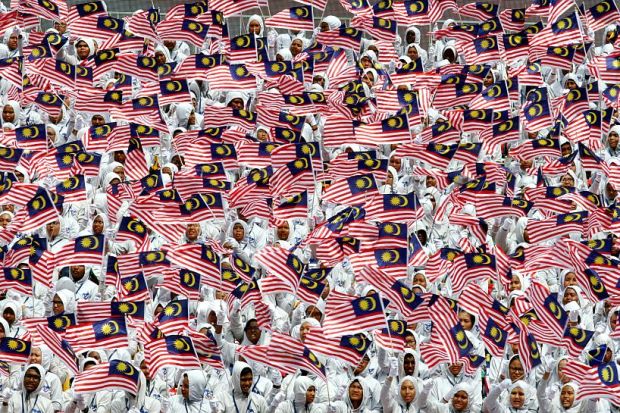
The 2013 election clearly showed that the majority of Malays kept their faith with Umno and last year’s Bersih rally was clearly dominated by the Chinese. In short, it was a yellow affair.

Sure, many diehard protestors would still insist there was a Malay presence and of course, there was, but the numbers were so insignificant they hardly stood out.

The lesson was clear enough – the absence of Malay protestors was because PAS stayed away and PKR could not deliver the numbers.

The demographic reality in Malaysia is that the Malays will never lose their grip on political power and Umno will remain to strengthen that hold.

Out of the 222 parliamentary seats, 166 are in the peninsula of which 70% are Malay-majority seats. There are only 22 Chinese-majority seats or merely 13% while there are 29 mixed seats. There is no Indian majority seat.

But even the demographics may change over the next two general elections in these 22 Chinese-majority seats.

In simple mathematics, even if every Chinese in Malaysia voted for the DAP, they can never make the party rule Malaysia.

And if we think that all the Chinese are so politically keyed-in, the latest statistics by the Election Commission on unregistered voters are an eye-opener. There are more than a million Chinese who have yet to register.

Of the 4.2 million unregistered voters, the Chinese account for 1.2 million and the Malays 1.8 million.

Malay politicians who create the fear that the Chinese will rule Malaysia via the DAP are also talking rubbish, creating a scenario that will never take place.

While the DAP has tried very hard to sell its multi-racial platform, it is essentially a Chinese party. That is not different from the Gerakan, which is Chinese majority, although its membership is open to all.

Amanah, the splinter group of PAS, may want to see non-Malays as members, but we can be sure the party won’t see any traction from the non-Malays.

As much as DAP strives to get more young Malays into the party, it does not help when Malay entrants are not voted into the party’s state committees except for a few.

The grassroot members in the DAP are still unable to see the value of these Malay members nor do they know how to work with their Malay partners. They kicked out PAS, quarrelled with PKR and harsh words were used by the DAP against Amanah over some pathetic councillor seats.

Such brashness and even arrogance is something the DAP leaders need to work on if they want to be part of an opposition pact to topple the Barisan.

Some of the DAP leaders, who are already in state government, still use the language of street fighters, forgetting that as state government leaders now, they need to speak with some finesse and decorum, befitting their status.

There is little wonder why a recent study by the Darul Ehsan Institute revealed that the Malays, especially in the rural areas, perceived the DAP as anti-Malay.

The study revealed that after the break-up of the Pakatan Rakyat coalition in June, the campaign to demonise the DAP as anti-Malay has become more effective, with Umno and PAS working together in the anti-DAP campaign.

In the survey by the institute conducted between Nov 13 and 15 last year, involving 1,716 Malay respondents throughout Selangor, almost two-thirds of respondents (72%) agreed that DAP was a racial party and that it was only looking after the interests of the Chinese community. Only 12% disagreed, while 16% said they were “unsure”.

More than half (64%) also agreed with the statement that “DAP is an anti-Malay and anti-Islam party”. Some 18% disagreed while 19% were unsure.

To be fair, the DAP has fielded more non-Chinese – Malays, Indians, Kadazans to Portuguese – which no other party can claim to. It has also contested in non-Chinese majority areas.

But the inability to change the perception after its formation in 1965 and having contested its first elections in 1969, is also a big failure the party must admit.

The DAP can blame Umno and PAS for its campaign but that’s what politics is all about.

The party leaders have to look at themselves and perhaps also measure the degree of interaction with the Malay community including how much they understand the Malay language, Malay customs and Islam as a pillar of the community.

Perhaps, they can take a leaf from Selangor Mentri Besar Datuk Azmin Ali, who has displayed courtesy and respect when he talks to federal leaders and the royalty.

Against this backdrop, the DAP must surely realise that it will never be able to win Malay votes on its own, if it lacks and fails to appreciate the Malay voters sufficiently.

When Malaysia achieved independence, the Chinese population stood at 45% but it now stands at 24% and the prediction is that in the next decades, it will go down to 10%.

The Malay fertility rate is at 2.8 children per woman against the Chinese’s 1.8 children per woman and Indian’s 2.0 children per woman.

It is reported that Malay fertility rates are 40% higher than Malaysian Indians and 56% higher than Malaysian Chinese. In 2010, the Malays and Bumiputras were 60.3%, Chinese 24.6%, and Indians 7.1%.

Sin Chew Daily, the country’s biggest Chinese newspaper, has correctly reported that “Chinese Malaysians will be reduced from a minority to a very small minority in the long run. And demography is all about politics and economics.

“The drastically reduced population ratio of the Chinese means their political power is poised to take a further beating and this will also have some bearing on its economic strength. In short, Chinese Malaysians must brace themselves for eventual marginalisation.

“On the one hand, Chinese families yearn for smaller household sizes in a bid to maintain the quality of their spiritual and material lives; on the other hand they must also come to terms with the possible consequences of marginalisation.”

In short – the lack of strategic political behaviour and voting, fanned by emotions and unrealistic hopes will put the Chinese in the back seat of power, or worse, totally out of government with Penang as the only base.

The Chinese daily further added, “we can no longer expect ourselves to compete with the mainstream community on an equal footing in numbers, especially when it comes to politics.”

“Chinese Malaysians must learn to get along peacefully with the majority community in this country, trying to understand their insistence on their ethnic attributes and religious faith, as well as their sense of insecurity towards the existing living environment. We have to learn to accept our common grounds in reducing exclusionism and confrontation as we attempt to make up for the broadening number gap.”

Politics can only work if there is consensus and readiness to share power, and to accept the fact that this is a plural society, with all its strengths and weaknesses.

If Malaysian politicians want to consider themselves leaders of all Malaysians, they have to win the support of all races, and not just one ethnic group.

Then there is hope for Malaysia.

Islamic law affects all of us

The Indira Gandhi case has broken the hearts of many Malaysians, including many Muslims, who understand what justice is all about.

I HAVE always thought that the court is one place where we can seek redress and justice. Where righteousness, uprightness and compassion flow alongside the stream of justice, even as the law is interpreted in ways the common people may not fully understand.

How naïve I have been. This could be the result of watching too many Chinese dramas on the life of the legendary Justice Bao, more commonly known as Bao Gong.

The judge was an honest and principled judge during the reign of Emperor Renzong in China’s Song Dynasty.

His court decisions included sentencing his own uncle, impeaching an uncle of Emperor Renzong’s favourite concubine, and punishing powerful families.

According to one article, his appointment from 1057 to 1058 as the prefect of Song’s capital Kaifeng, where he initiated a number of changes to better hear the grievances of the people, made him a legendary figure.

Justice Bao was always available at all times to the downtrodden and he stood up against the powerful landlords.

Their political connections meant nothing to him as he dispensed justice – as what judges are supposed to do. He was only fearful of God and certainly not ordinary men, no matter how influential they were.

Common sense, compassion and justice are surely noble values that we seek from our men and women on the bench.

Surely, not those who are fearful of making decisions, preferring to pass the responsibility to another court, especially when it involves matters of the faith, or at least that’s the perception of many Malaysians now.

Let’s deal with the M. Indira Gandhi issue as sensible human beings. Imagine the kindergarten teacher as your daughter, your mother or simply as your neighbour. Imagine her pouring out her frustrations to you as a listener.

It’s a case which can happen to any of us, and if the Federal Court – her last hurdle – upholds the Court of Appeal’s decision, then that’s the end of the road. Not just for Indira Gandhi, but it would have an impact on all future cases.

She married her husband K. Patmanathan, in a civil marriage, like most Malaysians and then in 2009, he decided to convert to Islam. This is not a disputed fact: Theirs was a civil marriage. She didn’t marry a Muslim.

Upon his conversion, he unilaterally went to the Islamic authorities to convert their three children – Prasana Diksa, then barely a year old, Tevi Darsiny, then 12, and Karan Dinish, then 11 – to Islam. The two older children have, however, remained with their mother.

Prasana turned seven last year. But the mother has only seen her once, since she was taken away, and that was at a court hearing at the Ipoh High Court in 2009 when the toddler was one year and six months old. The High Court had ruled in her favour, but the Court of Appeal by a majority of 2-1 has overturned that ruling.

She has been unable to speak to the child and her text messages to the estranged husband’s phone have been left unanswered.

Just for a second, think about it. A mother suddenly loses contact with her child for seven years. No one seems to be able to find the husband. It’s a classic case of abduction, as far as she is concerned, and she can’t seem to get any help.

This is Malaysia. No one just disappears into the thin air and we cannot be expected to believe that Patmanathan, now known as Muhammad Riduan Abdullah, cannot be found.

And now Malaysians are told by the learned judges of the Court of Appeal that this is a religious matter and that issues regarding Muslim conversion are exclusively the jurisdiction of the Syariah Court.

Now, you and I don’t have to get a law degree to know that non-Muslims cannot appear in the Syariah Court, so how on earth is Indira Gandhi going to seek redress in the Islamic courts?

Malaysia hasn’t become an Islamic State and the people, especially non-Muslims, can still challenge contentious matters in the civil courts.

So, this is a lesson for non-Muslims who actually believe that Islamic laws won’t affect non-Muslims and are meant only for Muslims.

We live in a plural society and even as Malaysia becomes more Islamic and mono ethnic, non-Muslims still have their rights, as guaranteed in the Federal Constitution.

The people also have the right to question the decisions of the courts including the Indira Gandhi case. That is surely not contempt of court and for sure not seditious.

We have not gone the dictatorial way. Our leaders can be criticised in a democratic society. Even ridiculed.

The case has broken the hearts of many Malaysians, including many Muslims, who understand what justice is all about.

Now, Indira Gandhi has her final shot – she will be appealing the Court of Appeal majority decision, and is expected to file the appeal within the next two to three weeks or sooner.

The Federal Court should expedite the hearing and empanel a full bench to hear this appeal as any decision it makes will have far-reaching consequences on the nation.

The majority decided that from a subject matter approach whether a person was a Muslim or not was only to be decided by the Syariah Court.

In his dissenting decision, Justice Hamid Sultan Abu Backer said the Administration of Religion of Islam (Perak) Enactment 2004, the law that allowed for the conversion, could be questioned by a civil court.

The panel set aside the Ipoh High Court’s decision to quash the conversion, and made no order as to costs.

Both the majority and the minority decisions (the full judgments are available at www.kehakiman.gov.my) will be heavily scrutinised in the days to come, and we should be thankful that we are also allowed to have our say as the common people.

In the court of public opinion, this is not just about lawyers slugging it out in the courts. With respect, this is not just a matter of religion. It is a case of whether non-Muslims can find a competent, fair and suitable court to hear their cases involving unilateral conversion.

Malaysians, especially non-Muslims, have a right to ask why they should be subjected to the jurisdiction of a Syariah Court and why are the rights of a non-Muslim not protected under the Federal Constitution?

More importantly, when it comes to the conversion of minors without the parents’ consent, should the court, in such circumstances, restrict itself in the interpretation of the word “parent” in the singular to a narrow interpretation when the results can be unjust?

Our judges and leaders cannot run away from their responsibilities. They have been put in places of responsibility and accountability to make sure justice is done. We will all be answerable to the Almighty in the end.

Say ‘no’ to extremism

Fireworks light up the sky over KLCC during New Year celebrations in Kuala Lumpur on January 1st 2016.

Fireworks light up the sky over KLCC during New Year celebrations in Kuala Lumpur on January 1st 2016.

As we look forward to 2016, we should remember to support voices of moderation. Malaysia needs it.

I AM an optimist by nature. Most of us, in fact, are traditionally optimistic and hopeful at the beginning of a new year.

But I cannot help having apprehensions about the coming months. It will be a rough ride ahead with too many external factors beyond our control.

The price of crude oil, which is a dominant factor on our economy and ringgit, is likely to continue to be volatile. There are fears that it will continue to plunge.

Who would have thought that just 18 months ago, it was US$100 (RM430) a barrel and now it is hovering at around US$40 (RM172) a barrel?

The knockdown effect on our ringgit has been tremendous and 2015 will be remembered as a year when our ringgit was the worst performing currency in Asia.

It is humiliating but more than that, it means that the cost of doing business in Malaysia has become extremely high. Against the backdrop of a falling ringgit, weak market sentiments and escalating operating costs, most companies saw the need to reduce staff as a way out.

It will be the same scenario this year. It’s not just the price of oil, but also China’s economic pace which began to slow down in 2015 and will continue the same downward trend this year.

Malaysia, like other Asian countries, is more reliant on China than ever before. China is, after all, the second largest economy in the world and the top destination of exports from Malaysia. Any slowdown in China will have a negative impact on us.

The good news, as we wrapped up 2015, was the ringgit had strengthened as much as 3% since September, and as the year ended, it was trading about RM4.32 against the dollar.

Europe is still trying to recover while Japan remains technically in recession, and the value of the yen has also dropped against the dollar.

In short, the combined effects of the US interest hike, economic slowdown in the region and the instability of the oil price will all make 2016 a difficult year.

These are the external factors. As far as domestic issues are concerned, the 1MDB rationalisation exercise is near completion.

The issue has dogged the leadership and the country for the entire year. It has to end and we need to move on.

Be that as it may, there are still answers that Malaysians seek and if the authorities are not forthcoming, the 1MDB issue will continue to haunt the leadership into the new year.

It is clear by now that Malaysians will not accept failed standards and the violation of rules in institutions. We should be protecting these principles and we cannot accept excuses made to defend these violations.

Those who have spoken up have paid the price but we must also be apprehensive of those who pursue their political agenda in the name of justice and other purported noble values. These include people whose background needs plenty of explaining.

As we face the challenges this year, we must do away with some of the political and religious controversies.

Why should even a roof structure that resembles a cross be an issue and the developer ends up having to cover them up? It is plain ridiculous.

The cross is the symbol of Christianity, yes, but it has no supernatural powers. Even Christians will tell you that and, for sure, it won’t shake anyone’s faith, if that is the reason.

Some of us must have watched too many Dracula and Frankenstein movies to believe that a crucifix is enough to disfigure and disintegrate these characters with acidic effects. The problem with most of us is that we see too many ghosts when there are none.

We should be more worried about politicians who use race and religion. They are more devilish than dead people.

As Hyacinth J. Tagupa of The Inquirer of the Philippines wrote, in reference to such figures in her country, the people must not remain “zealous, unquestioning and defensive” about them.

“That’s the kind of blind devotion for which we have always criticised the Nazis, and eerily, the kind of devotion we have started to display here.

“And though we could never imagine ourselves letting another Holocaust happen, if we continue to venerate our champions without scrutiny, we may already be tolerating too much.”

What she has written certainly fits into the Malaysian context too. Many of us turn a blind eye to personalities who use race and religion, for fear that speaking up against them would appear that we are acting against the interest of their communities.

Deep in their hearts of hearts, they know these characters are tearing Malaysia apart with their continuous ranting of race and religion in social media and certain newspapers, but many have chosen to remain silent.

We are on a slippery path to a nation torn apart if they are left unchecked and unpunished. A couple of days in remand, without any formal charges, won’t deter them.

In fact, they will appear more heroic in the eyes of their misguided supporters. Their indefensible actions will cost us dearly. We cannot let this continue in 2016.

More than 50 decades after independence, we are now told that being liberal is politically wrong. In fact, faithfully wrong, Muslims are told.

More frightening, some Umno leaders are saying the same thing, as the party gets cozy with PAS.

In the preamble to the Rukun Negara formulated in 1970 by the late Tun Abdul Razak, it is clearly stated that our nation nurtures the ambition “guaranteeing a liberal approach towards her rich and varied cultural traditions”.

Besides Sarawak Chief Minister Tan Sri Adenan Satem and former deputy prime minister Tun Musa Hitam, many of our politicians are fearful of declaring themselves as liberals. A few have become more outspoken after they retired.

In flirting with PAS, we should not be surprised if there were no dissenting voices when leaders of the Islamist party suggested that the best way to resolve cases of minors being raped would be for their perpetrators to marry them.

Yes, they are saying that rapists should marry their victims and that all will be well and fine. How brilliant but in the name of political expediency, many politicians, who claim to speak up for our interests, are strangely silent.

Perhaps, they have been away during the holiday season, but voters and politicians will be tested in 2016, as PAS pushes its agenda knowing that their suitors are currently unable to see, or chose to ignore their blemishes, in the heat of the courtship.

But remember, just three years ago, many Chinese voters were also infatuated with PAS, with many making excuses to defend them, looking the other way, or even closing their eyes to their transgressions.

The same apologists are now the same angry voices who pushed PAS to be kicked out of the now defunct Pakatan Rakyat.

The hudud laws were defended because they were purportedly suited for Barisan Nasional leaders, and that everything was allowed in Kelantan, as trips were organised for voters to see how exemplary “liberal” Kelantan has been under PAS rule.

Those who warned against working with PAS were scolded, even threatened for being political alarmists, in the heat of the 2013 polls but suddenly it has all changed now.

The very same DAP politicians who supported and worked with PAS are now asking why Umno is working with PAS. Politics makes strange bedfellows, and it’s all about common interests – all politicians should know that.

But the sad part is the voters, who have sacrificed much of their time and money, as well as loss of friendship, will continue to be influenced by the same politicians, peddling unrealistic hopes, feeding on fears and emotions.

2016 is a crucial year – thanks to the Internet, we have become experts on all issues, and as Tagupa wrote aptly, “it’s time we practised being more rational and analy­tical when faced with what others have to say about our heroes”.

Please stop giving saintly status to some of our politicians. They are fallible human beings, so there’s no need to be their echo chamber, accepting everything they say, and blindly rejecting other views and facts.

We need to support the voices of moderation more ever than before. And to do so consistently this year.

Moderate is the way to go

MALAYSIANS whine and complain a lot – it’s both good and bad.

The good part is that we obviously want the country to improve, to set new benchmarks so that we can match the best performing nations globally. And we want our leaders to be accountable and to have integrity.

The minus side is that we take many things for granted and we seem fixated in our perception that we are only going in one direction – downhill. We refuse to acknow­ledge even the positive traits around us.

We jump to conclusions, often coming out with the worst scenarios possible. We forward messages, in text or video, without thinking – a simple car fire, the vehicle set alight by a jealous husband, is the work of extremists for sure.

These cynics do not, for a second, ask themselves why a terrorist would choose an ordinary stop on the LRT route to set off a bomb.

But that’s Malaysia. I have enjoyed my Christmas celebrations and I am certainly happy that it is recognised as an official public holiday.

In fact, Malaysians – despite their many different and divergent views – all seem to agree that we must celebrate every festival of every community. Malaysia is among the countries with the highest number of holidays, at state and federal level, which often lead to extended weekends.

So, even the small groups of Muslims who feel that they should not wish their Christian Malaysians a Merry Christmas, supposedly on religious grounds, are happy not to have to report for work on such days.

While there are fears, among non-Muslims, that this country is turning more conservative and puritanical, this writer remains optimistic that most of us remain tolerant, respectful and moderate.

I do not believe we will go the Brunei, Tajikistan or Somalia way – countries which have banned Christmas celebrations and decorations in public.

For the tiny Christian community in Brunei, mostly expatriates and foreign workers, they can only celebrate within closed doors, such as churches and homes, and they must also reportedly alert the authorities ahead.

The Ministry of Religious Affairs said in a statement, “These enforcement measures are … intended to control the act of celebrating Christmas excessively and openly, which could damage the aqidah (beliefs) of the Muslim community.”

Sultan Hassanal Bolkiah’s decision to ban the public celebration of Christmas in his country has received worldwide attention but the media have also pointed out that the ban does not extend to his business interests outside of Brunei, including the historic Beverly Hills Hotel, part of his Dorchester Collection with branches in London, Paris, Milan and Rome.

International media continue to show pictures of these hotels fully decked out with Christmas decorations.

Punishment for violating the ban is a five-year jail sentence, and the government warned last year that Muslims would be committing an offence if they so much as wear “hats or clothes that resemble Santa Claus”.

It has also been reported that Somalia issued a ban on Christmas and New Year celebrations in the Muslim country, saying the festivities “have nothing to do with Islam.”

“We warn against celebration of Christmas, which is only for Christians,” Sheikh Mohamed Kheyrow, director of Somalia’s ministry of religion, reportedly said on state radio on Wednesday.

“This is a matter of faith. The Christmas holiday and its drum beatings have nothing to do with Islam.”

He was quoted as saying that the ministry had sent letters to the police, national security intelligence and officials in the capital Mogadishu instructing them to “prevent Christmas celebrations”.

In Indonesia, police had to be stationed at some churches to provide security with 13 areas identified as vulnerable to attack by extremists.

On Christmas Eve in 2000 a series of co-ordinated attacks on churches in Jakarta by al-Qaeda and Jemaah Islamiyah killed 18 people.

Despite the display of racial and religious extremism by some local personalities, who seem to enjoy press coverage without fear of being charged in the courts, Malaysia has been spared from such fears and unrealistic state actions.

The Prime Minister and our leaders have, without fail, issued statements wishing Malaysians of all faiths during each festival.

Christmas is openly celebrated, and our malls are wonderfully decorated to reflect the holiday season. It must be noted, however, that this is more for commercial reasons than of any religious significance.

Be that as it may, Christmas is an occasion to be happy and to spend time with loved ones, especially our families. That is surely a noble reason.

The Johor Sultan has taken to the social media to send out his wishes and has even publicly told Muslims that they should not fear that their faith would be threatened if they celebrate alongside their Christian friends.

I am glad that Malaysians continue to attend the unique open houses of fellow Malaysians, even donning the costumes of each ethnic group to reflect the occasion. No one has talked about their faith being shaken until now because of the actions of some ill-informed individuals who stir up issues of race and religion for their own agenda.

Globally, we have right-wingers and extremists like Republican presidential candidate Donald Trump, the French right wing party Le Pen and Swedish Democrats with neo-Nazis, whose actions fan up Islamophobia.

Muslims who push for into­lerance in Malaysia must see for themselves how vulnerable their fellow Muslims in these countries are to understand the predicament of minority communities.

Trump has insanely called for a ban on Muslims entering the United States and soon, some pea-brained extremists in the Bible belt would say mosques must be shut down or that Hari Raya must be banned because it would purpor­tedly weaken the faith of Christians.

It is a reminder that all of us must learn to put ourselves on the other side of the equation when we speak or take certain actions.

The office Christmas parties, yes, it’s a plural, have been the best so far! We have reminded ourselves that as we open our presents, we must also never forget to open our hearts and minds. That’s our mode­ration reminder!

I wish all Malaysians a Happy New Year!

Let’s rise above racial rants

We must stick together to face challenges of the new year. Malaysia needs us.

IT’S wishful thinking, perhaps, but then it’s still a wish that many Malaysians, we are sure, would cherish for Malaysia.

Wouldn’t it be nice if some of our politicians would stop talking about mono-ethnicity and in some cases, openly saying the community, which they claim to represent, should just disregard the interests of other races?

When these politicians sow distrust and suspicion among Malaysians, using race and religion, it can only spell trouble.

Worse, when low-level party apparatchiks stir these racial rants, and actually get away with it, without even a slap on the wrist, then we know that the wrong signals have been sent.

Something is fundamentally flawed when we cannot differentiate between right and wrong.

When public institutions of higher learning are allowed to hold seminars questioning the faiths of other Malaysians and no convincing explanations are forthcoming, can we be blamed if we feel there is a sense of injustice, and for that matter, lack of protection for the minorities?

For sure, we can do without such issues in the coming months when Malaysians need to come together, as one nation and one people, more than ever.

Malaysia needs the reconciliation of all races, all religions and all cultures. We need to pull back and ponder the meaning of power sharing – the very basic political principle that has glued this wonderful nation together.

The majority community has to reaffirm the plural fabric of Malaysia and to reemphasise that a multi-racial society is an asset. The continued push for mono-ethnicity and mono-religion will destroy this nation.

On the flip side, the minority Malaysians have to appreciate that power sharing is two-way. They have to accept the political reality. The fact is that the Chinese and Indian communities are shrinking fast while the Malays have grown swiftly.

To put it bluntly, the day will come when the Chinese community drops to 20% and less. When this country achieved independence, the number stood at over 35%.

With 222 parliamentary seats, there are only 35-38 Chinese-majority seats, and no Chinese tsunami is sufficient to overthrow the ruling party.

Without Malay support, any plan to dump Umno will never work, and anyone harbouring that hope should just wake up.

That could be clearly seen at the Bersih 4 rally when the majority of Malays stayed away. Those who strenuously pointed out the presence of Malays were merely lying to themselves, with their unconvincing spin.

Without PAS, the harsh reality is that PKR and Amanah could not rally the Malays. That is certainly telling how these parties would fare, except perhaps for Selangor and Penang, in the coming year.

And when the Chinese voters chose PAS candidates, including even personalities with extreme stands, they probably did not expect PAS and Umno top leaders to sit together on the same stage.

How can Chinese leaders in the Barisan Nasional now tell Umno not to work with PAS when in the 2013 general election, a huge number of Chinese voters supported PAS, at the behest of the DAP?

After kicking PAS out of the now defunct Pakatan Rakyat, PKR is scrambling to woo PAS in the presence of DAP.

Both Umno and PAS are now looking inward at their core supporters, and the other communities are now perceived as being less impactful in the numbers game where Muslim voters will increase in the coming years.

The country could well become more conservative and Islamic, let’s be frank, and certainly for liberal and progressive Malaysians, it is a disturbing trend.

The moderate forces have to step up to push back the waves of right-wing nationalism and religious forces.

It may seem like a paradox but Umno leaders are saying they have no choice but to look for alternate political support elsewhere, if they are spurned, and this can only lead to a more fragmented plural Malaysia.

If the political trend is gloomy, many of us are looking at the coming economic year with some apprehension. After all, we have been cautioned that the challenges for 2016 would be even tougher.

The price of oil has already dropped below US$40 and this certainly spells trouble. The Minister in the Prime Minister’s Department Datuk Seri Wahid Omar has said the Government will review Budget 2016 if oil prices continue to stay low.

The Government had planned for the Budget based on the assumption that Brent Crude would average at US$48 per barrel for next year but at midday on Thursday, it was trading around US$37 per barrel.

“The Government will need to optimise the country’s expansion plans if oil prices continue to stay low,” Wahid said. That includes reviewing some of the projects it has announced.

I remember asking a top official in October when Malaysia would be in trouble, and he said, if the price of oil reached US$43. Well, we have now gone below that.

To put it simply, if you are the head of the household, you now have less money to spend. Obviously, you have to review your family needs and that is precisely what the nation is going through. We cannot live like we used to, whether at the level of a family or as a nation.

Malaysia won’t suffer an economic crisis but we are in for a tough time as we face the impact of the continuing oil price slide and its effect on the value of our ringgit.

Most companies in Malaysia have remained operational and people continue to have jobs but operating costs have to be cut as revenue and profits tumble.

Employees can help to keep their jobs by postponing demands and being more productive. We all need to help ourselves.

All this may sound gloomy, as we celebrate this holiday season, but we need to keep our wishes in check.

IS no friend to Muslims

Bangladeshi and Yemeni Americans join supporters to protest against Islamic State and political and religious extremism during a rally in the Detroit suburb of Hamtramck, Michigan December 11, 2015. -  REUTERS

Bangladeshi and Yemeni Americans join supporters to protest against Islamic State and political and religious extremism during a rally in the Detroit suburb of Hamtramck, Michigan December 11, 2015. – REUTERS

DONALD Trump is a serious mental case. It will not be wrong to label the front-runner Republican presidential hopeful as an extremist.

He is no different from the other religious extremists, whether Muslim, Hindu or Christian, who use religion, fear and ignorance to pursue their political ambitions.

His call to ban Muslims from entering the United States of America is the most outrageous suggestion I have ever heard.

It is one thing to be racist but how on earth is the United States – should Trump, God forbid, become the president – going to enforce such a ruling?

Since religion is not stated on the passport, is he going to ban travellers on the basis of their Arab sounding names? Trump would be surprised to know that most West Asians have similar sounding names, even if they are not Muslims.

Or he is going to identify the Muslims by the way they are dressed, with their headgear and robes, or simply because they keep a beard or goatee?

It may be news to him but many Arab Christians do wear traditional garbs. They cover up themselves for simple practical reasons – to protect themselves from the sand in the desert as well as to follow the dictates of a conservative society.

I have travelled extensively to Arab countries and even to Jerusalem and as such, I am able to share some educated opinion from my observations and conversations with the people.

And let’s not even talk about Muslims from other parts of the world who do not fit into the typical Muslim image of the West. China has an estimated Muslim population of more than 20 million and the US immigration will surely have a headache if even a fraction of them decide to go to the US for a holiday.

And what about the Western-educated, English-speaking Muslims, who can easily fit into US society?

Last week, Trump became a global news item when he called for the barring of all Muslims from entering the United States.

“Donald J. Trump is calling for a total and complete shutdown of Muslims entering the United States until our country’s representatives can figure out what is going on,” a campaign press release said.

Trump, who has previously called for surveillance on mosques and reportedly said he was open to establishing a database for all Muslims living in the US, made his latest controversial call in a news release.

His message comes in the wake of a deadly mass shooting in San Bernardino, California, by suspected IS sympathisers and the day after President Barack Obama asked the country not to “turn against one another out of fear”.

The problem with the likes of extremist politicians like Trump is that each time the IS terrorists carry out a brutal campaign, such remarks are a form of oxygen to these people. It is the kind of reaction that they are looking for, which gives their campaign a far wider reach than they could hope from a localised attack.

The coordinated Paris attacks in Novem­ber involving three suicide bombers saw 130 people killed and 368 others injured. IS has claimed responsibility.

The attacks, which saw seven attackers killed, have been described as the deadliest on France since World War Two. In January, also in Paris, 17 people were killed in an attack by terrorist groups.

The saddest part of these IS attacks is that they give rise to Islamophobia, which leads to anger and suspicions against innocent Muslims.

It also provides right-wing politicians a fresh voice to pursue their campaigns while moderates find themselves losing their appeal as the latter would be perceived as being too ready to compromise and accommodate.

Individuals in Europe who have been sympathetic to the refugees have suddenly found that their citizens want the borders closed and that the refugees are no longer welcomed.

This may be something that IS wants. An analyst in the Wall Street Journal said IS’s objective is clear: to try to bait Western societies into an indiscriminate backlash against millions of Muslims living in Europe and the US. It is a backlash that, if successfully provoked, would disrupt these Muslims’ bonds with their countries of citizenship and residence and – as is it happened with Iraq’s Sunnis – validate the Islamic State’s claim to be their only protector.

“IS thrives on polarisation,” Hassan Hassan, an expert on the group at the Royal Institute of International Affairs in London, was quoted as saying.

“They want people to say they hate us, and so we hate them. This is the foundation of their success.”

If Trump’s call has gained traction, in France, the far-right National Front has reportedly received a major boost following the Paris attack, becoming the country’s ­largest party in regional elections. Reports have said that it is no longer beyond the realm of possibility that the Front’s leader, Marine Le Pen, may become president in 2017. Some opinion polls have placed her ahead of the incumbent.

The emergence of such rightist leaders in Europe against equally Islamist groups in West Asian and other Muslim countries can only spell trouble for the world.

If the IS succeeds in carrying out more attacks in the West in the coming months, something that terrorism experts and counter-terrorism officials say is a near-certainty, such polarisation is only likely to intensify, the report pointed out.

Extremist Western groups and individuals will become more popular while the moderates will find themselves discredited, and that will be sad for the world.

The voices of reason and compromise will be drowned out if Western countries conti­nue to be targeted by IS.

The saddest victims will also include Muslims who have assimilated into these Western countries and have accepted the Western way of life.

IS does not help Islam and Muslims one single bit.

Tok Pa – a true gentleman

We need to give credit where credit is due. And when good leaders shine, we should acknowledge it.

A GENTLEMAN politician – that is what International Trade and Industry Minister Datuk Mustapa Mohamed is – and is certainly an exemplary one, too.

Not many of our politicians are prepared to apologise when they make a mistake, thinking an admittance of a flaw is a weakness.

The ability to say sorry, unknown to some politicians with inflated egos, is a strength.

Instead, they prefer to go on the defensive, and often blame the media for purportedly being misquoted. Of late, some of them even play the racial card, claiming they are being targeted because of their ethnicity.

But our salute to Mustapa, or Tok Pa, as he is affectionately known, for apologising after coming under fire for making certain remarks on Tuesday that were considered sexist.

At the first official function held at the new MITI building, the minister reportedly described the new building as an “inexperienced virgin” when compared to the old building – home to the ministry for the past 30 years – as an old wife who is no longer exciting and who deserves to be discarded.

The off-colour joke amused some people but others did not find it funny. Like a true gentleman, which even the opposition readily declared, Mustapa issued an apology and expressed regret for his indiscretion.

“I humbly apologise for offending anyone, including women, with my inappropriate analogy at the event,” he said in a press statement.

“As head of staff, a husband and a father, I always respect women’s contributions to the country and to myself and I hold them in high regard. I regret what happened and this will be a lesson for me. I hope the matter will not be prolonged.”

Even DAP veteran Lim Kit Siang, who is ever ready to pounce on Barisan Nasional MPs, issued a statement acknowledging the swift stand taken by Mustapa.

“Kudos to Mustapa for admitting his fault and having the courage to apologise. We only wish that all of his colleagues in Umno and BN had his gentlemanly qualities,” he said.

“However, if we were to search for someone who this week exhibited an attitude that contrasted with Mustapa’s, we would have to look towards the opposition.”

PKR vice-president Tian Chua, despite being embroiled in the Nurul Izzah-Jacel Kiram controversy, has refused to acknow­ledge that the issue is indeed serious.

It has been reported that Tian Chua alleged­ly arranged the meeting between the two. Tian Chua outraged Malaysians when he said that members of the Kiram clan were not terrorists.

This is despite a statement by the late Sultan of Sulu, Jamalul Kiram III, that he ordered the Lahad Datu intrusion in 2013, which saw 10 Malaysians killed.

But back to Mustapa, who would have learned by now that telling jokes is not his forte. He should leave it to the professionals like Harith Iskandar and Douglas Lim.

It was during Mustapa’s time as the Higher Education Minister that Tan Sri Dr Rafiah Salim was appointed as vice-chancellor at Universiti Malaya, making her the first female vice-chancellor in this country.

He also appointed non-Malays to key positions in universities, such as Prof Dr Khaw Lake Tee, a woman, and Prof Dr Tai Shzee Yew as the deputy vice-chancellors for Universiti Malaya and Universiti Sains Malaysia respectively. There is also Prof Dr Saran Kaur Gill, a deputy vice-chancellor at Universiti Kebangsaan Malaysia.

Mustapa, a believer in meritocracy, pushed for these appointments when he took office, believing talent should be recognised, regardless of gender and race.

It has to be pointed out that the current secretary-general in his ministry, Tan Sri Rebecca Fatima Sta Maria, is certainly one of the most respected civil servants.

But what sets Mustapa apart from many politicians is his preference to be low-key, preferring not to be accompanied by an entourage of officials.

It is well known that he often takes the ERL from Sentral to the airport alone. Don’t expect him to buy expensive meals for you, as he is well known for his thriftiness. He has consistently proven that he can get himself elected into Parliament and in the party leadership by being a “no frills” politician.

In a state like Kelantan, where the voters hate smug politicians who show off their power and wealth, Mustapa is regarded as Barisan’s most effective opposition leader to PAS despite his lack of religious credentials.

At his Jeli parliamentary constituency, he makes it a point to personally teach students at the weekly English classes whenever he can find time.

Mustapa also does not believe in spewing racist remarks to win votes, preferring to let the voters judge his work. Affable and well-liked, Umno certainly can do with more politicians like Mustapa.

There is another one that comes to mind and that would be Datuk Ahmad Husni Hanadzlah, another gentleman politician.

At a time when taking an anti-establishment stand is popular, we should give credit where credit is due and certainly when there are good ministers who stand out, we must be prepared to acknowledge these gentlemen.

They are human beings with strengths and weaknesses, and they, too, like to be encouraged and inspired, so they can do better.

Forget not our heroes

Whatever our political allegiance, Malaysians must remember our men in blue who died for us.

SERIOUSLY, what was PKR vice-president Nurul Izzah Anwar thinking when she met up with Jacel Kiram, the daughter of the self-proclaimed Sulu Sultan Jamalul Kiram III, who orchestrated the 2013 intrusion into Sabah.

In that attack, an armed force of more than 200 men raided Lahad Datu in support of a separatist movement led by Jamalul Kiram, which claims Sabah as part of the Sulu Sultanate.

Two Malaysian civilians and 10 members of our armed forces were killed during a two-week-long military campaign against the raiders.

The MP for Lembah Pantai, in defending herself, has said that Jacel was one of the 15 guests invited to a meeting hosted by the Council on Philippine affairs and the Asian Institute for Democracy, the office of the City Mayor of Manila and the office of the Vice-President of the Philippines.

Nurul has now said that she had not sought out any meeting with Jacel and had not made her acquaintance before.

But here’s where we detect the holes in her story – there were only 15 people in the meeting and surely everyone would have an idea of everyone in the room. We are talking 15 people, not 150 people here.

It is almost a standard practice, at such meetings, that the participants would be formally introduced to one another and a short resume of the participants would be distri­buted to all ahead of the meeting.

But of course, if we are to accept the excuses put up by Nurul and her PKR colleague Tian Chua, everyone had no idea about anyone else in the room.

We are expected to believe they were two blur Members of Parliament from Malaysia, who kept to themselves and were only interested in talking about freeing Anwar Ibrahim and nothing else.

If that be the case, the least Nurul could have done was to snub Jacel, or at least avoid her. Then the controversial photographs of the two of them together would not have emerged.

Jacel is a known face in the Philippines, having the distinction of being among the first senatorial aspirants from the United Nationalist Alliance to file their certificates of candidacy for next year’s national elections.

At the height of the Lahad Datu intrusion, she was the spokesperson to the media and even opened a Twitter account to discuss the intrusion with her opening tweet statement – “Long Live the Sultanate of Sulu!”

By now, we have seen the pictures taken of Nurul and Jacel, both smiling, and the latter, seemingly star-struck, or seeking to score a political point, uploading the pictures on her Facebook.

Tian Chua has expressed regret that they had caused uneasiness among the people, pointing out that Nurul had already apologised to the families of the victims, but he also reportedly asked, “So why are we playing up this issue?”

I was there in Lahad Datu when our men put their lives on the line to defend the sovereignty of our land. They died fighting for Malaysians and Malaysia.

I can still remember clearly the day I arrived at Kampung Simunul, the sprawling village on stilts, on the outskirts of Semporna. It is the largest of the squatter colonies scattered around the coastline with its maze of rickety walkways,

I had taken a one-and-a-half hour journey by road from Lahad Datu to Semporna, a distance of some 140km – it was here that six intruders and six of our policemen were killed in a fierce shootout.

Their bodies had been left untouched for three days. When I arrived, the dried splattered blood, close to where the bodies were found, was still very visible.

Walking towards the abandoned home where a policeman was beheaded, I saw what appeared to be remains of human tissue on the wooden entrance.

The thought that two of our men in blue were beheaded while another had his eyes gouged out sent shivers down my spine.

Walking inside the house, I thought of the horrible and cruel acts that were carried out by these heartless militants. I felt angry and sad at the same time. I wondered how human beings could carry out such acts.

The television set had clear traces of blood, which horrified me. The walls of the home were adorned with family photographs, like most ordinary homes, except that something extraordinarily evil had taken place within.

What I saw has remained etched on my mind and for sure, I remain bitter and angry that such blatant intrusion could actually take place.

We are supposed not to make an issue out of this? We are supposed to keep quiet when our law makers get chummy with a leader of a group who attacked us?

Now, try explaining to the families of these policemen who strayed into the village and never walked out alive.

There’s something personal here too. My colleague Normimie Dun, a photographer, was in fact shot at by the intruders in the course of carrying out her duties. Fortunately for her, she managed to escape uninjured.

Surely, whatever our political allegiance, we cannot accept this. The expression of regret does not seem genuine when threats of legal action are subsequently made against those who have expressed their displeasure.

Malaysia must not forget her heroes who were killed and, for sure, we won’t forget those who staged the attack in Lahad Datu.

Behave like champions

Raining on their parade: Malaysian artistic gymnast Tan Ing Yueh (centre) together with silver medallist Ava Lorein Verdeflor of the Philippines and bronze medalist Farah Ann posing with their medals for the women’s uneven bars category. It’s mind-boggling that some of our Members of Parliament can actually suggest that certain sports attire worn by our national athletes are too sexy and could lead to promiscuity.

Raining on their parade: Malaysian artistic gymnast Tan Ing Yueh (centre) together with silver medallist Ava Lorein Verdeflor of the Philippines and bronze medalist Farah Ann posing with their medals for the women’s uneven bars category. It’s mind-boggling that some of our Members of Parliament can actually suggest that certain sports attire worn by our national athletes are too sexy and could lead to promiscuity.

Malaysia wants to host big international sporting events but it’s sad that some of us are more interested in our athletes’ attire.

IT’S mind-boggling that some of our Members of Parliament can actually suggest that certain sports attire worn by our ­national athletes are too sexy and could lead to promiscuity.

Most Malaysians have never heard of the PKR MP for Lumut, Mohamad Imran Abdul Hamid, until last week.

The MP said, in the august House itself, that when athletes wear “sexy and arousing clothes” in the company of both sexes, it could lead to illicit sex.

Needless to say, the same line of reasoning was made by Siti Zailah Mohd Yusoff, the PAS MP for Rantau Panjang, who urged the Government to mandate a syariah-compliant dress code for female Muslim athletes.

Her colleague, Nik Mohamad Abduh Nik Abdul Aziz (PAS-Pasir Mas), also urged the Government to take bolder steps in regula­ting the attire of athletes.

The last time the sports attire of our ­athletes became an issue was in June when national gymnast Farah Ann Abdul Hadi won the gold medal at the SEA Games.

Instead of congratulating her for bringing glory to the country, there were critics who were more interested in condemning her attire.

But most Malaysians came out to support her, including Youth and Sports Minister Khairy Jamaluddin.

“In gymnastics, Farah wowed the judges and brought home gold. In her deeds, only the Almighty judges her. Not you. Leave our athletes alone,” wrote Khairy on his Twitter account then.

True to his consistency, Khairy replied in the Dewan Rakyat last week that athletes can choose what they want to wear, as long as it complies with sports regulations.

“As long as it does not contravene the ­federal sport bodies (regulations), we allow them to modify their attire (to their needs). We leave it to them,” he said.

It’s a quick way for these MPs to get themselves into the news but the statistics are there to show that in the supposedly conservative east coast states, especially Kelantan, sex offences and drug abuse cases continue to be the among the highest in the country.

Many of these rape cases usually involved offenders who were known to the victims and certainly not due to how the victims were dressed.

In Kelantan, a staggering 91 rape cases were reported in the state in the first five months of 2014 of which 88 have been solved, said Kelantan police.

Kelantan police chief Datuk Jalaluddin Abdul Rahman reportedly said 90 indivi­duals were detained in connection with the cases.

He said that during the corresponding period in 2013, 92 rape cases were reported.

Jalaluddin pointed out that the police had resolved 214 of the 225 rape cases throughout 2013 with the detention of 161 indivi­duals.

In fact, Bernama reported that rape cases in Kelantan had been climbing steadily each year. Two hundred and twenty-eight cases were filed in 2007, rising to 563 in 2008, and 656 in 2010.

This is not even taking into account the unreported cases. To make matters worse, many victims were children as young as 12 years old.

For rational Malaysians, what has been happening in Kelantan is a symptom of the deteriorating status of women and gender relations in Kelantan.

Beyond religious puritanism, which PAS MPs want to project, the party needs to ask itself why besides the high rape reports for the past five years, statistics show that Kelantan repeatedly scores the highest incidence of rape, drug abuse and HIV positive cases in the country.

As one columnist correctly wrote, “The imposition of a religious edict that, among other things, has called for gender segregation in public places, has demonised ancient cultural traditions like the wayang kulit and mak yong, and even tried to forbid female hairdressers from attending to male clients, only serves to underscore the incongruence between the sanctimonious genuflections of morality politics and the dynamics of real community life.”

Can our politicians please leave our sports personalities alone?

Today, sadly, the sports environment is in danger of being destroyed by those whose minds seem forever fixated on race, religion and sex.

Malaysia is playing host to the 2017 Sea Games and the Sports Minister has already declared that “We are the Champions”. It is a clarion call for us, as a host nation, to emerge at the top.

The last time Malaysia played host and was at the top was in 2001.

Khairy told the athletes who are about to start the first phase of training, “Believe in yourself. Behave like a champion.”

It is commendable for Khairy to make a motivational speech like this.

But his other challenge is to stop those people who seem bent on getting Malaysia in the news for all the wrong reasons, even in the sports arena.

How can we even think of hosting bigger international sporting events when we allow these people to create an impression that Malaysians are more interested in the attire than in the performance of the athletes?

Banning vape not the answer

Various kinds of mods with different specifications are available in Vape stores. - Filepic

Various kinds of mods with different specifications are available in Vape stores. – Filepic

We should do what’s right for the country – not because we fear losing votes or agitating a section of businessmen.

LET’S face it – it is almost impossible to ban vaping. Don’t even think of it, so there’s really no point in passing yet another law that cannot be enforced.

Likewise, we all know that we cannot stop people from smoking. They know it is hazardous to their health and the people around them, including their family members, who end up being passive smokers because of their habit.

They have seen the horrendous pictures of the effects of smoking, and their habit is also increasingly expensive. Do they even care? Of course, no.

Although smoking has been declared “forbidden” by some religious authorities, it still does not work.

The bottom line is banning vaping is not the answer because those involved in the trade would just go underground or ply their trade online.

The substance would probably be delivered to the homes of customers if outlets continued to be raided or worse, closed.

The only sensible move is to regulate these outlets so that they are subjected to health and local government regulations.

It will also enable the authorities to have a record of how many people are involved in the business.

According to reports, vaping is defined as the act of inhaling water vapour through a personal vaporiser (the vaper’s tobacco-free version of the traditional cigarette).

It is regarded as an alternative to smoking, supposedly without several of the adverse effects of the latter: no bad smell and bad breath, no cigarette burns, no more dirty ashtrays, less likelihood of getting cancer and other smoking-affiliated illnesses.

A report said that vaping is simply the name given to the use of a vaporiser. The process involves applying heat to a liquid which generates vapour.

The user, called a vaper (smoker in traditional cigarette circles) gets their nicotine hit through inhaling the almost odourless vapour (smoking equivalent of ‘smoke’).

The dispute in Malaysia is clear – nicotine is used in vaping, as it is found in e-cigarettes, and the law is clear in giving the Health Ministry the power to act under the 1952 Poisons Act and 1983 Food Act.

Vape shops are currently not licensed to sell any products which contain nicotine, and like it or not the Health Ministry has the powers to act against those selling nicotine without a licence.

From the Health Ministry’s point of view, while the health risks of smoking are well established, the dangers involved in using e-cigarettes have not been conclusively determined.

The more apparent risk comes from users rigging their own vaporisers using diverse components and without proper research, as seen from incidents involving exploding e-cigarettes, it is said.

Last week, Health Minister Datuk Seri Dr S. Subramaniam announced a new committee to address controversies arising from vaping and its effects on users, which include young people and reportedly, school children.

I am always wary of committees and more sub-committees, which would come up with voluminous reports that no one is sure would be read or just left to gather dust. It looks like a move to delay making a decision because the Government is not sure what it should do.

Like many things in this country, which quickly becomes politicised, even vaping has become a political hot potato.

One would have expected the Government to make a decision based on facts, like there is no conclusive evidence that vaping is harmful, or that nicotine is not allowed to be sold by vape shops.

But no – Rural and Regional Development Minister Datuk Seri Ismail Sabri Yaakob has happily announced that young entrepreneurs would be encouraged to expand their vape business, and spur vape brewers to be creative in developing new flavours without resorting to the use of banned substances.

“I want to see vape products from Malaysia being recognised worldwide, and what is more pleasing is seeing results from the creativity of young Malays and bumiputras.”

The Umno minister’s comment came after several bumiputra groups lodged a police report yesterday warning that the crackdown on vape could cost Barisan Nasional over a million votes in the next general election. The group also demanded for Dr Subramaniam’s resignation over the raids that have taken place so far.

It is baffling – that a simple vaping controversy has to be seen from a racial perspective. Well, if one is looking for a scapegoat, there is one – a Chinaman, too.

Vaping, according to reports, was invented by Hon Lik, a Chinese pharmacist from Shenyang, north east China, who took inspiration from the death of his father from cancer, as a result of excessive smoking.

He called this device a Ruyan, which loosely translated means “like smoke” and made US$73mil in 2013 after he sold off the patent rights to a UK company.

Sabri is right in suggesting that instead of calling for a ban, the industry should be regulated. That should be what a committee comprising various groups should do. Let’s look at how other nations are handling this issue.

But please, it is totally unnecessary to use the racial undertone. Do study the issue at hand in a rational manner.

If more and more people are giving up smoking for vaping, then it’s a notch lower and anything that is regarded as less harmful should certainly be seen in a positive light.

If you can’t get rid of cigarette companies, then why would we want to ban vaping? Surely, cigarettes are a bigger killer.

Let’s do what is right for the country, Malaysians and businesses – and not because we fear losing a million votes or agitating the Malay businessmen. As they said, don’t let the smoke get in your eyes.