Author Archives: wcw

Time to steady the ship

A year-and-a-half into new governance, and the economy has shown little sign of improving. It’s time to up anchor from stagnation and brave the waves with conviction.

JUST over a year ago, the Pakatan Harapan coalition swept into power and dethroned Barisan Nasional, which had been the ruling party for over six decades.

The nation was in a state of euphoria as Malaysians welcomed a new era, with promises of fresh approaches to governance and ideals under a New Malaysia.

The victors guaranteed everything under the sun because they never imagined they would be in government, and that has been the open admission of Pakatan leaders.

The exuberance that once greeted Pakatan politicians at every mammoth ceramah during the General Election has unceremoniously faded. Their cause hasn’t been helped by some ministers fumbling and struggling after a year in office.

In some situations, these ministers have been simply incompetent. Had they been in the private sector, they would have got the boot after the probation period.

The Prime Minister’s attempt to revamp the Cabinet has failed to take off, forcing him to live with the hastily cobbled together line-up. However, if his officials have been honest with him, the murmurings of discontent must surely have reached his ears.

Yes, positive achievements have been recorded in the past year-plus – integrity and public accountability in our institutions have been restored, and once-untouchable corrupt figures have been apprehended by the long arm of the law and hauled to court.

But Malaysians are also tired of ministers blaming the past government for the country’s shortcomings. Sure, the claims are probably true, but they should just zip it and fix the holes. That’s why they were elected in the first place.

In fact, Tun Dr Mahathir Mohamad’s popularity has taken a beating, and one only needs to look at the comments on social media to gauge the disenchantment on the ground. A formal and more structured survey will likely reveal the same assessment, too.

While racial and religious sentiments have been employed to beguile the crucial and decisive Muslim-Malay electorate, there is also an equal amount of unhappiness among the non-Malays.

DAP leaders are used to being treated with near-idolatry status by Chinese voters, but of late, some party bigwigs have been heckled and booed at gatherings.

From being champions of the Chinese community, they have now found themselves branded apologists of Dr Mahathir. It’s as if the DAP and MCA have traded places, as the latter was severely criticised in the past while under the Barisan government.

While the recovery of the nation’s money from the 1MDB looters has given Pakatan brownie points, it’s obviously not enough to sustain the desired level of support.

Any political science student will know that in any uprising and toppling of a strong government, there is always a level of growing expectations. And often, the sentiments are even unrealistic, but that’s the price populist politicians must pay when elected.

Unfulfilled expectations have caused the Pakatan government to lose its ratings with the electorate. In the digital age, where politicians’ promises are recorded in the public domain, Pakatan leaders have now found themselves unable to meet these expectations. Even if the reason is real, such as empty coffers, it’s difficult to explain to the electorate.

We can’t say we are short of money and yet spend anything from RM800mil to RM1.67bil to provide meals to all primary school children, especially when it should be channelled to only needy students, particularly those from rural areas.

And why are we planning to build an airport in Kulim costing RM1.6bil when the Penang International Airport is just 26km away?

The failure to get recognition for the Unified Examination Certificate (UEC) – the school leaving certificate of the Malaysian Independent Chinese secondary schools – as stated in Pakatan’s GE14 Manifesto remains a sore point among Chinese voters who view education and economy as two primary concerns.

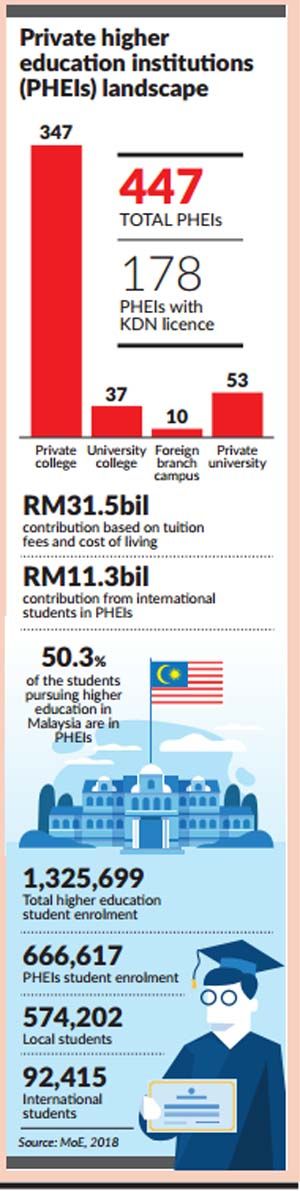
It was also a bitter pill to swallow when Finance Minister Lim Guan Eng, for two Budgets in a row (2019 and 2020), denied Tunku Abdul Rahman University College (TAR UC) its annual matching grants of RM30mil, totalling RM60mil.

The decision has drawn continued flak from the Chinese community, simply because the grants are meant to keep the tuition fees affordable for low and middle-income groups.

In a video that has gone viral, Lim is depicted declaring to the audience at a ceramah during the GE, that each of TAR UC’s 28,000 students would get RM1,000 if Pakatan formed the government.

The promise wasn’t fulfilled, and rubbing salt into the wound, there’s now no matching grant either. The justification given was that the government would direct the funds to the private higher education institution if the MCA was willing to relinquish its ownership of it.

Lim said this was in line with the government’s stand that public funds shouldn’t be channelled to politically-owned organisations.

But the explanation hasn’t convinced most Chinese because TAR UC has never been an MCA-indoctrinated institution, and any TAR UC graduate can attest to that.

MCA has had to finance these institutions with the support of the Barisan government, tycoons and ordinary people.

While the DAP and MCA are enemies, the general feeling is that when it comes to matters of education which benefit the Chinese, its community is left disappointed because the students and families have become victims of a political rivalry at a time when Malay unity is being openly promoted.

It’s a known fact that several DAP leaders are alumni of TAR UC, and all its campuses are in constituencies which have come under the control of Pakatan since the last General Election.

In Kampar, Perak, where Universiti Tunku Abdul Rahman (UTAR) is located, the constituency is now under the DAP despite the large number of student and lecturer voters.

The UEC is perhaps a much more complicated matter. While the Chinese community wants instant recognition, the examination has unfortunately turned into a highly racialised and politicised issue, and its subtext now is about the fear of losing Malay support.

UEC task force chairman Eddin Khoo said the final report on the recognition of the examination certificate is currently undergoing an internal discussion.

But the UEC issue has been dragging on for decades and wasn’t recognised even during Dr Mahathir’s first tenure as PM.

Obviously, Pakatan won most of the Chinese votes during GE14 mainly because, among other promises, its manifesto and leaders pledged to recognise the UEC.

So we have an odd situation where the UEC is recognised by the top universities in the world including the California Institute of Technology, Harvard University, Oxford University, University of Cambridge, University of Toronto, University of Tokyo, National University of Singapore, University of Hong Kong, University of Melbourne, Peking University and Kyoto University, but not here.

Based on The Times Higher Education World University Rankings Top 200 of 2014, more than 70 of these world-class universities have accepted the enrolment of UEC graduates to pursue tertiary education.

And yet, we see these mulling and delaying tactics being applied despite the bravado pledges of recognising the UEC.

The education débâcle apart, the continuing weak economy, the declining value of the ringgit, the increasing cost of living, the lack of economic programmes and taxation of all forms, have all become a source of discontent for the Chinese at all levels.

It’s still too early to predict the outcome of the Tanjung Piai by-election, and difficult to suss out if the huge crowd at a recent multiracial Barisan ceramah is any indication that voters want to send a strong message to the Pakatan government that they are dissatisfied.

But the grievances of daily issues, particularly the cost of putting food on the table and job opportunities, have become loud grumblings at the expense of largely positive actions by the government.

A gorgeous island that’s just a hop, skip and jump away

I’ve had the privilege and luxury of travelling to a multitude of places near and far, and in more recent time, my preoccupation has been on the living world, particularly in our oceans. Our region has some of the most fascinating marine life, and while Sabah’s Mabul and Sipadan islands have drawn international repute and is home to a menagerie of amazing animals, for city dwellers in the peninsula, particularly those in the capital, Redang Island is only a hop, skip and jump away from the daily grind.

The ace up its sleeve is the island is easy to reach from Kuala Lumpur and offers the most accessible spots for snorkelling and scuba diving, given its crystal-clear waters. For a simple and short weekend getaway, Redang is hard to beat and provides the best value.

It is just a little less than an hour’s flight from either the Sultan Abdul Aziz Shah Airport in Subang or KLIA to Kuala Terengganu, from which, a short 45-minute boat ride takes visitors to the island located in Kuala Nerus.

Redang is one of the largest islands off the east coast of the peninsula with an international reputation for its clean and clear waters, and white sandy beaches.

Taking advantage of the low tourist season with the monsoon just picking up, I popped over to the island paradise last week.


There are between six and eight turtles that regularly turn up at Redang Island’s Turtle Point.

Sure, like in the Klang Valley, there were showers in the evenings, but they were brief. Luckily, there was plenty of sun in the morning for the three days I was there.

Getting there from the Merang jetty was a rocky ride because the waves were choppy, but once the boat reached the open sea, the undulating waves petered out, providing a much smoother and calmer journey. No sick bag needed for this slowly-but-surely developing seafarer.

The northeast monsoon season from the South China Sea, which just begun, ends in January. Most hotels halt operations during this heavy rainy season, what with its strong winds and waves. All ferry schedules are restricted from the months of November through to February.

But I capitalised on this window period when hotel rates are better and fewer tourists are present, evidenced by the low turnout at the snorkelling spots in the marine park.

I made it in as the last of the tourists, before the island ceased operations for the wet season, which comes with its dangerous sea conditions.

Redang has never failed to impress me. Dipping into its waters is like swimming in an aquarium full of colourful friendly coral fishes.

It’s one of nine islands forming a marine sanctuary park, where snorkelling and diving are the main attractions.


Plenty of clownfish can be found here. — Photos: ANG KUAN WEI

Having been there previously, this time, I picked two places – Pasir Akar and Teluk Mak Simpang, popularly known as Turtle Point, which isn’t far from the upscale The Taaras Beach & Spa Resort operated by the Berjaya Group.

The wall of the island here protects it from the ocean’s currents, making it ideal for snorkellers and less experienced swimmers, and for kids, too.

Watching YouTube videos or ogling at picture postcards of the place is fine and dandy, but to get a real sense of the place, you must swim in Redang’s waters. Like a recurring wave of a reminder, I couldn’t help feeling how blessed Malaysia is and what a beautiful marine park we have in this part of our country.

For those who prefer to keep dry or have a fear of sea water, fret not – Redang’s splendid beauty can also be enjoyed from the cosy confines of the boat, where one can still feast their eyes on the fishes.

There are also between six and eight turtles who regularly visit the area. Call them resident turtles if you like, and the most popular one is named Jojo. However, visitors here are usually on the lookout for three gigantic whale sharks.

But unlike the ones at Maratua in Derawan, East Kalimantan, which are easier to spot because they always swim around the numerous fishing platforms, this trio is rather elusive.


Literally swimming with the fishes!

Some lucky divers and even snorkellers have spotted them though at the Big Mount and Pulau Lima dive sites, of which the northern Big Mount has had sightings of whale sharks, black tip sharks and even manta rays.

Apparently, strong currents at this spot help nourish these filter feeders, but these dangerous conditions also make it privy to only experienced scuba divers.

I have read that at the southern tip, there are small caves filled with lobsters and crabs, and also huge moray eels and groupers. Reading about all this and not experiencing it first-hand is becoming a drag, so, now might just be the right time to take up scuba diving.

With over 500 species of live corals, more than 1,000 species of invertebrates and almost 3,000 species of fishes, this island is indeed a marine haven.


The titan triggerfish is just one of the fishes you can find here. — KENNETH LAM

Redang means so many things to so many people – some seek it for a change in pace, and some for its scenery. And some go there to be one with nature, but for me, it’s all of the above. It’s simply a spectacular place to be, given its accessibility, accommodation ranging from utilitarian to premium, and its safeness.

And soon, those seeking her charms can hop on a plane operated by Berjaya and fly directly there from Subang.

Can’t afford to meddle


Big pressure: Malaysia’s palm oil sector faces a new threat after Indian traders were asked to halt purchases amid a row over Kashmir. – AFP

It seems counterproductive to be irking a major contributor of our economy when the price of one of our main commodities is on the wane.

BOYCOTTING our palm oil may not be the Indian government’s official stand, not even two weeks after the controversy surfaced, but the lobbying by some Indian groups – including the media – to punish Malaysia is still unsettling, especially when the price of the commodity is at its lowest.

At stake is the huge Indian market worth RM6.9 billion, so the call for prejudice isn’t something to be overlooked since the country is the world’s largest vegetable oil importer, with Indonesia and Malaysia its palm oil suppliers.

The palm oil downstream products that India needs include ghee, soap, vegetable oil, biofuel, pharmaceuticals and cosmetic products.

Recently, an Indian trade body representing oilseed crushers, advised its members not to buy palm oil from Malaysia, taking a cue from New Delhi’s protest of Prime Minister Tun Dr Mahathir Mohamad’s remarks on the Kashmir conflict.

“The recent developments pertaining to strained relations between our nation and Malaysia has put a lot of responsibility on our industry in view of huge imports of palm oil from that country,” said Atul Chaturvedi, president of the Mumbai-based Solvent Extractors’ Association (SEA) of India.

“In your own interest as well as a mark of solidarity with our nation, we should avoid purchases from Malaysia for the time being. We trust you would heed our advice, ” he said in a statement.

Chaturvedi said the Indian government “has not taken kindly” to Malaysia’s position on Kashmir at the UN General Assembly.

“It would be in fitness of things, as responsible Indian vegetable oil industry, we avoid purchasing of palm oil from Malaysia till such time clarity on the way forward emerges from the Indian government, ” he added.

The furore started when Dr Mahathir said in his speech at the 74th session of the General Assembly, “despite UN resolution on Jammu and Kashmir, the country has been invaded and occupied, ” and called on India to “work with Pakistan to resolve this problem”.

In its bid to thwart protests in the region, the Indian government, on Aug 5, revoked Jammu and Kashmir’s legally autonomous status and imposed many unprecedented security measures, including cutting off the Internet and phone services.

The PM’s opinion hit a raw nerve there and led to India’s Ministry of External Affairs rebuking Dr Mahathir’s references to Kashmir on Oct 4.

Added fuel to the fire, the media, particularly Magna Indica-anchored News Z, has been broadcasting a clip nearly every five minutes why India must support Hindus in Malaysia up in arms against Dr Mahathir.

Basically, Malaysia is being accused of taking sides and backing Pakistan – India’s long-time nemesis. It’s hard to ignore controversial preacher Dr Zakir Naik either wittingly or unwittingly playing a part in this diplomatic debacle.

Zakir, unwelcome in any nation, including Muslim majority countries, is a permanent resident in Malaysia. He was thought to be a Saudi Arabian citizen, but apparently, he isn’t, and even the Saudis don’t want him.

Indian groups, including the media, need to take a step back and look at the effects of trade wars and tariffs. It benefits no one except the inflated egos of shallow politicians who think they are statesmen.

The clear example is the escalating US and China trade war, which has led to spill over effects to the rest of the world, as the two superpowers clash. So, trade wars, in any form, is bad for any country.

As Dr Rais Hussin, the Emir Research CEO, put it aptly in his description of trade wars, “they trigger a dyadic trade relationship that is toxic on the rest of the global value chain, with India included.

“If that is an economic fact, why should India emulate the example of Washington DC and Beijing?

“Secondly, and perhaps more importantly, an unsaid yet practical principle in Asean is – any country wishing to be part of a thriving region of 680 million people, cannot be seen supporting the opposition there.”

He wrote that Prime Minister Modi has had a “Southerly Policy” with Asean since 2015, and is a member of the East Asian Summit, Dialogue Partner of Asean.

“India is destroying a key principle of its own diplomatic engagement. Not only will the whole of Asean oppose it, but the rest of the East Asian region will see India’s behaviour as the beginning of the use of ‘hatchet diplomacy’.”

There is another point to consider, much of Indonesia’s palm oil is owned and sold by the likes of Malaysian companies IOI and Genting.

That aside, there are growing concerns among India’s long-time friends that Modi’s hard-nosed approach to nationalism, bordering on religious fervour, is discomforting to many. These actions by Hindu militants, according to many reports, are affecting minorities including Muslims, Christians and Sikhs.

For the time being, the prices of crude palm oil are expected to remain competitive, at least until the first half of next year, pending any official announcements from India.

The Star recently quoted sources saying the offtake of Malaysian palm oil was still stable, and with demand still exceeding supply, CPO prices would hold steady. That’s comforting news.

Without a firm word directly from the Indian government, the market is treating the potential boycott by Indian importers on local palm oil as mere speculation. The MB Investment Bank’s regional head of plantation research, Ivy Ng, said excluding potential impact on demand from speculation of the boycott, CPO prices should recover next year, averaging at around RM2,300 per tonne.

In March, it was reported that China was bumping up its palm oil purchase from Malaysia by around 50% to around 4.7 million tonnes, which will be a huge boost to local planters and the government.

Last year, Malaysia exported 3.07 million tonnes of palm oil and palm products to China worth a total of RM8.38bil, marking, from 2017, an increase of 7.3% from 2.86 million tonnes worth about RM9.39bil.

Primary Industries Minister Teresa Kok said that the agreements were a “good start”, following the delegation meeting between the two countries in August last year, during which it was decided that the Chinese uptake of Malaysian palm oil would be increased by half a million tonnes.

The agreements inked for the purchase of 1.62 million tonnes of palm oil were very significant, said China Ambassador Bai Tian, especially in view of the 45th anniversary of diplomatic ties between Malaysia and China this year.

“This is really a very big number and I believe in the near future, there is possibility that China will increase its uptake of palm oil from Malaysia,” he said.

“As I have said before, China imposes no glass ceiling on the import of Malaysian palm oil, ” he added.

There was the perception that China was quietly stalling purchasing our oil palm, following the change of the federal government last year and the uncertainties over numerous Chinese projects in Malaysia as its consequence. Concern abounded since China is Malaysia’s third largest importer of our palm oil.

Dr Mahathir was outspoken during his first tenure as PM. He was the champion of Third World countries, and he initiated the Group of 20 comprising developing countries, giving his brutally frank views of western countries in the process.

Although Malaysia is a member of the Commonwealth, and even hosted CHOGM (Commonwealth Heads Of Government Meeting) in 1989, Dr Mahathir once said there has never been a “common wealth” among the member nations, which were all once colonised by the British.

That’s Dr Mahathir for you, and as he reaches 95 years old next year, I don’t think we can expect him to change. He will speak up, without fear or favour, and whether we like it or not, but he must also take cognisance of how Malaysia, which he helmed for 22 years earlier, no longer has a double-digit economic growth. And the prices of crude palm oil and crude oil have dropped drastically over the years.

India and Pakistan will likely continue being at loggerheads, and whatever Malaysia says, will not please anyone. Likewise, there was no need for Dr Mahathir to suggest that Hong Kong chief executive Carrie Lam quit, which did nothing more than irk China.

He was responding to a question from Hong Kong Bar Association chairman Philip Dykes during a question-and-answer session at a forum in Hong Kong, probably not realising that Dykes is an unwelcome man in Beijing.

In fact, the vice-chairman Edwin Choy quit over the association’s failure to condemn protesters’ violent actions in the ongoing anti-government demonstrations.

Malaysia can stay out of harm’s way if he refrains from commenting on issues involving other countries. After all, we have enough problems of our own.

It’s a holi-holiday

THE year is not even over yet, and we still have a good two months to go, but a list detailing national public holidays and how Malaysians can go for vacations on long weekends with just nine days of leave, has already been circulating.

It’s as if Malaysians can’t wait for more off days for 2020, to make use of the provision to start planning their getaways.

Malaysians will be able to enjoy 12 long weekends next year. The extended holiday is the result of having a public holiday fall on either Friday or Monday.

We are not even talking about the 13 days of gazetted national public holidays and the extra holidays declared by the states.

Oh, what a blessed country Malaysia is, indeed, and how some whine and grumble about ethnicity, whether at congress or at the office, yet love the holidays to celebrate the festivals of every ethnic group.

Even the fanatically loud racists, who conveniently forget their origins, rejoice in these celebrations.

If that’s not enough, some of us even “celebrate” silently when a VVIP dies because it means another off day!

Then, there are state government leaders who simply declare public holidays when their state football team wins silverware. And it’s not even the AFF Suzuki Cup.

But the most incredulous and outrageous public holiday was the one Kelantan declared to boost attendance at the protest against the implementation of the International Convention on the Elimination of All Forms of Racial Discrimination (Icerd) in the federal capital last December.

We have heard of cuti sakit (medical leave), cuti kahwin (marriage leave), cuti bersalin (maternity leave), and so for the first time, we had cuti protes (leave to protest).

Last week, Malaysian women workers were told that they will have longer maternity leave. They will automatically be entitled to 90 days of leave each time they have a baby.

Among the incentives announced by Finance Minister Lim Guan Eng when tabling the 2020 Budget was a review of the Employment Act 1955 to increase maternity leave from 60 days to 90 days effective 2021.

Deputy Women, Family and Community Development Minister Hannah Yeoh said it was a very basic leave that women were asking for and when babies are with their mothers for the first three months, there would be less incidences of babies choking on milk.

Previously, Human Resources Minister M. Kulasegaran had said: “Maternity leave is essential for a new mother as after birth, she needs to take good care of herself to rebuild her strength and will need plenty of rest, good nutrition and help. Both maternity leave and paternity leave are part of workers’ welfare, family well-being and the well-being of the community.”

Yeoh said it was a myth that women abused their maternity leave by spending it on holiday. She said that maternity leave for mothers was to ensure both babies and mothers spend time together and so that babies are breastfed.

“Maternity leave is not for holiday or fun, it is really for exclusive breastfeeding. Doctors always encourage mothers to breastfeed their babies for six months, ” she told reporters last week.

Not many Malaysians, especially employers, are willing to openly express their discontent on the maternity extension.

It’s simply politically incorrect, and anyone saying it affects productivity would earn the wrath of workers groups.

But privately, many employers are already complaining that Malaysians have too many public holidays, where they must shoulder the absence of their employees while productivity takes a hit.

The fact remains that when mothers go on maternity leave, someone has to pick up the slack, and most often, at no extra pay or incentive.

Just ask the teachers, especially the single ones who are forced to handle these tasks, and the resentment is palpable. It doesn’t help that there are those who seem to be more (re)productive in delivering babies than others.

With so many breaks, maternity or gazetted holidays, it has caused critical work needing to be delayed or postponed.

Clients overseas have always queried why Malaysia has to be among the countries with the most public holidays, and cynically questioned if we work at all.

In fact, we are the South East Asian nation with the most public holidays, if we account for state holidays as well. We have won it by default because no other Asean country has states, though some have provinces.

And of course, every state – except Penang, Melaka, Sabah and Sarawak – has a Ruler, meaning scripted public holidays marking their official birthdays.

This year alone, there have been 15 national public holidays – with four resulting in extended weekend breaks. Plus, the 30 state-level holidays and two-day weekends.

That belt of 10 weeks had six public holidays – starting with the Yang di-Pertuan Agong’s installation on July 30, right through to Malaysia Day on Sept 16.

In many cases, where work operations continue, even during public holidays, employers have had to pay their staff three to four times more than the daily wage rate when they have worked on public holidays.

With stiff competition from the emerging industrial economies in the region, our manufacturers have no choice but to keep their plants operating on public holidays even at the cost of sacrificing their profit margin in paying the overtime wage rates.

China, which is known as the factory of the world for producing almost everything, has only seven declared holidays.

Malaysia is already a high-cost country for basic manufacturing because we are short of labour. It can’t be denied that the frequent public holidays make it more difficult for the country to compete in low-cost production.

It might come as a surprise to most Malaysians, but the United States is one of few countries with 10 days of public holidays, while Germany only has nine.

As unpopular a decision as it may seem, it’s time the government recalibrates the system and takes the bold step to do away with minor public holidays.

It’s unacceptable to declare a public holiday for winning the Malaysia Cup or to attend a protest. It should be made illegal.

Just read up on countries with many public holidays, and you will find a European country which had to be bailed out by international financial institutions.

What’s next? Be a populist government and promise longer paternity leave because as fathers, we also need to build that special bond with our child from day one, which is only possible if we spend more time at home with the toddlers?

Keep foreign extremism at bay

THE arrest of two DAP lawmakers – including a state executive councillor – for their suspected links to the Liberation Tigers of Tamil Eelam (LTTE) militant group is certainly one of the most explosive stories of the week.

This isn’t the first time that DAP leaders have found themselves accused of supporting the Sri Lankan terrorist group, since even Penang Deputy Chief Minister Dr P. Ramasamy and Human Resources Minister M. Kulasegaran have been entangled in that same web.

Old pictures, purportedly showing them with flags and paraphernalia from the LTTE, have been circulating on social media for a while, but recently received a new lease of life.

Both Dr Ramasamy and Kulasegaran have one thing in common – they have both spoken out against controversial Indian preacher Dr Zakir Naik. They have continuously lobbied for his deportation and the revoking of his permanent residence status. Many believe that their incessant calls have angered some individuals and groups linked to religious units, who have stepped up their campaign against the two.

But while this has been nothing more than political rhetoric, details provided by Bukit Aman’s counterterrorism division chief Ayob Khan Mydin Pitchai on Thursday have taken a new complexion.

The two DAP leaders – Melaka exco member G. Saminathan and Seremban Jaya assemblyman P. Gunasekaran – are among seven people arrested under the Security Offences (Special Measures) Act, which comes with 28 days of detention. The possible arrest of Dr Ramasamy, a former Universiti Kebangsaan Malaysia political science lecturer, has also cropped up.

Obviously, Saminathan and Gunasekaran have been under surveillance for a while, because the police said they were arrested for giving speeches during an LTTE Heroes Day event in Melaka on Nov 28 last year. They were also allegedly involved in activities promoting the movement, where they were said to have distributed fliers at the events.

Ayob also said that two of the seven detainees had been charged with assaulting the Sri Lankan ambassador at the Kuala Lumpur International Airport in September 2016. He said police also arrested a 28-year-old insurance agent in Kuala Lumpur, who is believed to have planned an attack on the Sri Lanka High Commission in the city.

However, Ayob noted that race and religion did not factor in the arrest of the seven, adding that the force’s stance is consistent on all terror groups: “There is no issue of favouritism based on race and religion because for us, anyone who is a threat to national security will be arrested, ” he told The Malaysian Insight.

He said investigation papers would list all the evidence, to be submitted to the Attorney General’s Chambers (AGC).

Inspector-General of Police Abdul Hamid Bador, meanwhile, said there was ample evidence against the suspects.

As a follow-up, the police will now have to provide evidence of their alleged involvement in terrorism activities – even if the LTTE is now defunct – and it remains to be seen if the AGC will quickly charge them in open court.

These are serious accusations, so surely this group of seven would want to defend themselves, while the public will be expecting the police to charge them since their actions are detrimental to the nation. However, there is also a sense of disbelief, and even cynicism, that this is a mere political game to appease powerful religious and racial forces.

After all, Tamil Tigers chief Velupillai Prabhakaran has been dead for a decade now. He was cornered and killed with 18 of his most loyal bodyguards by the Sri Lankan military, it was reported. More than 10,000 former LTTE fighters, many of whom were forcibly conscripted by the rebels, have been rehabilitated since the war ended on May 18,2009, with only 300 still in detention, revealed Sri Lankan government figures.

Ayob must have anticipated such a reaction because he conceded that the police had also acted strongly against those who supported the Islamic State movement, adding that the police are professionals adhering to the letter of the law.

It’s unclear if the two are linked to the other arrested individuals because the latter party seems more radical in their actions and plans.

The arrest of Malaysian politicians, with their alleged involvement with LTTE, is, without doubt, the first of its kind in Malaysia.

But it comes as no surprise that the Malaysian anti-terrorism division has been vigilant against any attempts by Malaysians to revive support for LTTE, since India’s Home Ministry has also just renewed its ban on the group.

Recent news reports indicate that a representative of the Trans-national Government of Tamil Eelam (TGTE) met select media personnel in Chennai to announce a “tree sapling planting programme” to mark the “Mullivaikkal genocide” on May 18 – the final phase of the civil war in Sri Lanka, in which the LTTE was annihilated.

According to an economictimes.com report on May 15 this year, the TGTE “member of Parliament” quietly left India.

“Formed after the defeat of LTTE, the TGTE is a government-in-exile with Visvanathan Rudrakumaran as ‘Prime Minister’. Internationally, the ex-LTTE members have organised themselves in two or three factions, including the TGTE, ” it said, adding that the five-year ban was aimed at stopping fringe groups from raising the “Eelam” banner or reviving the slogan of an independent Tamil nation.

The report also quoted security experts in Sri Lanka saying they were wary of a revival of the LTTE.

“We have information that they are re-organising in Canada and Europe, ” said renowned international terrorism expert Professor Rohan Gunaratna.

“As long as attempts are being made to propagate LTTE ideology, India should continue to extend the ban.”

The news report said that although a ban has been in place for close to three decades, Tamil nationalist groups and individuals have been flaunting their affinity with LTTE with impunity, including “hailing Prabhakaran publicly and putting up photos and posters”.

So, the Indian government hasn’t been able to stamp out support for LTTE completely in India, and no politician would want to antagonise the Tamil voters.

Perhaps there isn’t much difference for Malaysian Indian politicians to tamper with Tamil sentiments, the affinity for LTTE, or to win the minority but still crucial Indian votes as part of their game plan. Race and religion remain toxic subjects, regardless of their form or variation. Adding fuel to the fire, it’s worse that this foreign extremism is imported into Malaysia, only to find life in our already complicated politics.

Waiting in the wings


SUCCESSION planning is a mandatory requirement in any private company, especially public-listed ones, where staff are generally distinguished by two categories – ready to take over and being groomed to take over.

It’s simply a process for identifying and developing new leaders who can replace the old guard when they leave, retire or die.

There’s nothing insensitive or unusual about this practice because it helps increase the number of experienced and capable employees ready to assume these roles as they become available.

It also helps motivate leaders in a company, because they know they are being prepared to take over higher positions.

At any given place in the hierarchy, there are usually three names for every role, and not necessarily only for the chief executive officer post, but for those at C-suite level, too.

The term C-suite refers to the highest executive-level managers within a company, including the CEO, chief financial officer and chief operating officer. The term is derived from the use of the letter C in these positions.

Companies take this practice very seriously, with detailed scenarios deliberated, including a CEO retiring without warning, suddenly calling it quits, or God forbid, dealt the proverbial “getting hit by a bus” scenario – all of which can pull the rug from beneath the feet of succession planning.

But in the case of Malaysian politics, we don’t seem to handle it well. In fact, it borders on abysmal.

Little dialogue is conjured about the succession planning process for the Prime Minister’s position because it’s deemed politically incorrect and can come across as insensitive to many people.

Out of respect, the bulk of us choose to adopt a muted approach, because Tun Dr Mahathir Mohamad is simply over-whelmingly popular. Never mind that he turns 95 next year.

Despite his age, he shames even those in their 30s and 40s with his sharp mind and ability, and it seems, by and large, Malaysians want him to stay longer, if not forever.

But the reality is that Dr Mahathir is a mere mortal. Yes, he’s almost a superman, with his superb health and mental frame at his age but if he remains in office until the next election, he would be 98 years old then.

That’s a little too far fetched for us to imagine, and in all honesty, deep down in our hearts, we are not sure if that’s feasible, or even healthy for Malaysia.

Apparently, his desk in Putrajaya is overflowing with files right now, and Malaysia today is a far cry from the nation he governed during his previous tenure as PM.

If we care for him more than ourselves, we should be able to tell that he deserves to be enjoying the twilight years of his life in a better way. He said that he slogs 18 hours a day, and is constantly working against the clock. That can’t possibly be good for him.

Right now, we have an odd situation where the Prime Minister is fielding questions every few months about his timeline for passing the baton to his successor. Last week, he said he “expects to remain as PM for some three years.”

“I promise that I will step down before the next election and give way to another candidate. So I may have, at the most, three years perhaps, ” he said at a dialogue held at the Council on Foreign Relations here on Thursday.

In June, Dr Mahathir was quoted as saying he would hand over the reins to PKR president Datuk Seri Anwar Ibrahim “within three years”.

The PM-in-waiting has been more precise, saying he should be in the hot seat by around May 2020, which is roughly seven months away.

When he was queried in a television interview on whether the transition would happen two years from Dr Mahathir assuming control, Anwar said, “there’s an understanding that it should be around that time, but I don’t think I should be too petty about the exact month.” Though he added, “But there is this understanding that he will resign at the appropriate time.”

To be fair to Dr Mahathir, he has been pretty consistent in his statements, unless one chooses to pick a bone with the meaning of every word and sentence he has uttered about the issue.

He has already named Anwar as his successor, mirrored in the single name which exists in the agreement that was signed by the heads of the Pakatan Harapan component parties.

There are no other names, and certainly, there is no deadline for Dr Mahathir to step down, either.

However, there are lingering doubts among cynical Malaysians, simply because politicians have a bad record of keeping their promises. They can’t even keep their election promises despite putting these pledges in black and white in their election manifesto.

Politicians are known to reverse decisions, earning mistrust in the process, and Dr Mahathir is no exception. It doesn’t help either that there is a history of acrimony between him and Anwar.

To complicate matters, Anwar has also gained a nemesis – from within his party – who wants Dr Mahathir to continue as PM forever, so that the wait will turn into nothing eventually.

It is no secret that Datuk Seri Azmin Ali, who has fallen out with his boss, would want the PM’s post, too. It’s natural for politicians to be ambitious.

And let’s not write off Datuk Seri Dr Wan Azizah Wan Ismail. Because she is the Deputy Prime Minister, and if anything should happen to Dr Mahathir, God forbid, she is next in line to assume the post to ensure a smooth transition if the plotting turns complicated.

That raises another point. We have an unusual situation where the successor – Anwar – has no role, no post and no clout in the government. He has been reduced to delivering speeches at universities and events, and that’s about it. In our entrenched political patronage system, it has put Anwar in a fix.

So will Dr Mahathir hand the reigns over to Anwar by May? Not a chance. It wouldn’t be like Dr Mahathir to stay away from the limelight as the host of the Asia Pacific Economic Cooperation (APEC) summit in Kuala Lumpur next November.

He would surely want to be on that stage, basking in the global limelight, standing in the middle and flanked by US President Donald Trump, Chinese premier Xi Jinping and Russian leader Vladimir Putin.

In all likelihood, Anwar will have to wait until 2021 for the succession to happen, and if we listen to Dr Mahathir, it could be 2022.

But if the waiting game stretches for too long, patience will wear thin, and consequently the rot of distrust and discontent will set in.

So while we know that Singapore Deputy Prime Minister Heng Swee Keat will be succeeding Lee Hsien Loong soon, the press will still be posing the same question to Dr Mahathir and Anwar over the next three years.

Swimming with graceful whale sharks at Sulawesi Sea


It’s baffling how a paradise, dubbed Kalimantan’s best-kept secret, has eluded not only most Malaysians, but Sabahans in Tawau, which is the closest point to this place. Yet, it’s literally in our own backyard!

Tarakan, the Indonesian island city of North Kalimantan, is just 40 minutes away by flight from Tawau. It’s the gateway to the Derawan Islands, located in the province of East Kalimantan.

Together, the provinces comprise 31 islands, but the best known are Derawan, Maratua, Sangkalaki and Kakaban.

The prize of my pursuit to these boondocks? The chance to swim in the Sulawesi Sea with whale sharks, like they are our neighbours.

Like with most of my trips, it took a year’s planning, and truth be told, it had become a near obsession – I had thought and dreamt of checking this on my bucket list for a while now.


Dolphins at Sulawesi Sea. WONG CHUN WAI/The Star

Haze or no haze, the disruption in weather conditions wasn’t going to hold me back. With the bit between my teeth, I was bent on getting there, even if I knew I was headed to where forest clearings have apparently taken place.

And luckily, I ignored the naysayers, well intentioned they may be, because the Indonesian portion of Borneo is nearly 550,000sq km, a huge place indeed, so there was always going to be pockets of good weather.

Either way, I rode my luck because the thought of calling off the trip never crossed my mind. Just as well, because when I arrived at Derawan island on Sept 27, the skies were perfectly clear.

God was kind to me, and at our hotel in Maratua island, my wife and I were the only guests then. Everyone else had cancelled their bookings because of the bad weather reports. So, when I took the three-hour speed boat trip from Tarakan to the islands, I knew we were going to have the place all to ourselves.

Reaching “whale shark point” involved waking up at 4am to prep ourselves for the swim with these fishes, but I was already awake at 2.30am, simply unable to contain the excitement that was building up in me.

We waited at the pier well before the boat crew took us on the 5am boat trip destined for a fishing platform locally known as bagan, situated in the Taliyasan sub-district out in the ocean. It was about a two-hour journey from my hotel.

At these platforms, whale sharks congregate to feed on small fishes that fishermen toss out. This abundance of fish also includes anchovies that escape their nets.


Whale shark at Sulawesi Sea. WONG CHUN WAI/The Star

Animals being unpredictable, it was difficult to pinpoint which platforms the whale sharks were going to be at, so the boat man wisely communicated with his contacts to learn where we needed to head to.

Lady Luck must have been smiling on me because we located a platform where four whale sharks had turned up.

Struggling to suppress our kiasuness, we also wanted to be there before other tourists got wind of our good fortune. I was just not up to having strangers join our swim with Jonah – the nick name I had given these spotted fish.

According to the Bible, Jonah was an Israelite whom God had called to be a prophet, but who refused to accept his divine mission and left on a sea voyage instead. But he was swallowed by a whale, and lived for three days inside the creature, after which the mammal vomited Jonah out onto dry land.

Whale sharks, the largest extant fish species and living non-mammalian vertebrate, are far from menacing. In fact, they are toothless and only feed on plankton and small fishes. But accidents have happened, and human beings – including photographers – have been accidentally swallowed and consequently thrown up. The worst outcomes have largely been shocked whale sharks and dazed human beings.

Fortunately, I had these huge, slow-moving creatures all to myself for at least 30 minutes, before two boats – one carrying Chinese scuba divers with sophisticated cameras, and the other with local tourists from Bandung, and a Russian couple. This wasn’t a case of more the merrier because it ruined my private time with these gentle giants.

They moved gracefully around me, taking occasional trips up to the surface to feed on the fishes, before dipping back into the waters below.


Whale sharks, the largest extant fish species and living non-mammalian vertebrate, are far from menacing.

Then, one came so close to me that I had to quickly scramble away. It seemed like I didn’t get far enough because the whale shark’s body nearly grazed me, its sheer size jolting me.

My wife had a closer encounter with the creature opening its huge mouth right in front of her, and as the video revealed later, she was literally on top of me. I didn’t even realise this in the magic of the moment.

It was surreal to have these majestic creatures gliding near us, and swimming along with us. Fortunately, my experienced guide and photographer Ricky Masiwa, recorded these scenes for my bragging rights. At one point, three of these fishes came close to me, as if to pose for pictures with me.

Apparently, there are about 10 whale sharks living in the area and their size can reach up to 7m, or more than 22ft.

The best time to witness these beautiful animals is when there is no moon, when fishermen are busy at home at night hauling in their catch and of course, discarding the small fishes in the morning.

During full moons, these platforms are sometimes closed as fishermen transfer their fish traps to other locations.


The gentle giants moved gracefully around, taking occasional trips up to the surface to feed on the fishes, before dipping back into the waters below.

So, it’s always best to reference a calendar for ideal timing. Likewise, ensure calm sea conditions and that it’s not the rainy season. Choppy seas and underwater currents are also situations to avoid being out in the open ocean because of the obvious hazards.

My trip last week was my second one to that region. I discovered these islands a year ago when I was looking for a nearby spot to swim with stingless jellyfish.

However, I was saddened to learn that Palau has closed its lake famed for these little jellyfish, due to environmental depravation. Tourists dipping in the lake’s water have also been blamed for killing these translucent creatures with their use of sun block.

There are only five such spots in the world, and at the Kakaban Island, I finally fulfilled my wish of swimming with millions of jellyfish in these crystal-clear waters.

But on this trip though, it was to discover whale sharks, manta rays and dolphins off Derawan Islands, where the marine biodiversity is one of the richest on Earth.

It wouldn’t be far-fetched to suggest that this is one of the last untouched marine paradises, with 872 species of reef fishes, and 507 species of coral and invertebrates.

Derawan Islands is indeed heavenly, and we should unflinchingly aspire to protect this place.

The thought of the Indonesian capital being moved from Jakarta to Kalimantan is haunting me. But I still promised these whale sharks that I will be back to swim with them again.

Fix for a better mix


Big test: The latest by-election will be closely watched as it takes place in Tanjung Piai, which has been called a mixed constituency seat. — Bernama

An upcoming by-election could prove how far we have come from the divisive and degenerative politics of race and religion.

THE Tanjung Piai by-election will serve as a good platform for our politicians to stop, or at least, refrain, from using the race and religion cards simply because the Parliamentary constituency has almost equal representation of Malay and Chinese voters.

It has an electorate of over 53,000, of which 57% are Malays, 42% Chinese and 1% Indian. It’s hardly inaccurate to describe this seat as a racially mixed one.

The relentless recycling of toxic issues, a forte of some of our politicians, will only backfire if they cross the line.

An issue may be hugely appealing to one race but appalling, and even offensive, to another community. That’s the tale of plural Malaysia.

It was reassuring to hear Umno vice-president Datuk Seri Mohamed Khaled Nordin expressing hope that the Tanjung Piai by-election will be about a healthy and moderate contest for a more democratic Malaysia.

Similarly, Johor Pakatan elections director Datuk Salahuddin Ayob has pledged that Pakatan Harapan will be moderate in its campaign, pointing out that with Tanjung Piai being a mixed constituency seat, “support from one community will not be enough.”

It’s good that these two leaders can sit at the same table and think of the greater good for a mixed-race electorate and Malaysia. Hopefully, leaders from PAS will also read the narrative.

Malaysians, and not just Tanjung Piai folk, will be glued to this by-election since this is the biggest test for both sides.

For Umno and PAS, this is the time to prove, beyond reasonable doubt and the lofty promises, that they truly embrace multi-culturalism and inclusiveness.

Their pact, while strategically sensible, is viewed as an alliance that campaigns only for the interests of the Malays and Islam.

That has spooked many Malaysians, and is certainly not going to help their cause in winning in the next general election, especially if they don’t stop their aggressive approach.

The right thing for Umno and PAS to do is to support a candidate from an Opposition party, in this case MCA, and prove that politics transcends race.

Not all the 222 Parliamentary constituencies are Malay-Muslim majority, and no party can form the next government without Sabah and Sarawak, which have 25 and 31 seats respectively. In Sarawak, from the 31 seats, 10 are Malay-Melanau majority, while 21 are non-Malays, and for Sabah, 11 of its 25 seats are in non-Muslim areas.

It’s not far-fetched to assume that PAS has near-zero appeal in these two states, and that the voters there have little patience for firebrand politicians who preach race and religion.

In the case of Umno, it won 88 Parliamentary seats nationally, with 14 in Sabah and one in Labuan. Of the 73 seats in the peninsula, about 30 are small constituencies in rural areas, reads a report.

The 40-plus other seats are mostly Malay-majority, with mixed ethnicity seats, which have a sizeable number of non-Malay voters within the constituency. It would be foolish for a politician to write off these non-Malays.

Statistics indicate that there are 83 mixed Parliamentary seats where Pakatan won in the 2018 general election. Pakatan apparently secured 88% of these racially mixed seats, while Barisan National only managed 10. PAS failed to win a single ethnically mixed Parliamentary seat.

Last week, the Selangor government-linked think tank Institut Darul Ehsan reported that support for PAS in Selangor has fallen to a mere 8% – almost half of the 15% vote it received in 2018. But, of course, the findings will be questioned with the think tank being state funded.

It claimed that PAS has three kinds of supporters – the hardcore, non-members who back the party’s ideals, and PAS voters who are neither members nor supporters but vote for the party based on personal reasons or are attracted to the party’s alternative offer.

Increasing the number of racially mixed Parliamentary seats will be the best way to sustain moderate politics.

It will end the use of race and religion because candidates will know it would be foolhardy on their part.

But it would be challenging, too, since the Malay-Muslim population has shot up while the Chinese and Indian electorate is shrinking. There are more foreigners than Indians in Malaysia, and that’s a fact. The result is there are absolutely no Indian-majority seats.

It would also be more difficult to carve out racially-mixed seats in east coast states like Kelantan, Terengganu and, to some extent, Pahang, as they are predominantly Malay.

So, Sabah and Sarawak must continue to be the bastion of moderate and multiracial politics, and these two states will likely be the ones to hold the fort.

However, there is a suggestion that Malaysia can have up to 140 mixed seats out of the 222, and it would be up to the Election Commission to draw up such boundaries to ensure there are no clear racial majorities.

The dynamics of politics will change, and politicians would have no choice but to campaign across ethnic lines. The appeal of communal politics will also be neutralised, and that can only be good in the long run.

After six decades of independence, we are heading down a slippery slope if our politicians continue to harp on race and religion.

Tanjung Piai a test for all political parties

IT will be the first test for the Umno-PAS alliance in the coming Tanjung Piai parliamentary by-election, and for that matter also for the Opposition front which includes MCA and MIC.

There is no doubt that the combination of the two Malay-based parties is extremely powerful, as far as the delivery of votes are concerned, but their roles in the by-election will be a testimony of whether Umno-PAS want to see an inclusive Opposition front.

While it is strategically realistic for the two to have a formal pact, they have been criticised for championing Malay-centric interests and accused of sidelining other races.

An Opposition coalition that is serious in wanting to beat the ruling Pakatan Harapan would surely realise that while Malaysia is predominantly Malay and Muslim, it still remains a plural society. Nothing is going to change that.

No federal government, formed by any political pact, can be a legitimate one if it is not representative of other races.

A government of only one race and one religion, shutting out others, is meaningless, even setting off a dangerous course.

Starting off with a Malay-Muslim narrative, Umno and PAS now appear to have taken a more conciliatory tone.

Leaders of both parties have set off to Sabah and Sarawak to explain that the Umno-PAS alliance is a national consensus charter, and that it included the indigenous people of the two states.

Wanita Umno chief Datuk Dr Noraini Ahmad gave an assurance recently that “unity is the national consensus charter, it is inclusive of all races.

“Umno and PAS are two big parties for Malays and bumiputras but we never sidelined our indigenous friends in Sabah and Sarawak.

“When we talk about Ummah (community) it is inclusive, not just about the two parties only,” she reportedly said at a press conference.

Noraini said when they talked about Perpaduan Ummah (Unity of Community), they did not limit it to only Muslims.

“What we offer is peace, unity and harmony. Umno, under Barisan Nasional, has other components, the MIC and MCA, while PAS also has its own supporters from other races, so it does not mean only for the Malays,” she had said.

PAS president Datuk Seri Abdul Hadi Awang and Terengganu Mentri Besar Ahmad Samsuri Mokhtar also paid a call on Sarawak Chief Minister Datuk Patinggi Abang Johari Openg in their efforts to woo Gabungan Parti Sarawak.

Hadi again kept to his script and said PAS had no issue with other non-Malay parties, except DAP.

They have made the right move by trying to explain their pact, as Umno and PAS need Sabah and Sarawak.

The two states have 25 and 31 parliamentary seats respectively. That’s a combined 56 seats of the total 222 parliamentary seats.

In Sarawak, out of the 31 parliamentary seats, 10 are Malay-Melanau majority while 21 are non-Malay seats.

As for Sabah, 11 of the 25 seats are non-Muslim areas.

While the Umno-PAS pact may win more Malay votes, it is also a double-edged sword as it turns off the powerful Christian voters in the two states who have already openly expressed uneasiness with the race and religion approaches.

It doesn’t help that there are certain Umno and PAS leaders who continue with their rhetoric, which are often overboard and offensive to non-Muslims.

The two parties need to be consistent as they cannot talk of being inclusive and forget that their speeches, which may be tailored to their audiences, are also followed by other races now in this digital age.

It’s worse when their tone reflects their ignorance.

Tanjung Piai will be the test for Umno and PAS to prove that they walk the talk beyond the pledge in the charter pledging to embrace the spirit of multiracialism.

Despite the huge wave of support for Pakatan in the 2018 general election, Parti Pribumi Bersatu Malaysia managed to win the Tanjung Piai seat by just 524 votes.

It cannot be denied that this had much to do with the popular MCA candidate Datuk Seri Wee Jeck Seng, who had held the seats for two terms before his defeat.

A hugely grassroots politician, he is known to have sponsored haj and umrah trips for his Malay constituents, and donated regular supply of rice to poor villagers.

Wee was the political secretary to former MCA president Tan Sri Ong Ka Ting, who held the seat.

The race composition argument cannot be used as there is no predominantly Indian-majority seat in Malaysia.

The role of MIC in Barisan will be meaningless if there are no MIC candidates in the next general election.

More so, when there are seven DAP MPs of Indian and Sikh ethnicity while PKR has six Indian MPs.

For state assemblymen of Indian and Sikh ethnicity, DAP has 15 and PKR has five.

Much water has passed under the bridge since the 2018 general election.

The euphoria has died down and as with the rising expectations of voters towards a new government, the demands are sometimes unrealistic but the over-promises in the Pakatan government have not helped.

It has been made worse by what has been known as U-turns, which have given the perception of indecisiveness and inexperience.

In the general election, it has been reported that only 25%-30% of Malays voted for Pakatan, according to the Merdeka Centre, but that was enough to see the downfall of Barisan.

It was further compounded by the split of votes – 35% to 40% of Malays voted for Barisan while 30% to 33% supported PAS.

In the case of Tanjung Piai, it has an electorate of 57% Malay, 42% Chinese and 1% Indian voters.

That means both Barisan-PAS and Pakatan have to work out a strategy and narrative that appeals to the Malays and Chinese, as both are almost equal in size.

The results of the 2018 polls show that Barisan has a huge loyal base there and the same can be said of PAS.

The PAS votes of 2,962 will tip the balance in Barisan’s favour.

The irony is that among large sections of the Malays, there is an increasing perception that Bersatu is unable to defend Malay rights – a rallying cry of the Umno-PAS charter – while many Chinese and Indian voters have complained that DAP has “sold out”, and that power has changed the Chinese-based party.

Last month, DAP adviser Lim Kit Siang was heckled in his own Iskandar Puteri constituency in Johor over the khat issue.

In Tanjung Piai, it will be difficult for DAP to attack MCA, if it is contesting the seat, for depending on Umno-PAS votes, as DAP has also worked with the Islamist party under the Barisan Alternatif pact while Tun Dr Mahathir Mohamad, who had sent so many of the DAP leaders to jail, is now revered by the DAP leaders.

Even Dr Mahathir had dismissed DAP as a racist party, the same line that Hadi is now using despite having worked with DAP before.

But that’s politics, where there are no permanent friends and enemies but only common interests.

So, the stage is set for a battle, with a radically changed political landscape and sentiment since May 9, 2018.

The people of Tanjung Piai have the privilege of sending a clear signal.

Have HK people lost their mind?


IT’S a classic case of the Hong Kong people shooting themselves in the foot with the protracted violence and riots on the streets every weekend which are beamed across the globe.

The continuous protests may be aimed at denting the image of China’s leaders, who are certainly particular about the country’s image, especially ahead of the 70th anniversary of the People’s Republic of China.

But the reality is that what had started as peaceful demonstrations to voice their fears of the purported erosion of their rights have now degenerated into chaos and violence.

We are sorry for the people of HK but you have lost much goodwill and sympathy.

To be brutally frank, we think you have lost your mind.

The general consensus – and one does not even need to carry out any survey – is that these Hong Kong youngsters do not know when to stop, and do not even know what they want.

If the escalated violence is aimed at provoking China to step in with the People’s Liberation Army, and with possible bloodshed, the protesters may be surprised.

China does not need to do anything. The endless protests will lead to Hong Kong people hanging themselves, in the end, without the mainlanders having to react.

On Oct 1, hundreds of millions of Chinese will be on the move to celebrate the week-long Golden Week. Almost all of my Chinese friends are going home to see their loved ones or travel overseas on holiday.

But this time, HK isn’t on their itinerary. Why would any Chinese tourists want to go to a place where they would be unwelcome, and worse, may even get beaten up.

According to a report quoting Hong Kong authorities, tourist arrivals dipped abruptly in July by 4.8% compared to the same month in the previous year.

The number of Chinese visitors fell 5.5% to 4.16 million, down from 4.4 million in July 2018.

A large majority of Hong Kong’s visitors come from mainland China. In January to June 2019 alone, mainlanders made 27 million visits to the territory.

According to the South China Morning Post, which is based in Hong Kong, the Hong Kong Retail Management Association (HKRMA) said most of its 8,000 member shops had recorded a drop in revenue.

HKRMA said it would revise its sales forecast to a “double-digit decline” if the protests continue. It had earlier predicted a year of single-digit growth.

The Hong Kong Tourism Board’s preliminary figures have shown a “double-digit decline” in the number of visitor arrivals in the second half of July.

“The travel trade has reported that the number of forward bookings in August and September has (also) dropped significantly, ” a spokesperson told the BBC.

It isn’t just Chinese tourists. Many people have put off travelling to HK because no one would want to walk an hour to reach the airport terminal or to find a huge number of protesters jamming the airport and disrupting flights.

There is more bad news for HK. Dozens of airlines have written a joint letter to Hong Kong authorities to seek airport fee waivers as the carriers struggle with reduced traveller demand following the months-long civil unrest in the city.

The Board of Airline Representatives (BAR) of Hong Kong, which represents more than 70 airlines that fly to and from the city, wrote to the government earlier this month asking for temporary relief from landing and parking fees as well as rent and other operational costs, Reuters reported.

“Already we have seen a double-digit drop in passengers in August compared to last year and we expect this to worsen in the remaining months of the year, ” BAR chairman Ronald Lam, a senior executive at Cathay Pacific Airways, was quoted as saying in a letter dated Sept 16.

“Many airlines have already reduced or cut their services to and from Hong Kong as many routes have become unprofitable due to declining passenger numbers, ” Lam said in the letter, addressed to Hong Kong’s transport secretary.

Cathay Pacific, the biggest corporate casualty of the Hong Kong protests, reportedly said this month that it would cut capacity for the upcoming winter season following an 11.3% fall in passenger numbers in August.

Travellers are tired, and to put it bluntly, pissed off, by the shenanigans of the protesters. They should not be called pro-democracy activists, as the Western media, especially CNN and BBC, like to brand them. They are just anti-government protesters, and in some cases, plain rioters and hooligans.

And if you are pro-China, or against these HK kids, you automatically get labelled a “thug” or “triad, ” but when innocent bystanders, who dare to speak up or challenge these angry young men, get beaten up and it almost goes unreported.

So are some of the odd Caucasians, who get involved in these demonstrations, and even actively direct the protesters. They are arrested, as shown in videos, but my media friends in HK said they were let off because of a lack of evidence.

It’s paradoxical that one of the five demands is that they want the charges against the arrested protesters to be dropped – so they want a fair and just legal system but when you break the law, while on a rampage and in an illegal protest, they want to be set free.

The third demand is the retraction of the proclamation that the protests are riots. How are these not riots when barricades were set up and put on fire, petrol bombs were thrown, innocent people beaten up, and insane vandalism carried out to destroy public property?

Then there is also a demand to investigate purported police brutality. Most of us who have been following the weekly protests must be left shaking our heads.

Yes, HK isn’t Malaysia or Singapore, where there are enough laws to put a stop to these. Even in the United States or United Kingdom, the protesters wouldn’t be allowed to continue this week after week.And no one, including my media friends, has been able to tell me why the Western media is calling Joshua Wong a student leader when he is not an elected one, he is not in any university and at 22 years old, he is not even in any school.

And who is paying for his globetrotting ways to meet the big names, and surely some powerful forces must be making these arrangements and meetings. Surely, he can’t pick up the phone and ask to meet the president.

The most oxymoron pictures have to be the kids waving the US and UK flags at the protests, and do they actually believe that President Donald Trump, with his anti-immigrant policy, will hand them US passports and welcome them to America? Neither would Boris Johnson who wants to keep out immigrants with his Brexit move.