Author Archives: wcw

Jalan Yahudi to Jalan Zainal Abidin — the real Zainal

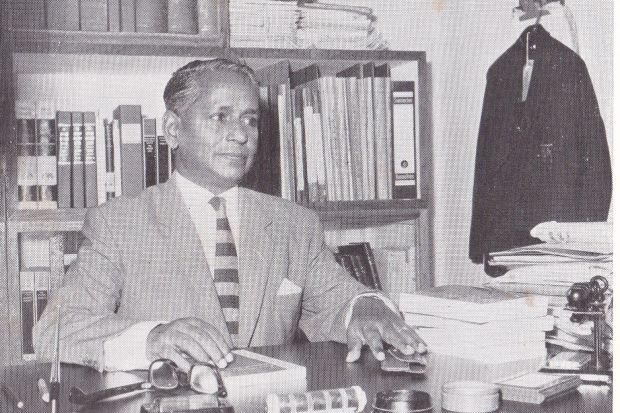
A colourfu l life: The late S.M. Zainul Abidin was a judo champion when he was still teaching and his grandchildren always gathered around to celebrate his birthday. The photos are reproduced from the book, Pengkisahan Riwayat Hidup Haji S.M. Zainul Abidin, published by Dimensi Eksklusif (M) Sdn Bhd.

A colourfu l life: The late S.M. Zainul Abidin was a judo champion when he was still teaching and his grandchildren always gathered around to celebrate his birthday. The photos are reproduced from the book, Pengkisahan Riwayat Hidup Haji S.M. Zainul Abidin, published by Dimensi Eksklusif (M) Sdn Bhd.

I WOULD like to thank readers for pointing out the error in the history behind Jalan Yahudi, subsequently renamed Jalan Zainal Abidin, published in this column on July 6.

I had wrongly identified Zainal Abidin with the noted Malay writer who was better known as Za’aba. The road is actually named after S.M. Zainul Abidin, one of Penang’s pioneer educationists, whose name is also spelt as Zainal Abidin.

The letter below from his youngest son Zainul Arshad is reproduced in full to put the matter in context. There is also another letter from another reader who also pointed out the same error. I am given to understand that many readers had called Zainul Arshad about this matter and he has taken the initiative to write us the letter.

I record my deepest appreciation to readers of this column who have constantly given me feedback, and pointed me to the right direction when needed.

It reminds me that much of local history is passed down orally, from generation to generation. We should all strive to know our own history. In writing this column, I have found that it is difficult to find the definitive records of many of the personalities that have roads named after them.

I believe all local authorities should make it a requirement to document the history of all the roads under their jurisdiction, old or new, for public record. Even new developments named after people or events must be documented so that those who come after us will have a proper record. The little stories that surround our neighbourhoods are a rich legacy that should be preserved.


The road is named after my father

I read your article Penang’s History, My Story titled “Leaving only tombs behind”. Since I was born and bred in Penang I always look forward to reading this weekly column.

I had wanted to send you a book about my father in the hope that you may write something about him being the pioneer educationist and politician in Penang. But before I could do that your article on the Jewish cemetery appeared.

I have to point out an error in your article. Zainal Abidin Ahmad has nothing to do with Jalan Zainal Abidin. He was not a Penangite. Jalan Zainal Abidin (although wrongly spelt) was named after my late father S.M. Zainul Abidin. I am his youngest son.

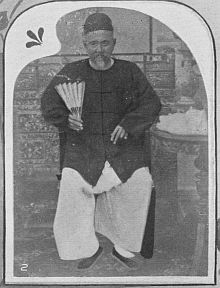
S.M. Zainul Abidin was one of Penang’s pioneer educationists. Among his former students were Tunku Abdul Rahman, Tuanku Syed Putra Jamalullail (Raja of Perlis), Tun Dr Lim Chong Eu and Tuan Yusoff Rawa.

He taught at the Penang Free School for 20 years before becoming headmaster of the Francis Light School in 1938. He retired as Inspector of Schools in Penang. Zainul Abidin was the first Malay to obtain a B.A. degree (externally) from London University in 1933.

He was also a founder member of Penang Umno and was responsible for getting a piece of land from his good friend, the late Hamid Khan, to build the Umno building in Penang.

S.M. Zainul Abidin was selected by Tunku to stand as a candidate in Malaya’s first Parliamentary election in 1955. He won handsomely as an Umno candidate in the north-west constituency whilst Chee Swee Ee of MCA won in the north-east constituency.

One of S.M. Zainul Abidin’s sons is the wellknown broadcaster, the late Datuk Zainul Alam. Interestingly enough, my late father stayed at No 35, Jalan Zainal Abidin (Jalan Yahudi), two doors from the Jewish cemetery, from 1929 until his death in 1969. — Zainul Arshad S.M. Zainul Abidin


The wrong Zainal

I am a fan of history and naturally an avid reader of your Saturday articles. You wrote that Jalan Yahudi was re-named Jalan Zainal Abidin in memory of Za’aba.

However, I think it is not so. I think it was attributed to S.M. Zainal Abidin, who was a member of the 1955 Federation Legislative Assembly.

I am told by old-timers that Zainal Abidin’s home was situated just behind the present Umno building at the junction of Macalister Road and Jalan Zainal Abidin.

Hence, lending credence that it was named after a local personality rather than Za’aba who originated from Negri Sembilan and had no real links to Penang. – Abdul Fareed Abdul Gafoor

Our flag flies high in London

Tan Sri Liew with Najib, Cameron and Johnson at the Battersea project launch.

BATTERSEA has become the most talked about word in London. Malaysians travelling to this city over the last few days have been asked the same question by Immigration officers on arrival: “Are you here for Battersea?”

At Bayswater in Central London, one of the city’s most cosmopolitan areas with significant populations of Arabs, Greeks and even Brazilians, I was asked by an Arab salesman at Whiteleys if I was from Kuala Lumpur and whether I was attending the Battersea Power Station development launch.

British friends, especially those with links to Malaysia, also asked for help to get invitations to the Battersea regeneration event on Thursday.

Everyone wanted to be part of history. It is safe to say that there has never been any property groundbreaking event in Europe which was attended by two prime ministers and the mayor himself!

All three – Datuk Seri Najib Tun Razak, David Cameron and Boris Johnson – endorsed the project, declaring the enormous economic benefits that would be brought to the city.

Foreigners, including house buyers, see the Battersea property project as a good investment. Londoners see thousands of jobs being created and, better still, a RM4bil underground rail line in the works.

It was exactly 30 years ago on Thursday when the Battersea Power Station stopped producing power for the city but, as SP Setia boss Tan Sri Liew Kee Sin rightly pointed out, that power is back again in Battersea to bring a planned RM38bil development to the area.

It is a massive project by all counts, with the first phase comprising a block of 865 apartments that will be completed in two years. All the apartments have been sold, mostly to Malaysians, Singaporeans and Hong Kong buyers.

The project, which is backed by Sime Darby Bhd and the Employees Provident Fund (EPF), is unprecedented for a Malaysian consortium in one of the world’s biggest financial centres. The icing on the cake is that Liew beat Chelsea football club boss Roman Abramovich to the prized land, where Stamford Bridge, the club’s stadium, is not far away.

Local residents associations also lent their support to the Malaysians as they feared Abramovich’s plan to relocate the stadium to Battersea could cause traffic disruptions but bring few new jobs to the area.

After 30 years, life will be rekindled at the abandoned coal-fired power station once the project is in full swing. Located on the south bank of the River Thames, the station once generated about a fifth of London’s electricity.

It was used as the backdrop for Pink Floyd’s Animals album in 1977 and this writer has been made to understand that talks are ongoing to convince the remaining members of the hugely successful band to reunite for a charity concert at the iconic site.

In more recent times, Battersea was used to launch the Conservative Party’s election manifesto, according to Boris Johnson.

At one point, it was bought by John Broome, chairman of Alton Towers, who wanted to turn it into a British Disneyland. Hong Kong businessman Victor Hwang wanted to turn it into a shopping mall but the plan never took off.

The groundbreaking event by Najib and Cameron saw plenty of history being made. The two premiers carried out bilateral talks for 30 minutes on the upper floor of the site sales office – where the show unit is located!

Johnson, as usual, cycled his way to Battersea while it has to be recorded here that a Malaysian bomoh was flown all the way to London to ensure the unpredictable British weather was beaten. Whether it was the bomoh’s expertise or sheer luck, the rain stayed away.

Now that the fanfare is over, the real work needs to be done. The sales of the first phase have been a roaring success. SP Setia, in fact, had to turn away buyers.

The real challenge would be the subsequent phases. Getting Arab investors and buyers for the higher-end units would bring higher value to the project. There is also a need to secure sales from European, American and East European buyers.

Liew, who is well known for his down-to-earth approach, played down his visionary role in making the Battersea project a success. Instead, he attributed the success to the backing of Najib and the British leaders. He consistently reminded journalists, who billed it as Malaysia’s success story, that he has never felt so proud of being a Malaysian, a sentiment shared by his countrymen regardless of their race at the event.

But the reality is that Battersea is really a feather in his cap. His leadership, professionalism, dynamism and commitment have made this first step to changing the skyline in London possible. He has successfully flown the Malaysian flag in England.

This should serve as a reminder to Permodalan Nasional Berhad, the giant Malaysian asset management company that now owns the majority share in SP Setia, that Liew should be allowed to carry on his work with no interference.

In the day-to-day management, Liew and his men know their job inside out and they have the track record to prove it.

Let the professionals do their job and I am sure his financial backers, Sime Darby and EPF, would feel the same way. Their concern is that their investments must see good returns, that’s all.

The Jewish community in Penang is all but gone leaving only tombs behind

Honouring Za’aba: Jalan Zainal Abidin used to be known as Jalan Yahudi

Honouring Za’aba: Jalan Zainal Abidin used to be known as Jalan Yahudi

IT used to be called Jalan Yahudi but it has been renamed Jalan Zainal Abidin, after the prolific Malay writer who is more popularly known as Za’aba.

By renaming the road, the Jewish legacy in Penang, and for that matter, in Malaysia, has been erased.

But the country’s only Jewish cemetery which was set up in 1805, is still in existence there.

It is well-maintained but most of the time, the gates are locked, perhaps mindful that it could be the target of anti-Semitic elements.

Located between Burmah Road and Macalister Road, the small cemetery escapes the attention of Penangites who use this link road, as it is tucked behind high walls.

According to a report titled A Penang Kaddish: The Jewish Cemetery in Georgetown — A case study of the Jewish Diaspora in Penang (1830s-1970s), the oldest Jewish tombstone in the cemetery is dated July 9, 1835.

Penang’s only synagogue used to be in Nagore Road.

It is dedicated to a Mrs Shoshan Levi, believed to be the benefactor who donated the land where the cemetery stands.

Many of the Jews buried there were British subjects, including one Louis Victor Cohen, a former army officer, who died on Oct 9, 1941 at the age of 23, according to an article by Hismanshu Bhatt.

There are about 107 graves located in the cemetery, with the most recent tombstone dated 2011, of David Mordecai, a former E&O hotel manager. He died just short of his 90th birthday and was believed to be the last ethnic Jew on the island.

According to a report online, “55 friends and neighbours attended the burial, among them a handful of Jews. With his passing, the only Jew to hold a Malaysian passport is Mordecai’s niece Tefa Ephraim, who now lives in Sydney, Australia.

Mordecai was the son of David and Mozelle Mordecai, who came from Baghdad to Penang in 1895.

David Mordecai Sr was active in the tin and rubber industries under British rule and a colonial turf racing enthusiast in Penang and Singapore.

A good number of Jews used to live openly in Penang until the end of the 1970s, when many emigrated.

The local Jewish community reportedly comprised Jews of Sephardic origin who live among the Kristangs (people of mixed Portuguese and Asian ancestry), including those who came from Iraq and India.

The first known Jew to make Malaya his home was Ezekiel Aaron Menasseh in 1895.

Menasseh claimed to be the only practising Jew in Malaya for three decades but the general census of Jewish settlers in Penang (1881-1941) showed that 172 Jews already lived there in 1899, according to a news portal.

It is said that during the Japanese occupation, the Penang Jewish community was evacuated to Singapore.

After the war, a majority of Jews had stayed on in Singapore or emigrated to Australia, Israel and the United States.

One report has it that by 1963, only 20 Penang Jewish families remained in the country.

Penang’s only synagogue, located on 28, Nagore Road, closed down in 1976 as the community could no longer fulfill a quorum of 10 or more adult Jews assembled for purposes of fulfilling a public religious obligation.

An article in the portal Free Malaysia Today, dated March 18, 2011, entitled “The Last Jew to leave Penang,” featured an interview with one Joseph Hayeem Abraham Jacobs, whose grandfather Hayoo Jacobs moved from Singapore to Penang, where he stayed at the island’s synagogue in 1929.

Jacob’s father Abraham grew up juggling a myriad of professions including that of a fighter pilot and professional boxer. At one point, he even enjoyed a French dairy board consular status with the French government. He eventually met and married Tan Kok Choo who would go on to become a popular RTM broadcaster,” the portal reported.

“It was a normal childhood, we went to school, we played with the neighbourhood kids. Everyone knew we were Jews but no one cared. That’s the beauty of Penangites,” said Jacobs.

The Penang synagogue is today the office of a print, design and digital business.

While most of the early Jews were of Caucasian origin, there were also many of Indian stock from India.

Closer to home, the most famous Jew was David Marshall, the first Chief Minister of Singapore.

He also accompanied the first Prime Minister Tunku Abdul Rahman to meet Chin Peng, the Communist Party of Malaya head, in the Baling Talks.

In Penang, Gottlieb Road is named after Felix Henri Gottlieb, a German lawyer of probably Jewish descent, who worked for the British government in Penang between 1846 and 1882.

But it would not be fair to leave out the legacy of Za’aba, of which the road is now named after.

Zainal Abidin Ahmad (Sept 16, 1895 to Oct 23, 1973) remains one of the most respected Malaysian writers and Malay language experts.

The Jewish cemetery in Jalan Zainal Abidin with neat rows of Hebrew-inscribed headstones, testifies to the existence of a sizeable Jewish community then. – filepic

Every student of Malay literature is expected to know his name — that is how much respect has been accorded on to him.

In Kuala Lumpur, there is a road named after him at Taman Tun Dr Ismail and many colleges or residential hostels in Malaysia are named after him as well.

Zainal Abidin was born in Negri Sembilan and had his early education in a Malay school but went on to study at the premier St Paul’s Institution in Seremban. He became the first Malay to pass the Senior Cambridge in 1915.

Although he began teaching the following year, soon he enrolled in the Malay College in Kuala Kangsar and in 1924 he studied at the Sultan Idris Teachers’ College, now a university.

He also studied and lectured at the School of Oriental and African Studies at the University of London, where he completed his Masters at the age of 59, and finally taught at University of Malaya in Singapore.

According to the National Archives of Malaysia official portal, Za’aba was considered the pioneer of Malay language grammatical rules, which were vague at that time.

He was given the responsibility to draft the school curriculum, was a translator, lecturer and during the Japanese era was handed the responsibility to write books that could be used in Malaya and Sumatra.

The portal said in 1946, he was appointed a committee member of the Legislator Committee of Umno Charter Bill.

Za’aba, who was later conferred the Tan Sri title, died on Oct 23, 1973 at the age of 78.

Za’aba’s legacy will remain as he is one of the biggest names in Malay literature, whose works have been translated into many languages.


Readers write

I WAS a boarder at the St Xavier’s Boarding School in Burmah Road, opposite the Pulau Tikus Convent secondary school from 1949 to 1954, before continuing my secondary school years at the new SXI building in Farquhar Street. We were the new occupants of the newly-completed school building.

The boarding school was set up by the La Salle Brothers for poor boys and orphans. And it also took in paying students from all over Malaya. 

The lower classes studied at Noah’s Ark (so called because the wooden and attap building looked like a boat). There were eight to 10 classes conducted there. 

All those who passed their annual school examination could be promoted to higher classes at St Xavier Branch School at Kelawei Road.

It faces the St Joseph’s Novitiate which trained Catholic novices to be Christian Brothers of the La Salle Order. The school being situated in a Eurasian enclave had many Eurasian teachers and many Eurasian pupils and students.

One of my teachers was Dudley Rozells, younger brother to Colin. Colin never taught me but he was a hero to the school population as he was a Penang state sprinter and the school’s athletics coach.

Jimmy Boyle, who lived just across the road from the school was also the school’s sports coach and was famous as a musician. He coached me on the 80-yard hurdles.

One must say of the Eurasian community that they made a big contribution in sports, music, education and in community service.

In addition to the teachers, I remember some names of families living next door to the Church of The Immaculate Conception such as Sheila Labrooy, Marie de Souza and Carmen Coombs, who were good friends to the boisterous boys of the St Xavier’s Boarding School. 

The Church of The Immaculate Conception, Pulau Tikus is a heritage building. It had its bicentennial celebration two years ago.

The church records are intact for those who wish to research the early history of Penang.

There are some early writings dated from the 1800s and the names of all parish priests who served the church consecutively corresponding to the 200 years of its establishment.

– Anthony Lim, Penang

If you have any feedback to share, email mystory@thestar.com.my


The correct Zainal Abidin

It has been pointed out to me that Jalan Jahudi was renamed Jalan Zainal Abidin in honour of a renowned educationist in Penang. Please read this story for context and clarification.

Crack down on criminals

In place of the EO, a new law to deal with hardcore criminals, with a built-in mechanism to stop abuses by the authorities, should be drawn up.

DRUGS, gambling and corruption – that’s the root cause of crime. You don’t have to be a criminologist to know where we have gone wrong, and what we have done, or not done, to stamp out the disease that is eating us up.

It has been reported that over 60% of snatch thieves caught are drug addicts. The statistics also show that half of the 30,000 prisoners have a history of drug use.

Home Minister Datuk Seri Dr Ahmad Zahid Hamidi has also said that 48.2% of the prisoners had been found guilty of drug trafficking, possession and other drug-related offences.

Then there is the huge growth of illegal online gambling operations in towns and cities particularly in Selangor and Kuala Lumpur.

There are strong suspicions that, hiding behind the façade of Internet cafes, these gamblers, mostly youngsters, are resorting to criminal activities to “fund” their habit, according to Malaysian Crime Prevention Federation vice-chairman Tan Sri Lee Lam Thye.

“Some of them would do anything, including stealing and robbing, to get money. Initially, they start by stealing money from their parents and family members, and gradually move on to the streets. Most of these people have become habitual gamblers,” he said.

The media, including this newspaper, have regularly exposed illegal gambling outlets which offer online casino games.

One bold operator reportedly even distributed leaflets offering discounts, loyalty points and even original jerseys of English Premier League clubs to new gamblers!

Last year, The Star reported on the many illegal e-casinos with gambling programmes and live games broadcast from the Philippines. Despite the exposé, many carry on with business as usual.

Even the few that were raided and supposedly closed down have re-opened, according to my colleague who went undercover to investigate these places.

The underground gambling business has thrived simply because the operators know the authorities would never allow for legitimate outlets, be they outlets or clubs. The Genting Casino is likely to be the first and only casino ever to be sanctioned in Malaysia.

The result is that illegal gambling dens, whether in the form of cyber cafes or online casinos, have mushroomed.

The Home Ministry has a tough job on its hands. Zahid has proposed for a centralised body to be set up to coordinate enforcement and prevention efforts in curbing drug addiction and drug-related offences.

He has said that the body could be made up of personnel from the Customs Department, Health Ministry, Immigration Department, the National Anti-drug Agency (AADK) and the police.

Zahid is known as someone who means business but for the war against crime, he needs plenty of support.

Just look at the huge number of cyber cafes and massage outlets that come under the purview of the local councils. The police cannot be expected to raid every outlet as there are genuine ones too but the councils must do their part to keep an eye on the errant ones.

There are also strong suspicions that corrupt policemen and council officers are allowing the e-casinos to continue doing business.

Something does not tally here. Many of these outlets are known to the public and yet they appear to be unknown to the authorities. Can the public be faulted if they think there are crooked and rogue elements in uniform?

Regulated gaming outlets are frowned upon because of political and religious reasons, but illegal gaming outlets flourish as a result. And because they are illegal, there is also a loss in gaming taxes which would have been good revenue for the government.

Morale within the police force is low. The good cops feel they have been blamed for everything and, worse, they find that their hands are tied in crime-fighting.

The Universiti Sains Malaysia (USM) research team on crime and policing has rightly said that the Emergency Ordinance, although criticised as a draconian, inhumane and undemocratic law, did serve its purpose in effectively dealing with terrorists, secret societies, criminal gangs, recidivists and organised crime members.

USM Associate Prof Dr P. Sundramoorthy said that most EO detainees in the last three decades were those alleged to be involved in violent gang activities, extortion, kidnapping, gaming, and in executing the day-to-day operations for organised/syndicated crime bosses.

Almost 2,000 criminals were released after the EO’s repeal last year. Since then, according to police officials as reported in the media, most of those released are back in business and they are more dangerous and commit crimes openly without regard for public safety.

Sundramoorthy, as the principal researcher of the team, said the nature of their crimes were generally violent, inhumane and cruel.

His team has a question for Malaysians: “The research team on crime and policing from USM would like to ask all law-abiding and peace-loving citizens: To what extent are we willing to give up safety for the sake of liberty and democracy?”

Perhaps there could be a middle ground – a new law to detain criminals with a built-in mechanism to stop abuses by the authorities which can include a review committee comprising ex-judges, retired police officers, welfare officers and elected representatives from both sides.

The bottom line is, we cannot expect our cops to deal with hardcore criminals the gentlemen’s way. The criminals should simply be locked up.

Colonial law stalwarts

A GERMAN Jewish lawyer who founded the Free-masons lodge, a colonial lawyer and activist fighting for the rights of the locals and a British magistrate who arrived in Penang only to find that he had lost his job, were among those whose legacies live on.

There are at least five roads in Penang that honour colonial lawyers. The most famous has to be the busy Gottlieb Road.

The road is named after Felix Henri Gottlieb, a lawyer in the Straits Settlement between 1846 and 1882.

But his name would probably remain unknown and even inconsequential to most Penangites, who ply the road daily.

Gottlieb Road is the site for Penang Chinese Girls’ High School, the biggest girls’ school in Penang.

The road used to be congested at all times of the day especially during after school hours, when it is packed with school buses.

But Henri is more important than we think. He was one of the most colourful characters of the Straits Settlement.

He was also a true Penangite as he was born on the island. His father was the island’s first harbour master George Felix Gottlieb in the 1830s.

Both father and son were active Freemasons in Penang.

According to local historian and publisher Khoo Salma Nasution in her book, More Than Merchants: A History of German Speaking Community in Penang, Henri set up Freemason lodges in Penang and Taiping, Perak.

The Freemason movement has regarded itself as a global secular fraternity that carries out social and charity work where its members are taught these precepts in ancient forms.

Frowned upon by Muslim and Christian groups, the Freemasons including those in Malaysia, have openly conducted their activities by setting up websites with pictures of their members.

It is to show that the Freemasons are not a shadow group, as portrayed in Dan Brown’s The Da Vinci Code.

In fact, those interested in their activities can apply to be members while the press has been invited to observe their work.

In Penang, the Penang Masonic Temple is a historic building that stands out at the Brown Road and Jalan Utama (formerly Western Road) junction.

According to a report, the land to build the Temple was acquired in 1926 and the foundation was laid on Dec 17, 1927.

Designed by architect Howard Leicester, the building was built by contractor Lee Ghee Sok.

Another well-known lawyer of old Penang was James Richardson Logan, who was honoured with the Logan Memorial at the Supreme Court Building in Leith Street.

Logan Road, which runs from Perak Road to Anson Road, is also named after him.

Logan was regarded as a champion of the rights of the non-Europeans in Penang, as he dared to represent the natives.

He came to Penang with his elder brother Abraham and began a law practice.

In an age where the rights of the natives were often suppressed, he skilfully fought in a case of an Indian sireh planter against the East India Company, according to a posting.

Today, the famous landmarks are the Loh Clan Association, the LohGuanLye Specialists Centre, the Penang Specialist Maternity Centre and the Methodists Girls’ School.

Edward William Presgrave was another big name of the legal fraternity during the colonial days of Penang.

Presgrave Street is known in Hokkein as sah tiau lor or third street, and is today part of the city area known as the Seven Streets Precinct.

Presgrave Street is regarded as a working class neighbourhood.

Presgrave & Matthews is one of the oldest legal firms in the Straits Settlement. It was founded on Jan 1, 1879.

The original partners being Arthur Edward Clark, barrister-at-law, and Presgrave, who was a member of the Legislative Council.

Then, there is Dickens Street, which a short one-way street linking Penang Road with Transfer Road.

A plaque in the road has wrongly attributed the name of the street to novelist Charles Dickens (1812-1870) whose works included Oliver Twist, David Copperfield, A Tale of Two Cities, A Christmas Carol and Great Expectations.

In reality, Dickens Street was named after John Dickens, a British magistrate who arrived in George Town in 1801.

According to a report, upon arrival, he found that his services were no longer required as the Straits Settlement had set up a Recorder’s Court instead.

RAD Hogan was another lawyer who has a road named after him.

Hogan Road is a small road off Vermont Road, a minor road off Jalan Residensi.

Vermont Road is named after one of the military officers during the late 19th century.

Both Vermont and Hogan roads house quiet, leafy neighbourhoods.

The legal fraternity in Penang has a long history and its colonial style court complex is surely one of the most beautiful heritage buildings in this country.

Now, we cannot even eat in peace

Crime is an issue that unites the people, but for the wrong reasons. One thing is clear – we are sick and tired of living in fear.

IF you live in Petaling Jaya, you would probably have heard of it. Three armed men rushed into a famous chilli crab restaurant shortly after closing time – and they were not looking for food.

They held up the cashier in this cash-only restaurant and cleaned out the till while the restaurant helpers ran helter-skelter, for fear of being slashed by the parang-wielding robbers. An accomplice was waiting inside a car nearby. Luckily, there were no customers at the usually packed restaurant.

Not too long ago, the restaurant opposite, famous for its fish head curry, had also fallen victim to such criminals.

What is frightening and most unfortunate is that this is one part of Petaling Jaya that is busy and vibrant, even after midnight. It is a hive of activity because the food court and several outlets nearby are open 24 hours.

Word has gone around Petaling Jaya that it is no longer safe for the people to patronise eateries during late hours.

In fact, at least one restaurant operating in Section 17 has taken the unusual step of locking its doors even when it is open for business. Only customers who have made reservations or those who can prove they are bona fide customers are allowed in.

It’s the same with many hair salons, which have taken to locking their doors as they are often the target of such hoodlums.

In Cheras, it was reported that people eating on the pavement outside a restaurant were also robbed. For many of us, crime has worsened.

This newspaper reported on June 13 that a group of armed robbers had been terrorising customers of seafood and mamak restaurants in Kuala Lumpur, hitting five eateries in Cheras, Jinjang and Brickfields since January.

The group of at least 10 parang-wielding men would use stolen cars, conceal their faces with crash helmets and target the restaurants to rob customers of their money and valua­bles.

The police, according to the report, claimed to have made a breakthrough in the case following the arrest of three men, in their 20s, who had attempted to strike at their sixth target, a seafood restaurant in Kampung Subang.

The point is this – why must Malaysians continue to live in fear? To be more precise, it seems that Malaysians cannot even eat in peace now!

The promises and assurances made at the many anti-crime campaigns will not be taken seriously until the people feel safe. Forget about the statistics that tell us that snatch theft incidents have actually gone down.

Don’t think that our Cabinet members and police chiefs do not know about the actual situation. I know for a fact that the family members of several Cabinet members have been robbed. So have the children and relatives of our top police officers.

I hope the Prime Minister would issue an order for the Cabinet and police top brass to watch the most recent robbery cases captured on CCTV that have been uploaded on YouTube and shared on Facebook.

Many of these robberies, which take place in broad daylight, happen right in front of the homes of Malaysians. The most vulnerable victims are women who, upon alighting from their cars, have their bags snatched by the robbers on motorcycles. In some cases, the victims are dragged along the road when they resist.

Video clips of such incidents are shocking and guaranteed to make our blood boil. The fact that cameras are being installed in so many homes now is testimony to the fact that many of us don’t feel safe even in our home surroundings.

Crime is our number one concern, according to a survey by the International Islamic Uni­versity, and that certainly is not news to us.

The Dewan Rakyat begins its meeting proper on Tuesday after the oath-taking ceremony on Monday. I hope that our Members of Parliament would find time to deliberate on this issue. We are not interested in them scoring points, but to propose concrete solutions, especially with regard to legislation.

There is this strong perception that following the repeal of the Emergency Ordinance, the hardcore criminals, including former detainees, have been emboldened to return to the streets. Talk to the police officers and many are angry that they have lost their power to rein in these devious criminals.

No doubt, there have been allegations of abuse of power by the police in the past, which was one reason why this piece of legislation was repealed. But now we learn of many cases of robberies involving ex-detainees who probably no longer fear being detained or banished.

The harsh reality is that the police do not expect hardcore criminals to volunteer information or confess to their crimes when arrested. It is difficult to build up a case under such circumstances but human rights lawyers expect the police to try harder instead of using the EO to close their files.

But the pressure is piling up on the government, not just the police, because we want our authorities to clean up our streets.

We are sick and tired of living in fear. We have elected our politicians into the highest legislative chamber and now we expect them, as law-makers, to do their job well. So please get on with it.

Getting spooked by the winding drive

Scenic: A filepic of the Guillemard Reservoir near the Vale of Tempe. Scenic: A filepic of the Guillemard Reservoir near the Vale of Tempe.

CALL it an urban legend but I have heard enough spooky tales about the many unexplained incidents along the Vale of Tempe.

The name of this winding stretch of road is Greek to many Penangites but to the older folks, this is certainly a famous, or more precisely, an infamous road.

Even the origin of the name remains speculative. It must be the only road in Malaysia that is named after a place in Greece.

Located between Olympus to the north and Ossa to the south, the Vale of Tempe is a beautiful gorge nestled in northern Thessaly, Greece.

Quite appropriately, its current Malay name, Jalan Lembah Permai, means peaceful valley.

What is more interesting is that in Greek mythology, the Vale of Tempe was the favourite hunting ground of the god Apollo and the Muses.

The winding 1.7km road cuts across a hill joining two suburbs, Tanjung Bungah and Fettes Park.

A reservoir is built on a hillside in Vale of Tempe, and is named after Sir Laurence Guillemard, who was the Governor of the Crown Colony of the Straits Settlements from 1920 to 1927.

As one report rightly described it, Guillemard Reservoir comprises two equal size ponds with two cupolas. Due to it being shaped like a pair of spectacles, the Guillemard Reservoir became known in Hokkein as bak knia tee meaning spectacle pond.

If there is any similarity between Vale of Tempe in Greece and the one in the northern part of Penang island, it must be the ravine.

Residential: Fettes Park is named after JD Fettes, an engineer with the then municipal council. Residential: Fettes Park is named after JD Fettes, an engineer with the then municipal council.

In this hilly part of Penang, many mysterious accidents have happened. Some were fatal while other victims escaped with injuries after their vehicles skidded off the road and went down the ravine.

As a crime reporter in 1980, I remember getting a call from the police that an accident had taken place at the Vale of Tempe. It was just 7am and was still too early to start work.

I remember asking my police source if it was a serious accident to warrant such an early call but he merely chuckled and say I should head towards the scene if I wanted an interesting story.

When I arrived at the scene of the accident, I could see the damaged car in the ravine but someone had also lighted some candles and burned some offerings, presumably to appease some powerful forces.

There was no one else at the accident scene who could tell me what had taken place. I then decided to head towards the Penang General Hospital, where most accident victims would be sent to.

Remember these were the days before the mobile telephones and there were just one or two other private hospitals.

I finally located the victim after checking with the nurses at the emergency section. Not wanting to put the victim and his relatives at the ward on guard, I did not introduce myself as a reporter but merely a nosy visitor at the hospital.

The victim, a middle-aged man, was narrating to his relatives that he was driving along the Vale of Tempe around 1am when he saw a woman in white in the middle of the road.

He swore in Hokkien that he wasn’t drunk but the sight of the woman frightened him so much that he lost control of his car.

He was sure it was no ordinary human being but a ghost.

It would be the first time that I have heard stories of unexplained “dirty” encounters at the Vale of Tempe but it was the first involving a victim, if that is a right word to use. There are many variations but they all involved a young woman!

One tale guaranteed to give one the goose pimples was about a young factory male worker. He was driving along the road, when a young woman ended up sitting next to him in the car. As in all the tales, the shocked driver swayed his car and ended up in the ravine!

Old school: The entrance to Pepper Estate. Old school: The entrance to Pepper Estate.

Many Penangites are reluctant to use the road at night and they would probably advise their family members not to do so either. There are practical reasons too, as the road is not well-lit and the curves are tricky to negotiate.

Last week, on a trip to Penang, I decided to re-visit the Vale of Tempe, to update myself on its condition.

My brother’s daughter, Wong Lai Pheng, uses the road as an access route to reach her apartment at Tanjung Bungah from Mount Erskine. She said the main Tanjung Tokong road is often congested and using the Vale of Tempe was so much easier.

My driver, Praba, from the Penang office has been using the road to send colleagues, who had completed the graveyard shift, pardon the pun, to their homes each night. The young man from Seberang Prai does not even know the name of the road he has been using and stories of a woman in white were news to him!

Ignorance is bliss but after sharing my tales of this urban legend, perhaps more known to other Penangites, I am sure Lai Pheng and Praba will not want to look behind when they are driving alone along that road at night!

Tales from the Vale of Tempe have even made it to www.hungzai.com, a Singapore website of horror stories.

But apart from the horror stories, there were also real events that put the area into the spotlight.

One of the most famous real-life events relate to a murder case in November 1980. Joggers came across a badly decomposed body that had been dumped into the ravine along the road.

The body turned out to be that of factory worker Salbiah Yeop Abdul Rahman and police inspector Saderi Abdul Samat was subsequently sent to the gallows for her murder.

Salbiah was Saderi’s lover and pregnant at the time but the inspector never admitted to killing her, but insisted she had committed suicide. He claimed that he had found Salbiah hanging in the bathroom of the officers’ mess where he lived.

He drove around various parts of Penang to get rid of the body until he came to the Vale of Tempe.

Another story from our library archives related to an incident in 2001 when a skull of young girl was found in the undergrowth off the Vale of Tempe main road.

The skull was discovered by a man picking fruits in the area at about 4.30pm.

He called the police who in turn contacted forensic pathologist Dr Bhupinder Singh. The skull, which had been there for about five months, was wrapped in a pillow case and a piece of cloth which was badly torn. Bits of ribs and pelvic bone plus strands of black hair were also found at the scene.

Cottage industry: One source of employment in the Hong Seng Estate is a sauce manufacturer. Cottage industry: One source of employment in the Hong Seng Estate is a sauce manufacturer.

According to then George Town OCPD Senior Asst Comm (II) Mustafa Abdullah, the police had yet to determine why the skull, which was that of a girl aged between five and six, had been placed there.

“Somebody could have been trying to bury the skull after using it for ceremonial purposes — perhaps to obtain lottery numbers.

“We have classified the find as sudden death pending a postmortem by Dr Bhupinder. Foul play has also not been ruled out,” he said.

Back to the roads, if you think Vale of Tempe is an unusual name for a road, so too are the nearby Fettes Park and Mount Erskine. Fettes Park is a residential neighbourhood in Tanjung Tokong and is named after the municipal engineer of George Town JD Fettes, who was instrumental in the building of the Guillemard Reservoir.

Mount Erskine or pek hoon sua in Hokkien, or White Cloud Mountain, is a residential area not far from Pulau Tikus and Gurney Drive.

It is named after John James Erskine, a judge and member of the George Town council around 1810, who was known as the “second king of Penang” because of his influence and clout.

The area is known for the large Chinese cemeteries, some dating back from the early 19th century, and during the All Souls Day or Qing Ming Festival, this place is packed.

Not many Penangites are superstitious of the presence of the graves as human beings jostled for space with the dead in Penang. The top of Mount Erskine has now been flattened to make way for apartments.

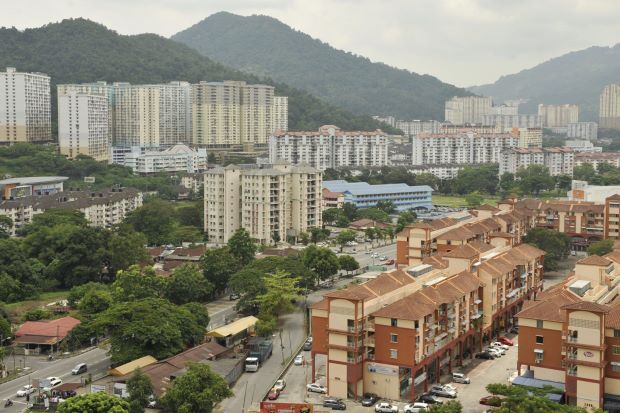
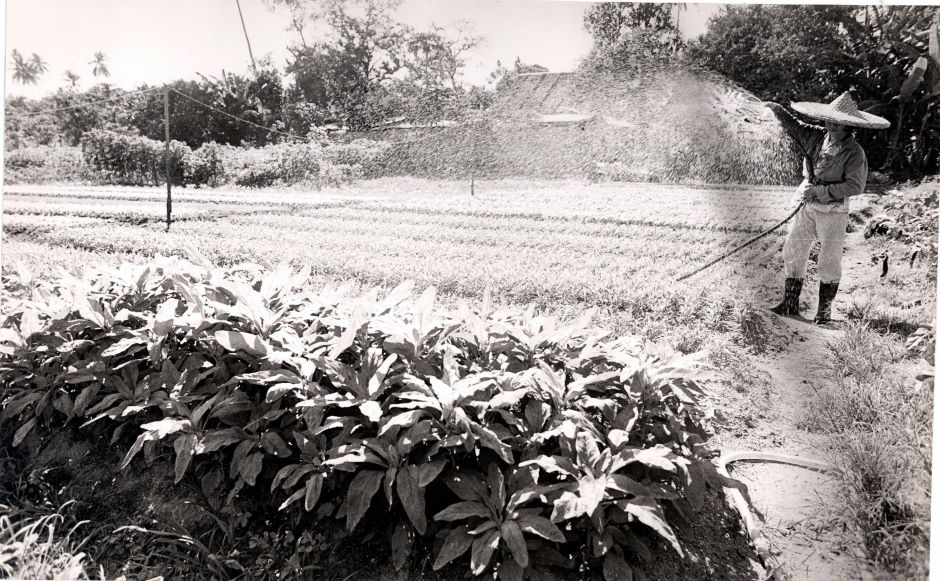
Even during the 1970s, many homes have been built at the nearby Pepper Estate and Hong Seng Estate, where one has to drive through tombs to reach these houses. Many of these houses are located next to graveyards and no one has any ghostly stories to tell.

There used to be a pepper estate and the settlement built as a living quarters of the estate workers. A former school mate and close friend, Loy Boon Peow, grew up in Hong Seng Estate.

Certainly, these tales have made the area more interesting but as Penang becomes more crowded, the roads will become busier and congested.

The isolation is gone and so would the mysterious atmosphere.

Readers write

REFERRING to your article on June 15 about Anson Road, specifically on Tai Hin coffeeshop.

It was November 1967, when I was in Form 4, that I went camping with a brother scout in the Methodist Boys’ School grounds for one of our Scout achievement badges towards the award of King Scout certification.

The campsite was behind the dilapidated Suffolk House and by the Ayer Itam riverbank.

We had camped one night when the next day my parents came looking for me to take me home as the Hartal (the general strike in protest against the proposed Federation of Malaya) troubles had started in George Town and were racial in nature.

So we decided to quickly pack up and leave and send my friend back to his house in Anson Road on our way back to our house in Leith Street Ghaut.

We had to get my Chinese friend to lie down on the floor of our car as we had to pass through the kampung area by the bridge, in Ayer Itam Road.

There were already groups of villagers from Langkawi Road gathered on the bridge. Luckily we were not stopped and proceeded very quickly to Anson Road to send my friend to the Tai Hin coffee shop where he lived.

We also did not encounter any trouble in the Anson Road area, which was a Chinese area.

Thank God we arrived safely in our house before the curfew came into force.

— Syed Kamarulzaman Syed Kabeer

Leave the baggage behind

Malaysia must really grow up and not let the divisive and emotive issues long resolved to fester in the present environment.

WE are about two months away from National Day. We will be turning 56 years old, which is still relatively young in terms of nationhood. But we are not really that young any more.

The country will once again put on a flag-waving exercise as our leaders wax eloquent on patriotism and nationalism.

Malaysians can expect those inspiring TV commercials extolling how the people of this plural socie­ty have come together and proven the critics wrong that Malaysia would collapse as a country upon independence.

It is now more than five decades and we have remained strong. But wait a minute.

Just glance through the newspapers or read the online postings, and we get another picture – one that gives the impression that we are a country that is terribly torn apart.

Any investor wanting to put money in this country would look for another option because we have been sending messages to the world that we are at each other’s throats and the country is waiting to explode, politically. Many of us, including those in the media, are still talking about issues that were emotionally debated in the 1950s, before the nation was born.

We are still talking about race and religion in a terribly shameless and sad way. These contentious issues were settled and resolved by our founding fathers. We should be moving on but instead we seem to be heading in the other direction.

Some of our politicians are even fuelling the political temperature by bringing up, or allowing, these issues to fester, even if it affects the unity of the people.

The Malays, Chinese, Indians and the other Malaysians have made the country what it is today. There would be no Malaysia without the contributions of all these ethnic groups. Go and read the history books.

Blame the British for the divide-and-rule system but the fact remains that the labour of the Chinese and Indian immigrants helped to build the economy.

The Malay farmers and fishermen fed the nation; the Malay policemen and soldiers kept the country safe to allow the Chinese traders to expand the economy; and the Malay-dominated civil service enabled the country to be efficiently administered.

In fact, many non-Malays joined the police force to fight against the communists because they believed in safeguarding their country – Malaysia. Each and every one of our forefathers has made Malaysia to be truly outstanding in the eyes of the world.

Many of the present Chinese and Indians are third or fourth generation Malaysians. We were born, raised and will die here in Malaysia. There is nowhere else and we will not choose anywhere else, because we are proud to be Malaysians.

Many of us, especially those who were educated in English-medium schools, cannot even speak and write in Chinese.

If there are employers who refuse to hire non-Chinese speaking employees, certainly it is not just the Malays and Indians. Many Chinese also fall in this category.

Let no Jurassic racist politician tell us that only certain ethnic groups are immigrants because most of us, if we trace our roots hard enough and are honest, would find that we have ancestors from another part of this world. That is history.

Similarly, the general election is over. We have lost enough productive time on the campaigning, which seems to have clouded the judgment and sanity of many Malaysians, turning them into petty political tyrants.

Malaysians have made their choices. The victors have plenty of work to do and the least of their concern should be to talk about punishing those who did not vote for them. It is the people’s right to vote for anyone or any party. A general election in any democracy is about the right to choose.

No one should be made to feel pressured or threatened, in any way, simply because they did not vote for the winning ruling party.

And for the losers, please stop blaming the system and just move on. Come back in five years’ time. Surely, both sides have to administer the states they won. For Pakatan, just accept the fact that you did not win enough seats to form the federal government.

While every National Day celebration is about remembering what our founding fathers have done, it should also be a time to review what we of this generation have done or not done. It is now mid-2013 and we have just over six months to another year. Surely, we should be worried about how much we need to catch up.

Young Malaysians, without the baggage of the past, have spoken out loudly during the elections. From the mainstream media to our ministers, surely we must acknowledge that it cannot be business as usual again.

The destiny of this country is in our hands. We need to make Malaysia a liberal, progressive and democratically open country.

Don’t let our neighbours, which are starting to open up, catch up with us. Malaysia has to move forward faster and there is no time to waste. We are not young any more. We need to grow up.

Caught between two triads

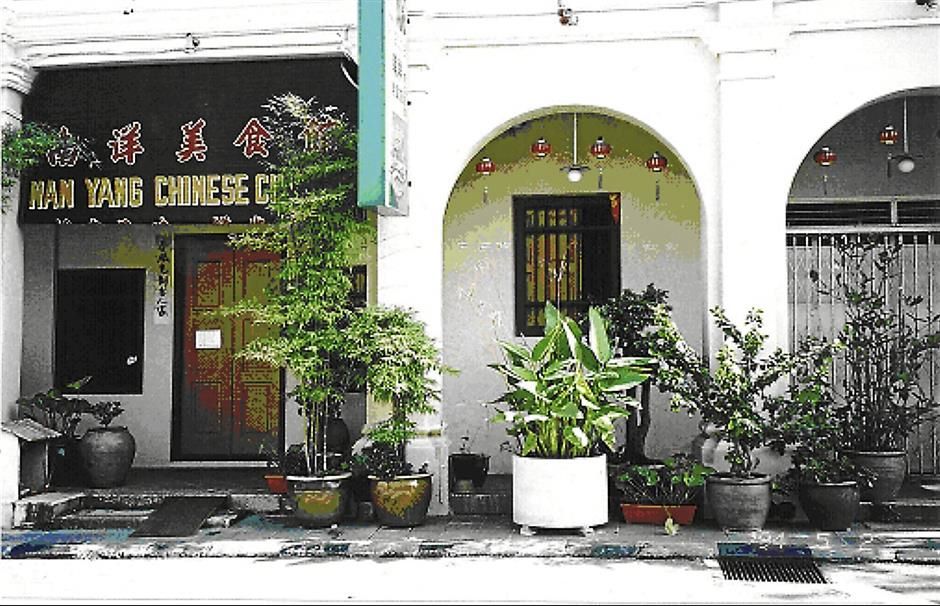
EACH time I return home to Penang, I try to eat at the Tai Hin coffeeshop at the junction of Melaka Street and Anson Road.

The corner coffeeshop is operated out of a pre-war house, one of many that dot George Town.

It isn’t the best coffeeshop in town but has its regular patrons. I have been eating at the same wantan mee stall since I was about 10 years old.

Over the years, I have seen some of the stall operators, including a char koay teow seller who was very popular back then, pass on.

The wantan mee seller is probably now in his mid-60s and I reckon he would soon give up the business.

His wantan mee is served mostly in dry form, with thick soya sauce and sesame oil, and topped with char siew or barbecued pork, and boiled vegetables. It comes with two small meat dumplings.

Older Penangites sometimes refer to wantan mee as tok tok mee, so called because in the old days, wantan mee hawkers would signal their arrival by hitting two bamboo sticks together, making the distinctive tok tok sound.

His sister runs another wantan mee stall at the famous Seow Fong Lye coffeeshop at Macalister Lane which is famous for its Penang-style chee cheong fun or rice rolls that come with blackish prawn paste, sweet sauce and chilli.

Each time I am at the Tai Hin coffeeshop sipping the thick coffee with condensed milk, memories of old Penang would come flooding back.

I remember how my classmate, Choong Keng Hooi, now a hairstylist in Penang, used to buy me a packet of fried mee or economy noodles, from the wet market in Anson Road.

As a growing teenager in my secondary school days, I was constantly hungry and it was sometimes impossible to control my urge to eat before recess at 11am.

By around 10am, I would smuggle out my packet of noodles, stealing bites, even as the teacher was still conducting the lesson in the classroom!

I guess with my kind of behaviour, the school already knew that I was not prefect material, nor a class monitor. In fact, the school didn’t think that I should even be a traffic warden!

I suppose the former students who eventually rise to high positions are those who hold such responsible positions in their schooldays.

So, it was with some satisfaction when I returned to my alma mater, St Xavier’s Institution, years later as the guest-of-honour at the school’s Speech Day or prize-giving day.

It was to be the first and last time as the Brother Principal looked on disapprovingly when I advised the students, “Be the best in what you do. If you are a doctor, be the best. If you are a waiter, be the best waiter, and if you end up as a criminal, be remembered like Botak Chin.”

The students applauded loudly but I doubt if the principal and the other Brothers shared the same enthusiasm.

But Anson Road is our main concern here because it is a major road connecting Macalister Road, Burmah Road and Perak Road.

Anson Road is named after Colonel (later Major) Archibald Edward Harbord Anson, the Lieutenant Governor of Penang from 1867 to 1871.

Born in Devonshire, England, he was also Acting Governor of the Crown Colony of the Straits Settlements in 1877

A British army commander, he served in England, Ireland, Scotland, Mauritius and Madagascar, according to a report.

It has been reported that he also wrote a memoir, About Others and Myself, 1745-1920, where he described the feeling of depression upon his appointment as Penang’s Resident Councillor.

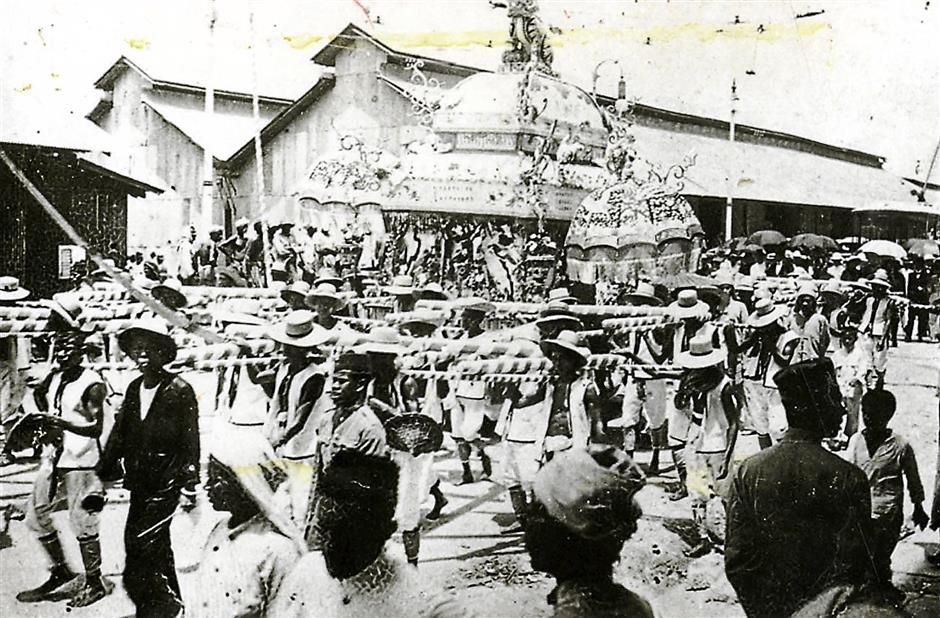
At the time he was in Penang, he negotiated in the Penang Riots that broke out between the Cantonese-speaking Ghee Hin-White Flag and the Hakka-speaking Hai San-Red Flag gangs.

During the nine days of fierce clashes in 1867, which saw heavy street fighting and bloodshed between the two secret societies, the British had to bring in reinforcements from Singapore while the Europeans who were staying in Penang were roped in to help.

The fiercest fight was near Cannon Street at the Khoo Kongsi building where a cannon was fired, resulting in a big hole on the road, hence its name to this day.

It was essentially a quarrel between the triad leaders over tin mining rights and other lucrative business deals.

As a highly respected figure, Anson has also been honoured with a road that is named after him in Singapore, which is located at its central business district.

Then there is Teluk Intan in Perak — which was formerly known as Teluk Anson or Anson Bay.

In fact, until the British named the town after Anson, the town was originally called Teluk Mak Intan, after a woman Mandailing trader from Sumatra, Indonesia.

It was here the Perak rulers held court from 1528 until Kuala Kangsar became the royal town in 1877.

The British renamed the town after Anson as he was responsible for drawing up the town’s planning.

Teluk Intan is famous for its iconic colonial style structures including the 5m-high Clock Tower, known as the Leaning Tower of Teluk Intan.

Apart from keeping time, the tower is also used to store water for the locals during drought season or in case of fire.

For sure, Sir Archibald Edward Harbord Anson has left his mark not only in Penang but other parts of the Straits Settlement.

Download the PDF version of this story.

FAM, stop kicking us around

We want to soar to greater heights in the game that is loved by the people, but the FAM must learn how to accept criticism from those who dare to speak out because they truly love football.

THE Football Association of Malaysia truly deserves the black eye from the Tunku Mahkota of Johor, Tunku Ismail Sultan Ibrahim, as he has expressed the feelings of most ordinary Malaysians over the FAM’s pathetic state of affair.

In the eyes of Malaysians, the FAM has turned into an association of powerful personalities who simply refuse to take responsibility for their failures. It has become a club where the word “responsibility” does not seem to exist and, worse, the leadership seems incapable of taking criticism.

The FAM leadership has increasingly become more dictatorial, and is quick to act against those who have voiced their dissatisfaction over the pathetic performance, or rather, non-performance, of the members of the association. If the ordinary Malaysian can vote and have a direct say in its affairs, they would have been booted out of the FAM long ago.

Last week, the outspoken Tunku Ismail told the FAM to accept criticism for the betterment and development of football in the country. In a strongly worded statement, he said he was “doing this (criticising the FAM) only because I love football. Those holding office in the FAM must be sincere and fair to all teams playing in the local league.”

He said “their priority must be to improve the quality of football in the country”, adding that the Johor FA had received a letter from the FAM to warn the Johor FA against criticising the FAM through the media.

The FAM, it appears, has also reportedly warned the media to be cautious over how it reported the statement from Tunku Ismail. Well, why should the media be cautioned?

This is not the first time that Tunku Ismail has taken on the FAM but the action of the FAM has not stopped him from speaking up. His Highness can be assured that football fans all over, not just in Johor, are cheering him on.

In March, Tunku Ismail was slapped with a six-month ban from all football activities and fined RM18,000 by the FAM for two alleged offences, namely breaching Article 88 of the Statute 2010-2014 and criticising the quality of referees in the M-League.

The infamous Article 88 states that only the FAM president and secretary-general can issue statements to the media while other individuals must get prior approval from the FAM before issuing any statements.

FAM disciplinary committee chairman Datuk Taufik Abdul Razak had said the punishment was meted out after Tunku Ismail pleaded guilty to both the charges.

Tunku Ismail was reported to have allegedly questioned the quality of refereeing during a Super League match between Johor Darul Takzim and Lions XII on Feb 19 at Larkin Stadium. The match ended 2-2.

The FAM surely must have bigger problems to worry about. If they have been criticised, in any form, then they must take it sportingly. No one is beyond criticism. You just have to be in the stands to hear the things fans say about players and referees to understand that this is all part of the game.

The latest FIFA ranking has placed Malaysia on 159th spot, a two-spot improvement from 161 in May and 163 in April. Big deal.

Flood-prone Bangladesh is placed at 152 while the island republic of Maldives, which is more worried about being submerged under water soon than football, is at 157, with Myanmar at 155.

And who would have imagined these countries are outranking us – the Philippines (144), India (147), Tahiti (138), St Kitts and Nevis (137) and Antiqua (121).

Anyone who has ever visited the Philip­pines and India would tell you that the people in these two countries are hardly as passionate about football as we are. Not many from this generation will remember, but Malaysia’s 15-1 victory over the Philippines in 1962 is currently the record for the highest win for the national team and the record has never been broken since then.

Let’s be blunt here. The fellas at the FAM have no clue how they can lift the Malaysian football team out of the doldrums.

From the era of our Merdeka champions, when we had giants like Soh Chee Aun, Mokhtar Dahari, R. Arumugam and Santokh Singh, we have become minnows.

We call ourselves the Malaysian Tigers when we can neither roar not bite, and it is no surprise that even teams ranked below us know that we can be beaten. There is a lack of consistency and while the nation does get excited when we win even one small tournament or grab a medal at the SEA games, the big-time success is simply beyond us.

Yet, all over the world, we continue to see how young talents are unearthed and are so good that they not only play for the country but are quickly snapped up by the big-time clubs in all the major leagues in the world.

Frankly, I am not even sure if those at the FAM care two hoots about how ordinary Malaysians feel about our level of football.

Yet, they seem super-sensitive when any of their officials or their policies are criticised. And, seriously, why are they even clinging on to their positions, year in and year out?

Those who have bravely spoken up, for the love of football, have been punished, and that includes the Tunku Mahkota of Johor. We should all speak up, so stop kicking us around!